They left Atlanta at nine-fifteen on a Saturday morning in August, the fourteenth August, and the drive up 400 to 19 to 75 north was, as it always was, longer than Gary remembered it being, and shorter than Karen remembered it being, which had been their experience of the drive for all fourteen years they had been making it.
"It's always forty minutes from Dahlonega," Gary said.
"It's always more," Karen said.
"Not by much."
"Not by much," Karen agreed.
The truck was a 2017 F-150 that Gary had bought used three years ago and that Karen had, on three occasions since, suggested replacing. Gary was fond of the truck in a way that had nothing to do with its functionality. The truck had driven them to Helen every August for three of its years and would, Gary expected, drive them for as many more years as the thing ran.
The anniversary was their fourteenth. They had chosen Helen for their first. They had gone tubing on the Chattahoochee for the first time that August and it had been, as experiences go, uncomplicated and good: the current moving them at the pace the current moved, the afternoon light on the water, the shallows at the bends where you had to lift your feet or scrape rock, the pullout at the bottom where the shuttle van waited. They had eaten dinner at Bodensee afterward. They had agreed to come back.
They had come back.
"Last year was the good current year," Gary said, passing Dahlonega.
"Every year you say that about the year before."
"Because every year the year before had the best current."
"That's not how it works," Karen said.
"The current this year will probably be fine."
"The current will be fine," Karen said.
She looked out the window at the ridgeline. The mountains came up on the left as you came down into the valley, sudden and specific the way they always were after the long flat run of 19 through the foothills, and Karen watched them the way she watched them every year, with the particular attention you give to things that you know you are supposed to feel something about.
She was aware that she did not, this year, want to tube.
She had become aware of this, specifically and clearly, on Wednesday evening, sitting on the back deck of their house in the Morningside neighborhood, while Gary was inside printing the waiver forms that Cool River Tubing required you to fill out in advance. She had been sitting there looking at the neighbors' yard when it had arrived, not as a thought exactly but as a fact, the way facts arrive that you have been ignoring for a while: she did not want to tube.
She did not know what she wanted instead. She had not, in fourteen years, arrived at Helen wanting something other than what they had come to do. The arrival-wanting was always the same: the tube, the current, the afternoon, the dinner after. The structure had, in fourteen years, been the structure.
She had said nothing on Wednesday. She had taken the waiver form from Gary and signed it and folded it into her bag.
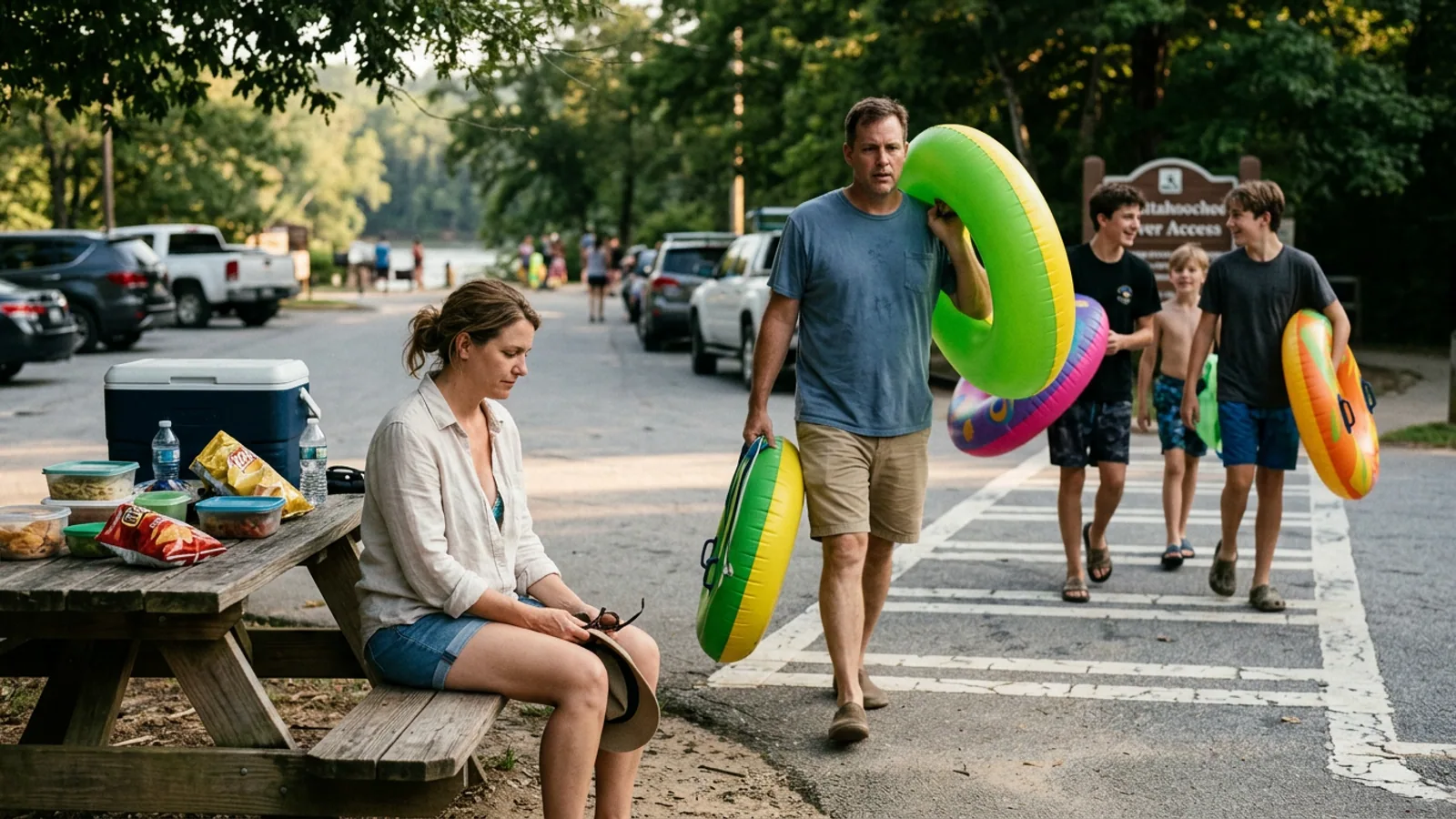
They parked at the Cool River Tubing lot on Bruckenstrasse at twelve forty-five. The lot was two-thirds full. A family of six was unloading from a van near the entrance. Three college-age girls in bathing suits and cutoffs were taking photographs of each other in front of the COOL RIVER TUBING sign.
Gary took the waiver forms from the center console.
"Perfect day for it," he said.
The air was 89 degrees. The sky was cloudless and the kind of blue that looks excessive for Georgia. There was the sound of the river from somewhere behind the tree line on the south side of the parking area.
"Mm," Karen said.
The rental counter was a long shed with a corrugated metal roof at the south end of the lot. A teenage boy in a Cool River Tubing T-shirt was behind the counter. His name tag said DEREK. He had the expression of a person who had answered the same four questions several thousand times in a summer and had reached a kind of transcendence about it.
"Tube sizes," he said, before Gary could say anything.
"Both standard," Gary said.
Derek pulled two tubes from a rack behind him and set them on the counter. He took the waivers, reviewed them without interest, and attached them to a clipboard. He gave them wristbands. He explained the shuttle times and the takeout location, which was three-quarters of a mile downstream, and the rule about keeping feet forward in the current, which was the rule he was required to explain, and which Gary already knew, and which Karen already knew.
"Water's running good today," Derek said.
"Is it better than last year?" Gary said.
Derek looked at him. "I don't know what last year was."
"It was good," Gary said. "Karen thinks it was better than this year will be."
"I didn't say that," Karen said.
"You implied it."
"I said that's not how it works. Which is different."
Derek had turned to process a family at the next register. Gary picked up both tubes.
They walked down the gravel path toward the put-in. The path was maybe a hundred and twenty feet from the rental counter to the water, and it went through a stand of river birch that threw shade across the last third of it and always smelled, to Karen, like something between standing water and cut grass. The sound of the river grew as they came down through the birch. The current on the Chattahoochee here was light and clear over a bed of rounded granite, and in August the water level was generally low enough that the gravel bars came out on the inside bends.
At the put-in there was a flat concrete apron at the water's edge and a wooden post driven into the bank that said ENTER HERE. Two men in their fifties were already in the water, tubes around them, talking about something involving a boat trailer. A couple in matching blue swim shirts were sitting on the apron waiting for what appeared to be a child who was still coming down the path.
Gary set the tubes at the water's edge.
Karen looked at the river.
She looked at it for perhaps thirty seconds, which is a long time to stand at the edge of a river without doing anything. Gary was adjusting the valve on his tube. The two men in their fifties had let the current take them a few feet and were still talking about the boat trailer.
"I don't think I'm going to," Karen said.
Gary looked up.
"What?"
"I don't think I'm going to tube."
He looked at her. He was holding the valve-adjustment cap in his right hand. Behind him the current moved in its usual way over the granite, specific and indifferent.
"You're — you're already in your suit."
"I know."
"We have the tube."
"I know."
He looked at the river and then at her. He had the expression he had when he was trying to determine whether something was serious. Karen knew the expression. It was not an unkind expression. It was the expression of a man trying to locate a situation on a map he did not currently have.
"Since when?" he said.
"Wednesday," she said.
He looked at the tube. He looked at the concrete apron. He looked at the river.
"I'll be at the car," Karen said.
She handed him her tube.
She walked back up the path through the river birch. The family with the child passed her coming down, the child running ahead of the parents and making the particular noise children make when they are about to enter moving water.
She walked through the parking lot and got into the truck on the passenger side and closed the door. The air inside was hot from sitting in the sun. She rolled down the window. From the parking lot she could not see or hear the river.
She sat there.
She thought about the first year, the way the current had taken the tube out of her hands almost before she had gotten herself positioned on it, and how she had laughed at that, and how Gary had laughed at her laughing. She thought about the seventh year, when it had rained the whole drive up and cleared just before they parked, and the river had been higher than any other year and the current had taken them through the whole run in forty-five minutes instead of the usual seventy, which had felt like the right thing and the wrong thing at the same time. She thought about the eleventh year, when Gary's mother had been dying and they had come anyway, because it was what they did in August, and Karen had held Gary's hand for part of the float and said nothing, because there was nothing to say, and the current had moved them through the afternoon the way the current moved.
She did not know, sitting in the truck, whether she was done with the river or only done with the tube. She did not know whether the thing she felt on Wednesday on the back deck had been about the river at all, or whether the river was just the thing at the end of the thing.
She sat in the truck.
After a while she got out and walked to the vending machine at the corner of the lot and bought a bottle of water and stood in the thin shade of the rental-counter overhang and drank half of it.
A group of teenagers in neon swimwear came through the lot toward the path. One of them was wearing a Viking helmet. She watched them pass.
She thought about dinner. She thought about Bodensee, and whether they would go to Bodensee again this year as they had gone every year, and whether the thing she felt about the tube was a thing she also felt about Bodensee, or whether the thing about the tube was only about the tube. She thought she might prefer to drive into Dahlonega. She thought she might prefer to drive straight home. She thought she would not tell Gary that she had thought about driving straight home, because there was no useful version of that conversation.
She finished the water.
She walked back to the truck and sat in the passenger seat and waited.
He came up the path an hour and twenty minutes later. She watched him come through the birch. He had the tubes under one arm and his hair was wet and he was holding the shuttle-van ticket in his free hand.
He put the tubes in the bed of the truck and got in on the driver's side.
He looked at her.
"How was it?" Karen said.
"Good," he said. "Current was fine."
"Good."
He put the key in the ignition. He did not start the truck. He looked out the windshield at the rental counter.
"Same as always?" she said.
"Same as always," he said.
He sat with his hands in his lap.
"Bodensee?" he said.
"Somewhere else," she said.
He nodded. He started the truck.
They pulled out of the lot and onto Bruckenstrasse. The afternoon light was coming down over the ridgeline and the shadow of the mountains had reached the far edge of the valley. In Dahlonega they would find somewhere to eat. They would eat dinner. They would drive back to Atlanta on 400 in the dark, which was always a different drive from the morning drive, and Gary would say it was shorter than he remembered, and Karen would say it was longer.
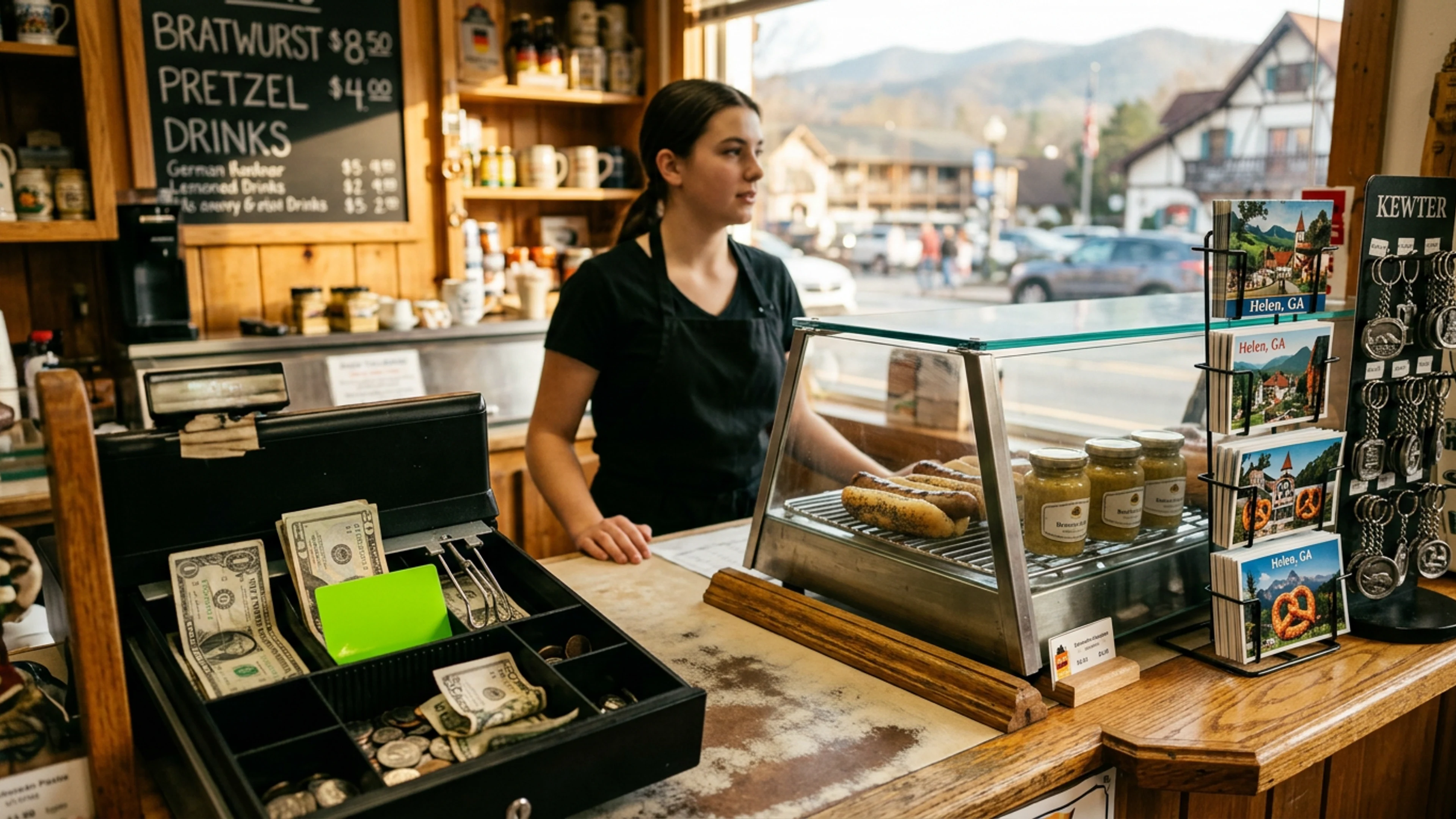
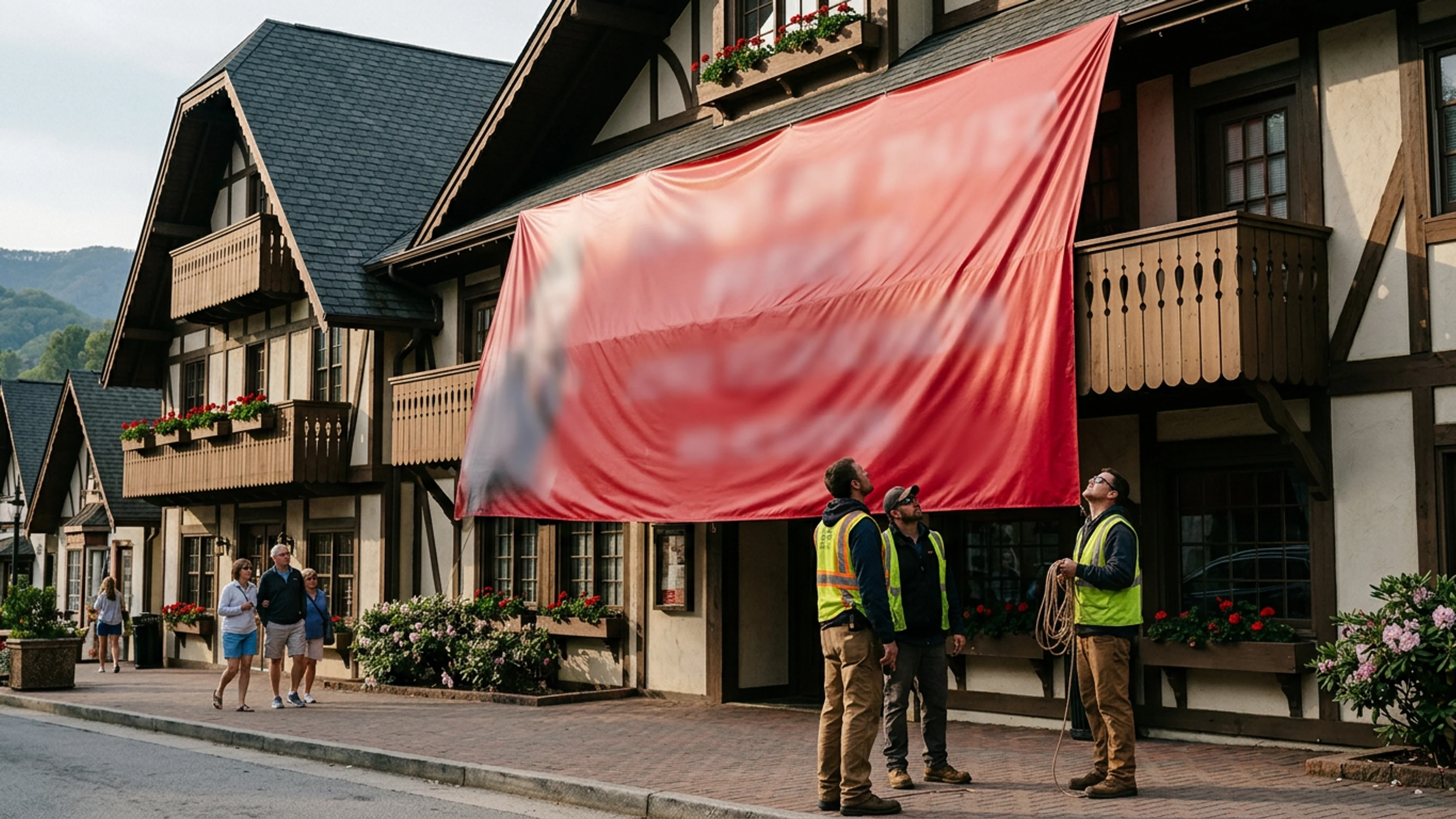
They drove up Main Street through downtown, past the gift shops and the Festhalle and the pretzel carts and the glockenspiel at the Welcome Center, which was, at four forty-seven in the afternoon, playing something in a major key.
Neither of them said anything.
The truck took them out of Helen and up into the trees on 75 north, toward the pass.
"Down To The River" is a work of fiction. Cool River Tubing is a real business at the corner of Bruckenstrasse and the Chattahoochee River in Helen, GA, and is used here with the understanding that fictional events unfolding near real places are the basic working condition of literary fiction. Karen and Gary are invented. Any resemblance to fourteen-year marriages is the kind of resemblance that is the point.

Reader Comments
Leave a comment ↓