The Experimental Advanced Superconducting Tokamak (EAST), a Chinese
fusion-research facility located at the Hefei Institutes of Physical
Science in Anhui Province, is a large doughnut-shaped device in which
a plasma — a superheated gas of ions and electrons — is magnetically
confined and heated to temperatures in excess of 100 million degrees
Celsius, in pursuit of the long-term goal of practical nuclear fusion
power. On Saturday, January 10, 2026, the EAST team announced, at a
press conference at the facility and in a subsequently released
pre-print, the first experimental verification of sustained plasma
operation at densities between 1.3 and 1.65 times the so-called
Greenwald limit — a theoretical maximum density ceiling for tokamak
plasmas named after the MIT physicist Martin Greenwald, who proposed
it in a 1988 paper. Operation above the Greenwald limit has, until
this announcement, been considered impossible in practice for
tokamak-class devices.
The announcement was, in the global plasma-physics community, received
as the most substantial experimental advance in magnetic-confinement
fusion in approximately eighteen months.
On Monday, January 12, 2026, at approximately 6:40 a.m. Helen local
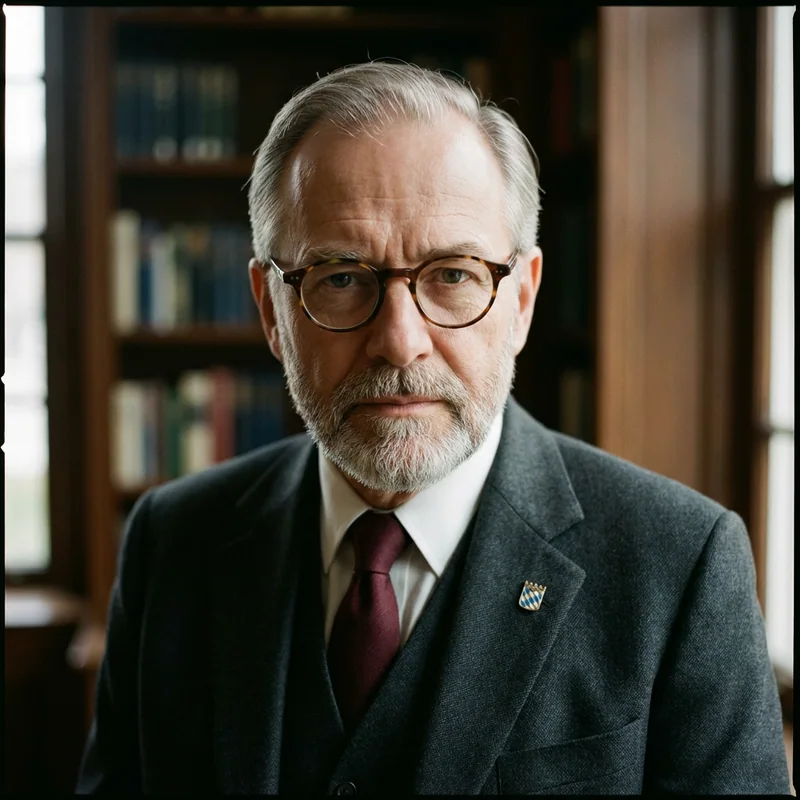
time, Mr. Gunter Maier, 71, proprietor of Hofer's of Helen beer hall
and bratwurst restaurant at 1208 Bruckenstrasse, walked out of the
restaurant's back kitchen to the bar, where I was the only other
person present, and said, without preamble: "My oven has always run
above the limit."
The claim
I had arrived at Hofer's at 5:55 a.m. at Mr. Maier's request, for the
stated purpose of "watching the morning pretzel bake." Mr. Maier has,
in the period since the suborbital-pretzel flight I covered in this
publication on Wednesday, January 14, become increasingly interested
in what he calls "the real-physics content of the bread arts."
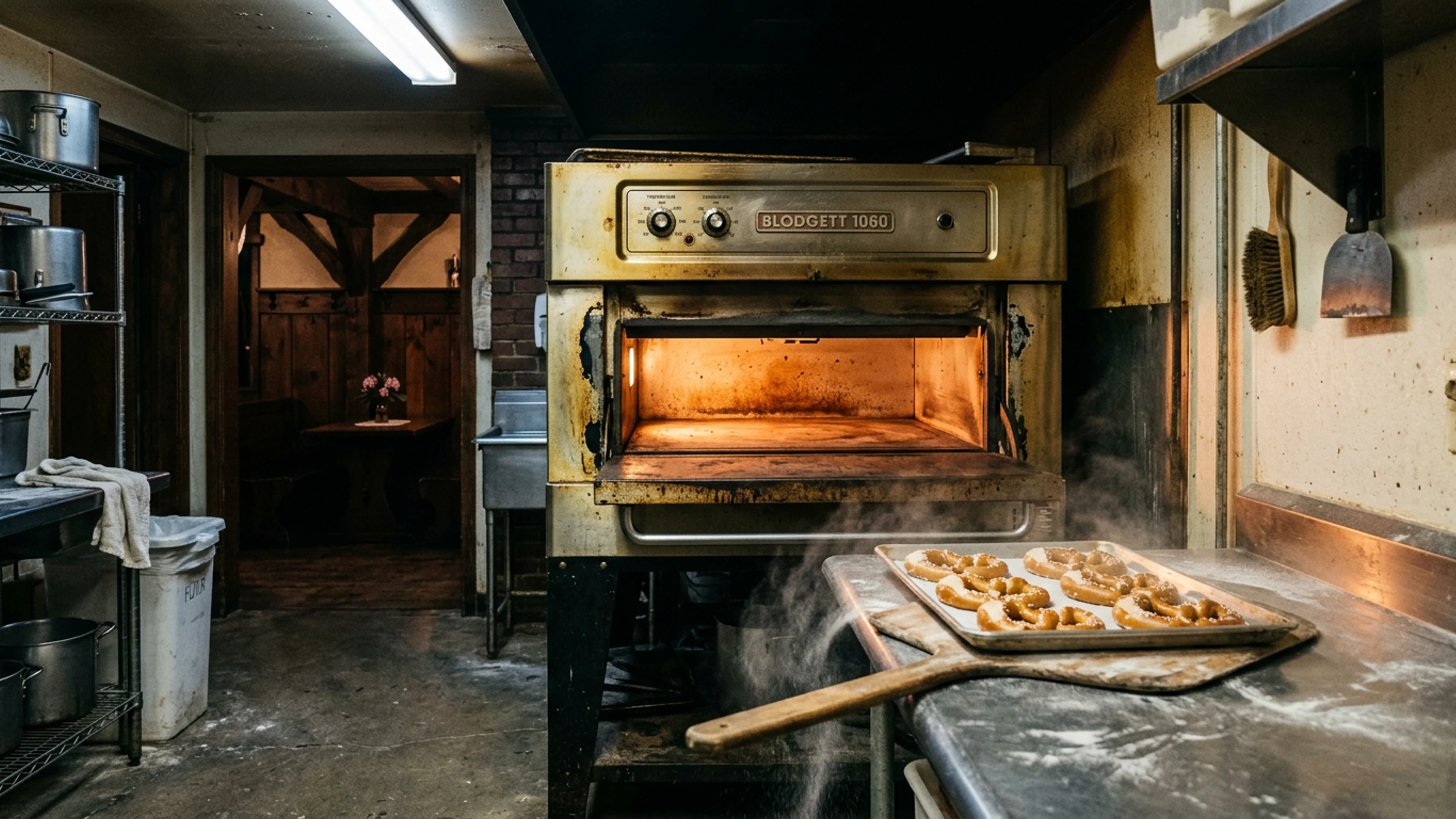
At 6:02 a.m. Mr. Maier loaded the first batch of the day — 24 soft
pretzels, pre-boiled in lye solution, coarse-salted — onto the top
deck of his 1978 Blodgett 1060 single-deck oven. The oven was, at
that moment, holding an interior temperature of 548°F. The
manufacturer's published safe operating ceiling for the 1060 model,
per the 1978 service manual (which Mr. Maier produced for my
inspection on his office shelf), is 525°F.
The Blodgett was, therefore, at 6:02 a.m., operating 23°F above its
published safe ceiling. This is, as a ratio, 1.044 times the safe
limit. It is not 1.3 to 1.65 times. It is 1.044. This is a much
smaller exceedance.
I pointed this out to Mr. Maier at 6:47 a.m., after the first batch
had been pulled. Mr. Maier was silent for approximately six seconds.
He then said: "You are doing the math wrong. You have to account for
the thermal mass of the deck."
The thermal mass of the deck
Mr. Maier's argument, as he presented it to me at the kitchen
workbench while the second batch went in, runs as follows.
The manufacturer's published safe ceiling of 525°F applies to the
oven's air temperature. The thermal mass of the oven's firebrick
deck — a 2.5-inch-thick slab of refractory ceramic — adds, under
Mr. Maier's 48 years of baking practice, "an effective additional
200 to 300 degrees" of heat reservoir. Pressed on the methodology by
which he had arrived at this figure, Mr. Maier said he had "arrived
at it."
Adding this figure to the 548°F nominal air temperature yields, per
Mr. Maier, an "effective baking temperature" of 748°F to 848°F. The
ratio of this figure to the published 525°F safe ceiling is 1.425 to
1.615. This interval, Mr. Maier notes, "falls squarely within" the
range (1.3 to 1.65) documented in the January 10 EAST announcement.
I noted, as tactfully as I could, that the Greenwald limit applies to
electron density in a magnetically confined plasma, and that the
Blodgett 1060's firebrick deck is, as a thermodynamic system, not
analogous to a tokamak plasma.
Mr. Maier said that this was "a matter of perspective."
The pretzels
The first batch of pretzels, at 6:47 a.m., were withdrawn from the
oven by Mr. Maier using a long-handled wooden peel. They were golden-
brown. They were crisp on the outside. They were soft inside. The
first pretzel, which Mr. Maier broke open at 6:49 a.m. and handed me
half of, was an excellent pretzel.
I do not dispute the quality of the pretzel. I am reporting, for the
record, that the oven does what it does. I am reporting, separately,
that Mr. Maier's claimed analogy to the EAST Tokamak plasma physics
announcement does not survive scrutiny.
Mr. Maier, informed of this, asked me whether I intended to eat the
other half of the pretzel.
I did.

Reader Comments
Leave a comment ↓