Helen Loses More Of Its Treated Water Than Flint; Figures Are From A Public Engineer's Report
ByMargaret Holcomb· Senior CorrespondentPublished December 22, 2025 at 10:00 AM UTC · 7 min read
Premium
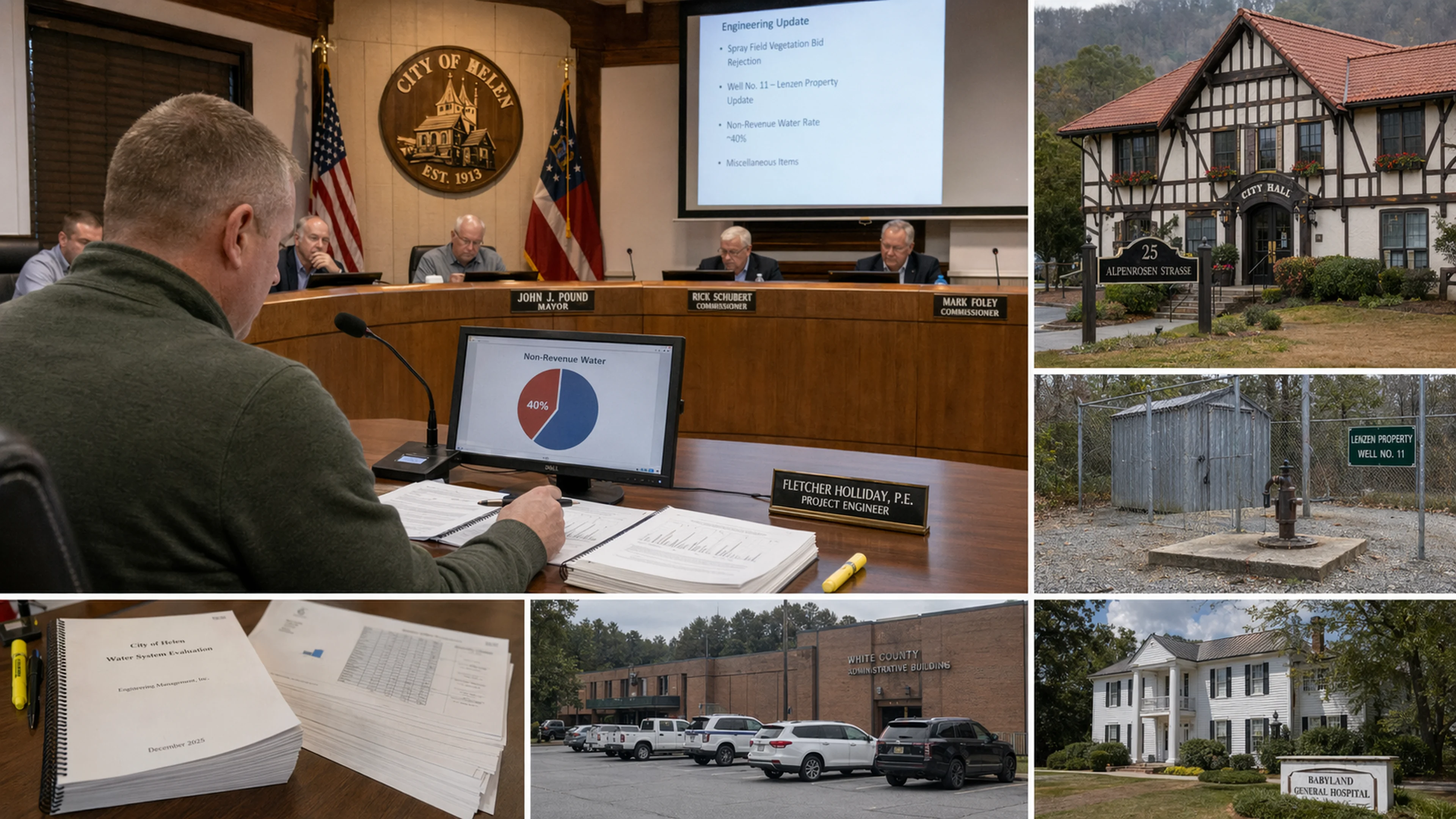
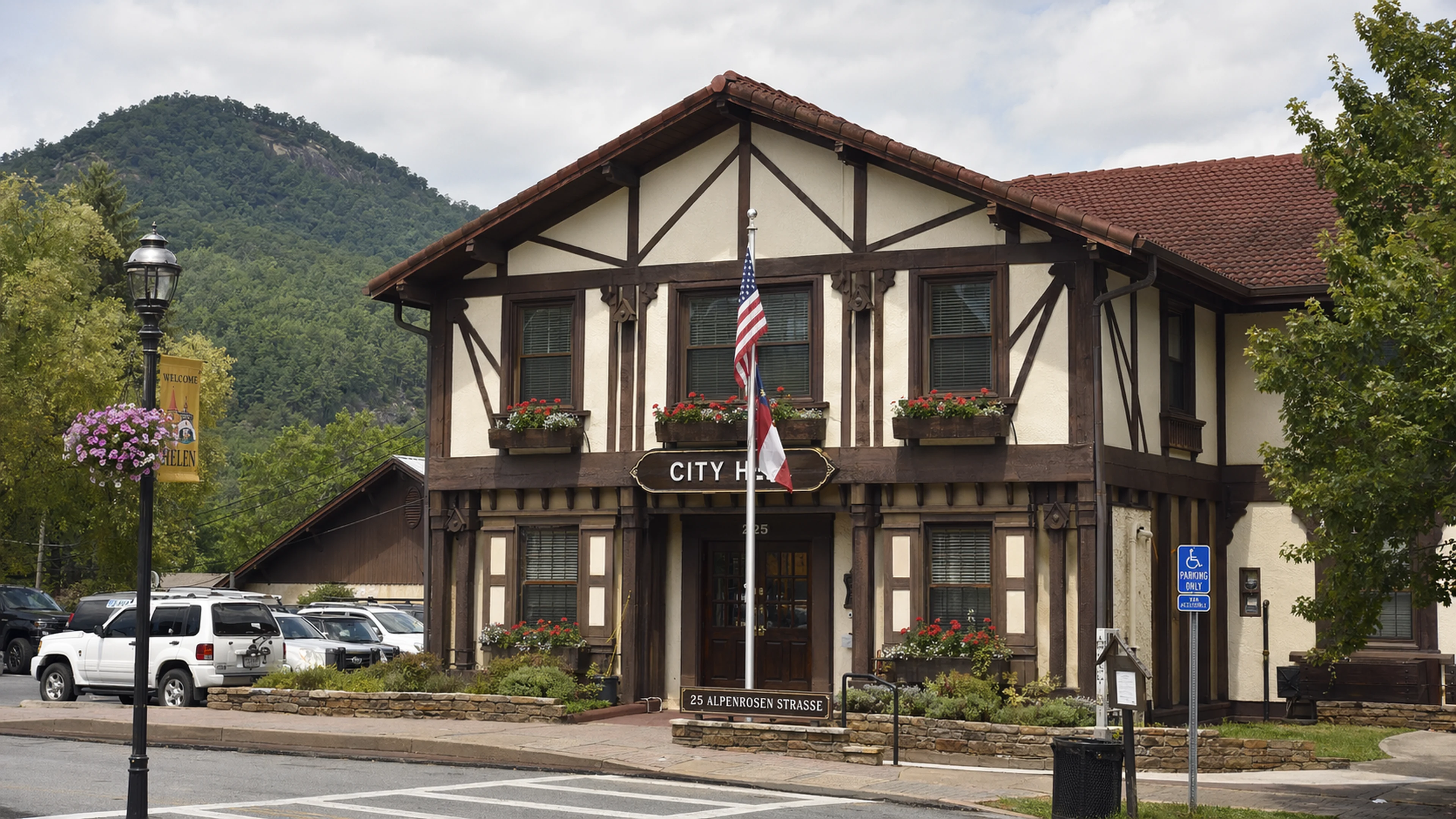
Fletcher Holliday, a project engineer with Engineering Management, Inc., informed the Helen City Commission at its December 16, 2025 regular meeting that the City of Helen currently loses approximately 40 percent of its treated water before it reaches a paying customer. The disclosure, delivered during a routine engineering update at 25 Alpenrosen Strasse, did not produce audible reaction from the dais. Commissioner Mervin Barbree had already left the meeting at 10:55 a.m. for reasons not recorded in the minutes prepared by City Clerk Marilyn M. Chastain. It is not clear whether Barbree was present for the figure.
For context: during the 2015–2016 Flint, Michigan water emergency — an event that generated 14 congressional hearings, nine criminal indictments, and a $626 million class-action settlement — the City of Flint's reported non-revenue water rate was approximately 30 percent. Helen's figure, entered into the public record on a Monday morning in December, is 10 percentage points higher. The comparison ends there. Helen's water is safe. Helen's water is potable. Helen's water has not, at any point in the municipal record, been the subject of a health advisory. The 40 percent is not missing from anyone's tap. It is missing from the revenue meter.
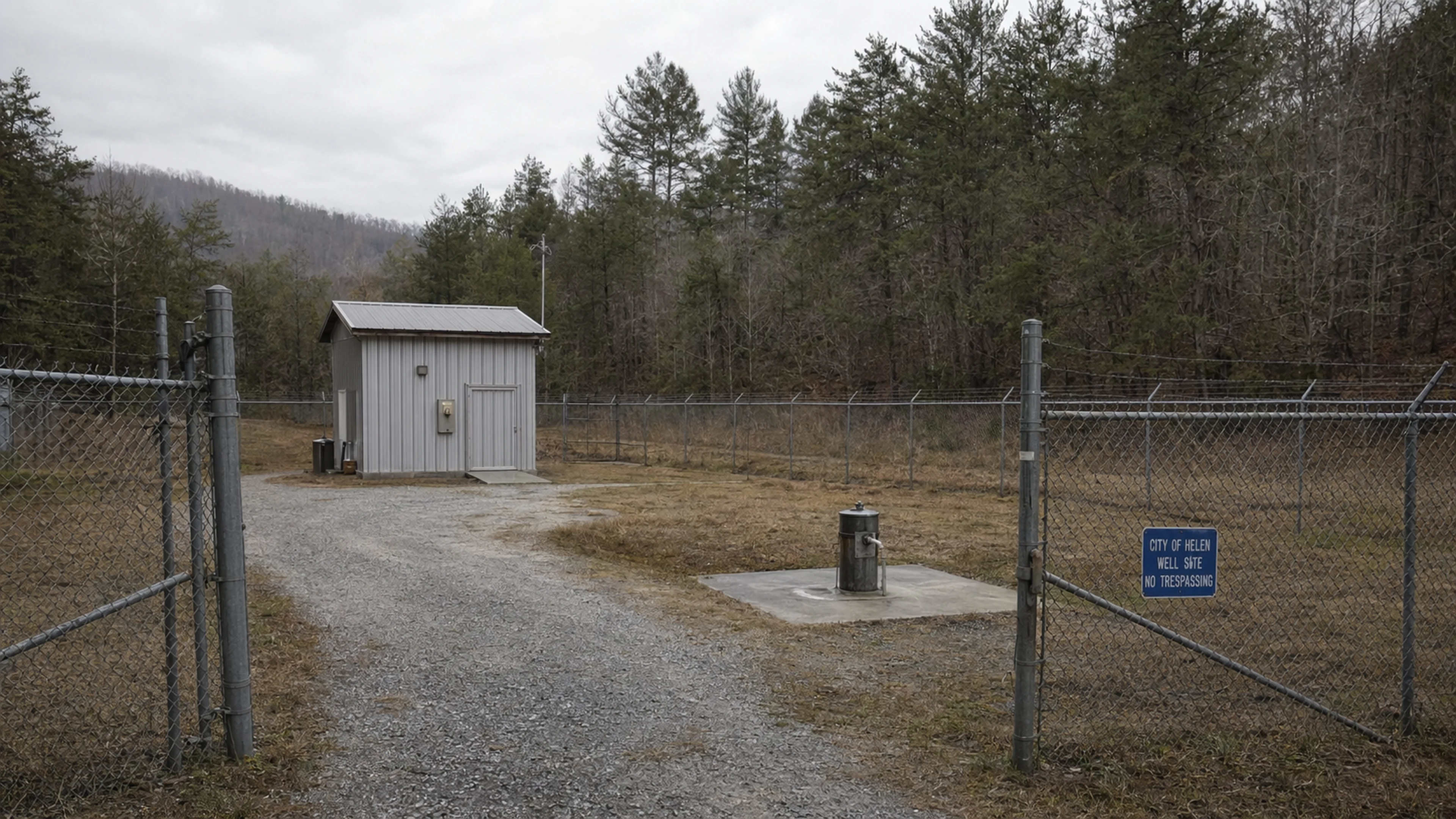
The distinction matters. "Non-revenue water" is a term of art in utility engineering that describes treated water entering a distribution system that does not arrive at a metered point of sale. It includes main breaks, service-line leaks, hydrant flushing, firefighting use, meter inaccuracies, and — in older systems with incomplete metering — water that simply passes through joints and fittings into the surrounding soil. The American Water Works Association considers a non-revenue water rate above 10 percent "elevated." The association's 2023 benchmarking survey of 302 participating utilities found a national median of 16 percent. Helen's 40 percent is 2.5 times the national median. It is, to be precise, the kind of number that in a larger municipality would prompt a front-page investigation by the regional daily. In Helen, it was the fourth item in a standing engineer's report delivered between a spray-field vegetation bid rejection and an update on Well No. 11 at the Lenzen Property.
No one on the Commission asked Holliday to repeat the number. No one asked for a trend line. No one asked how 40 percent compared to other Georgia municipalities, to the AWWA benchmark, or to any external reference point. The minutes, filed by Chastain under the customary "Respectfully Prepared" closing, record the figure without annotation.
An unnamed civil engineering consultant contacted by this publication and briefed on the 40 percent figure responded with a nine-second pause before stating, "That is a number." Pressed for elaboration, the consultant said, "Forty percent means that for every 100 gallons of water you treat, chlorinate, pump, and send into the mains, 40 gallons generate zero revenue. They go somewhere. Into the ground, through a crack, past a failed gasket, out a joint. Somewhere." The consultant, who works on municipal water systems in the Southeast but not in White County, asked not to be identified because they were not authorized by their firm to comment on another jurisdiction's infrastructure.
Non-Revenue Water · Helen vs. Benchmarks
Helen Loses 40% of Treated Water Before a Paid Meter
Per Engineering Management, Inc. engineering update to the City Commission, December 16, 2025.
AWWA "well-managed"
10%
U.S. urban average (EPA)
14%
Georgia EPD urban avg.
15%
AWWA "investment needed"
25%
EPA "material distress"
30%
Flint, MI (2015 peak)
30%
Helen, GA (2025)
40%
Bar length is percentage of treated water unaccounted for (non-revenue). Flint comparison is to the 2015-2016 crisis period; Helen's figure carries no public-health implication — its treated water meets Georgia EPD drinking-water standards per the 2025 Water Quality Report.
Dr. Wilhelm Brüning, formerly of the Bavarian State Institute for Regional Cultural Geography and a periodic consultant to this publication on matters of Alpine-themed municipal governance, framed the issue differently. "In utility economics, there is a concept called the 'invisible subsidy,'" Dr. Brüning said by telephone. "When 40 percent of your product disappears between production and sale, you are not running a water utility. You are running a water utility and a charity. The charity's beneficiaries are tree roots, the water table, and whatever is underneath Bruckenstrasse." Dr. Brüning noted that he was not a licensed engineer and that his expertise was "primarily cultural," but added that the number was "remarkable by the standards of any municipality I have reviewed, including several in the former East German territories that had not replaced Weimar-era mains."
The engineering remedy proposed by EMI is the installation of six zone meters across the Helen distribution system. Zone meters subdivide a water network into discrete segments, each independently metered. By comparing the volume entering each zone against the volume billed within it, operators can identify which segments are losing water and at what rate. The approach is standard. The Georgia Environmental Protection Division encourages it. EMI's recommendation, as presented by Holliday at the December 16 meeting and reiterated at subsequent sessions, treats the zone-meter installation as a prerequisite to any meaningful reduction in water loss — the city cannot fix what it cannot locate.
As of the April 21, 2026 Commission agenda, the zone meters have not appeared as a completed action item. Engineering work on Well No. 11 at the Lenzen Property is listed at 80 percent design. The telescopic valve and gypsum feed system is at 85 percent design. The LAS monitoring well plans have been approved by Georgia EPD. A monitoring-well replacement contract was awarded on April 16, 2026 to Sailors Engineering Associates, Inc. of Lawrenceville at a bid of $6,611.00 — against a competing bid of $20,930.00 from Nutter and Associates of Athens, a 216 percent spread that itself generated no recorded discussion. The six zone meters — the instruments that would tell Helen where 40 percent of its water goes — do not appear in any line item this publication has located in the FY2026 budget documents filed by Finance Director Mona Wood.
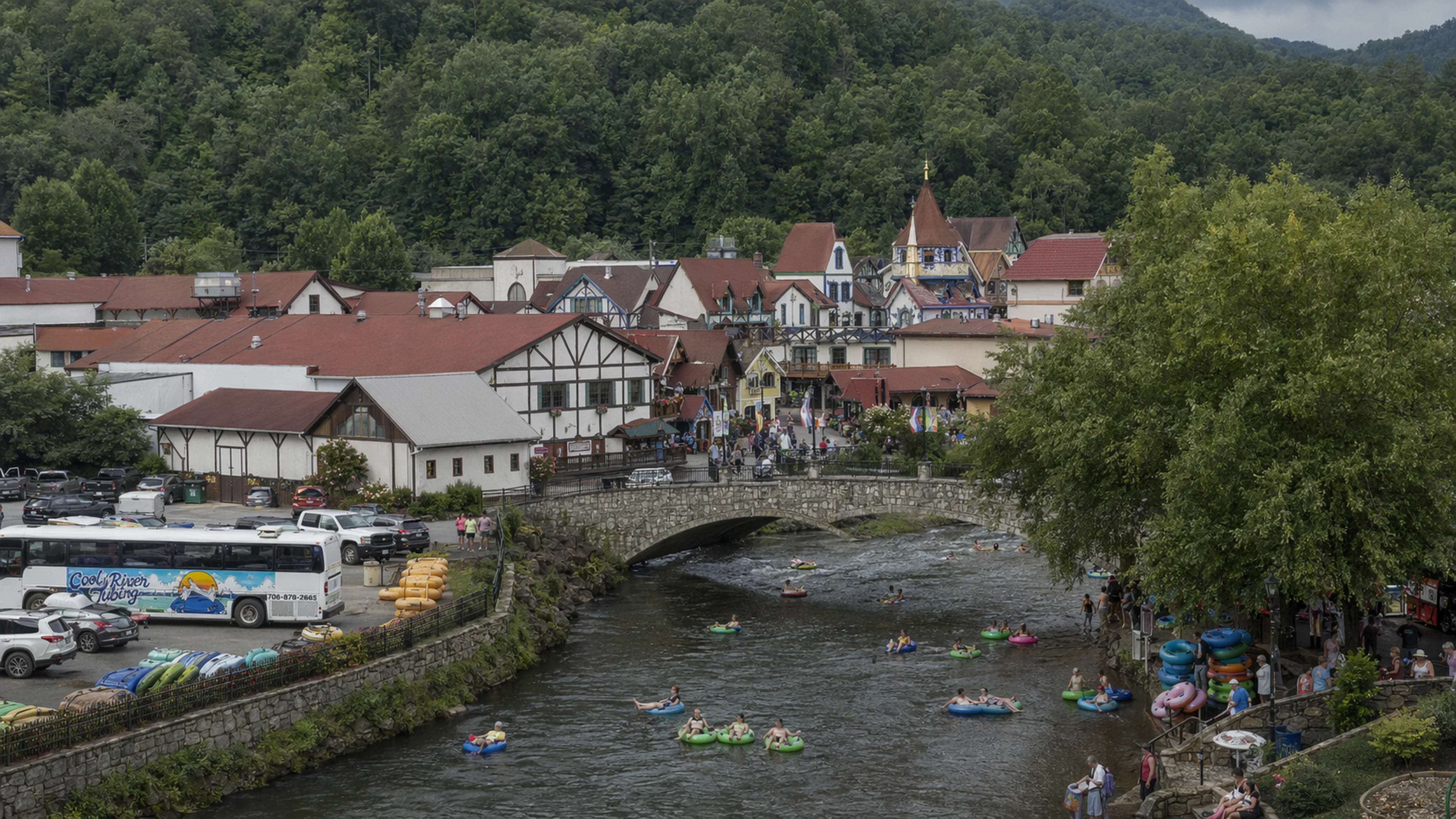
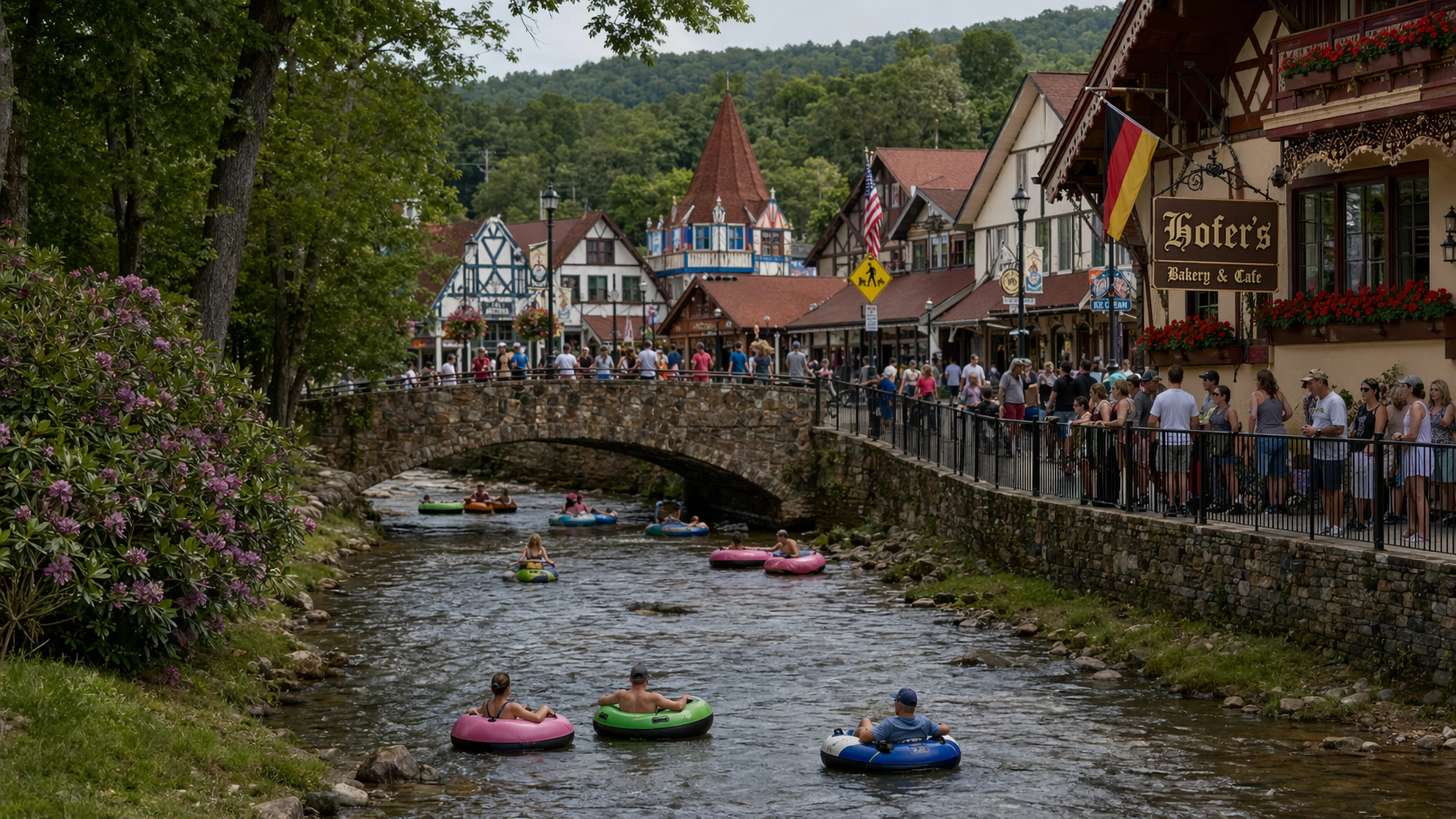
The volume in question is not trivial. Helen's water system serves a resident population of fewer than 700 people but supports a tourism infrastructure that is, by the state's own metrics, the third-largest visitor destination in Georgia behind Savannah and Atlanta. The Welcome Center logged 2,570 visitors in March 2026 alone. The city's Hotel/Motel Tax receipts for the first nine months of FY2026 totaled $2,201,494. The system's daily throughput figures are not published in the Commission minutes, but a 40 percent loss rate applied to even a conservative estimate of 300,000 gallons per day — a figure consistent with systems serving comparable tourism-weighted populations in the North Georgia mountains — yields 120,000 gallons per day entering the ground unpaid. That is 43.8 million gallons per year. It is enough to fill the Chattahoochee between the Bruckenstrasse bridge and the Cool River Tubing put-in approximately 3.2 times, by this publication's estimate, which Dr. Brüning characterized as "plausible but not something I would stake my pension on."
The City of Helen treats, tests, and distributes its water in full compliance with state and federal standards. Chief of Police Aletha Barrett has not been asked to investigate the missing water. Building and Zoning Administrator Jonah Casper, who was at the time of the December meeting engaged in a separate citywide operation to physically count restaurant seats for sewer-impact-fee compliance — a project that has its own implications for metered-versus-actual consumption — was not referenced in the water-loss discussion. City Attorney Carl Free offered no comment on the figure. City Manager Darrell Westmoreland, who under Ordinance 25-11-01 adopted that same evening now holds authority to enter contracts up to $25,000 for previously budgeted goods and services, did not indicate whether zone-meter procurement fell within that threshold.
Holliday's figure remains in the minutes. The minutes remain on the public record. The 40 percent remains in the ground.
"The water is not missing," Dr. Brüning said when reached for a final comment. "It is merely unaccounted for. In municipal governance, these are considered different problems. In hydrology, they are the same problem. The water does not care which ledger you put it on."
The next regular meeting of the Helen City Commission has not been publicly posted as of press time. The gavel, as always, will fall at 25 Alpenrosen Strasse. The six zone meters, as of this writing, will not be in the room.

Reader Comments
Leave a comment ↓