The Italian village of Belcastro — a hill town of approximately 1,200
residents in the Province of Catanzaro, Calabria, in the southern
mainland of the Italian Republic — issued, on December 18, 2025,
Ordinanza N. 2025/09, a three-paragraph mayoral directive signed by
Mayor Antonio Torchia. The ordinance, per its English-language
summary (the text is in Italian), formally discouraged residents from
contracting illnesses that would require emergency medical
intervention. The ordinance cited, as its basis, the village's
distance from the nearest emergency-medical facility (approximately
30 kilometers, via a winding provincial road with no ambulance
staging capacity) and the unreliability of the mobile telephone
signal across the village's upper quarters.
The ordinance was, internationally, treated as a curiosity. It was
covered by the Associated Press, BBC, La Repubblica, and several
Italian-diaspora publications. It was not, to this publication's
knowledge, formally adopted anywhere else.
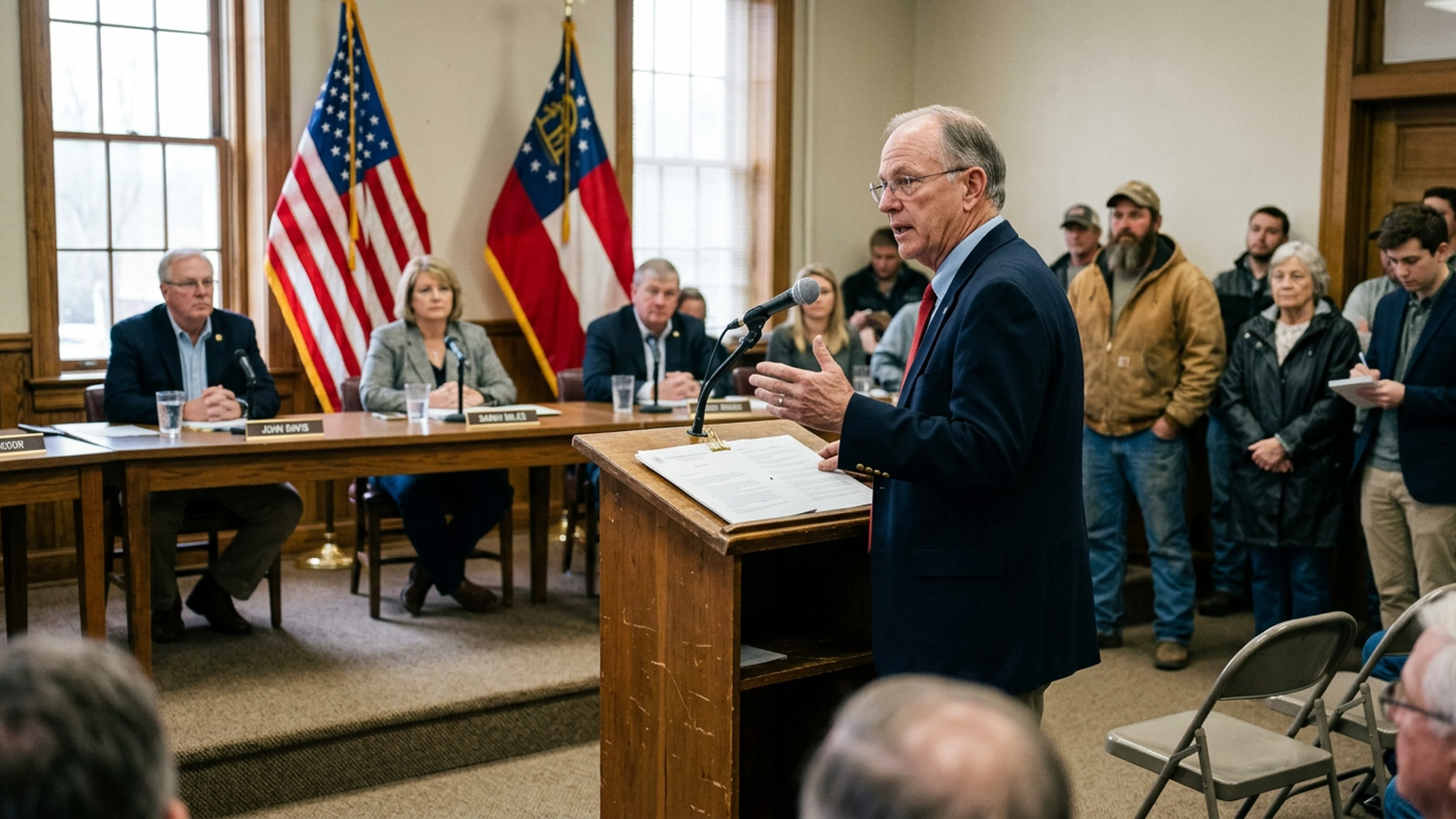
On Wednesday, January 14, 2026, at the regularly scheduled meeting of
the White County Board of Commissioners, held in the upstairs
community room of the White County Historic Courthouse in Cleveland,
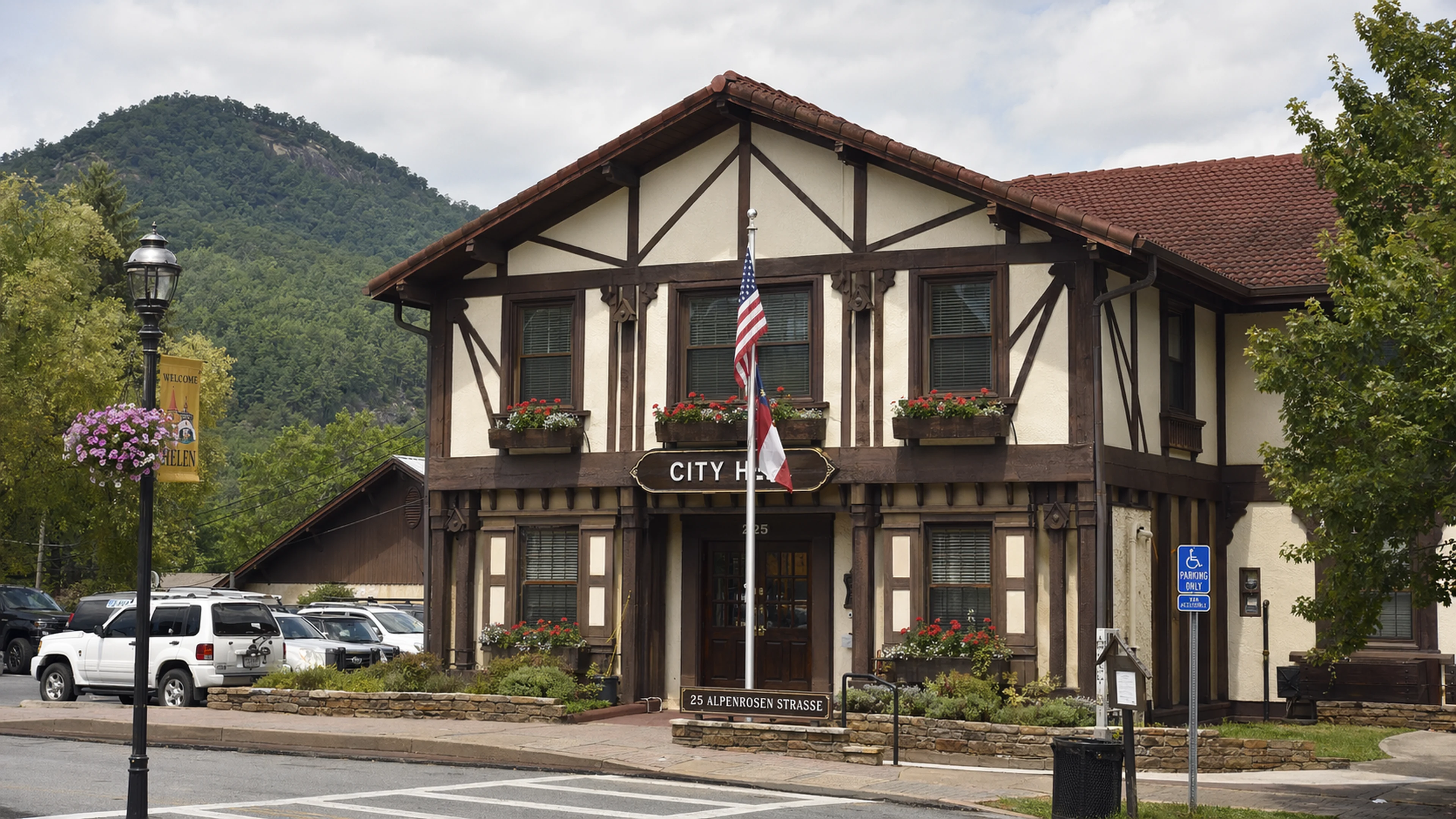
Commissioner Dale Henneman — whose district (District 4) includes
downtown Helen and who has introduced, in calendar year 2026 already,
two prior resolutions of comparable institutional novelty — introduced
Resolution 2026-02, a nineteen-paragraph document modeled in
substance, though not in length, on the Belcastro ordinance.
The full text of Resolution 2026-02, per the version entered into the
county clerk's record, opens:
"WHEREAS the Comune di Belcastro, in the Province of Catanzaro,
Italy, has issued, by mayoral ordinance of December 18, 2025, a
directive to its residents to refrain, so far as is within their
individual power, from contracting serious illness; and WHEREAS
this Board considers the said directive to be a prudent
acknowledgement of the practical constraints on emergency-medical
response in remote settings; and WHEREAS unincorporated White
County, Georgia, while not remote in the absolute sense, is
approximately forty-seven minutes by ambulance from the nearest
Level I Trauma Center in Gainesville, Georgia; NOW, THEREFORE, BE
IT RESOLVED: the White County Board of Commissioners strongly
discourages the residents of unincorporated White County from
contracting serious illness."
The balance of the resolution's nineteen paragraphs elaborated, at
considerable length, on the specific kinds of illness most
"discouraged" (stroke, myocardial infarction, serious communicable
disease, major trauma), and affirmed that "the Board does not intend,
by this resolution, to penalize any individual resident for
contracting any of the discouraged illnesses; the resolution is
hortatory in nature, and the Board remains committed to emergency
response in the ordinary course."
The debate
The resolution was introduced at 7:31 p.m. Commissioner Henneman
spoke in support for approximately four minutes, during which he
described the Belcastro ordinance as "a model of civic candor." He
concluded: "The people of White County are grown adults. They can be
told, in the clearest terms, that the prudent course of action is to
remain well."
Commissioner Reba Kinnison (District 3, Cleveland), who has dissented
on Commissioner Henneman's three most-recent Glockenspiel-related
resolutions, asked from the dais whether Commissioner Henneman had
considered the possibility that the resolution, once entered into the
public record, might generate a degree of popular amusement not
consistent with the Board's institutional dignity.
Commissioner Henneman said: "The Italians have not been amused."
Commissioner Kinnison said: "The Italians have been amused. I have
read three articles."
Commissioner Henneman said: "Those articles are in English."
The public comment period drew seven speakers. Of these, four spoke
against the resolution (citing, variously, the resolution's "unhelpful
tone," its "unnecessary adoption of a foreign-policy posture," and
one speaker's concern that her elderly father, who has a heart
condition, would "take it personally"). Three spoke in favor, though
with qualifications; none enthusiastically.
The vote
At 8:47 p.m. Commissioner Kinnison moved to table Resolution 2026-02
for further study, specifically for "consultation with the White
County Department of Public Health" before any further consideration.
Commissioner Henneman objected that the motion to table was
procedurally unnecessary, given the resolution's purely hortatory
character.
The motion to table carried 3-2. Commissioners Kinnison, Burnside, and
Pettigrew voted in favor; Commissioners Henneman and McVey voted
against.
The resolution has, per the clerk's record, been placed on the agenda
of the Board's February 11 meeting under "Old Business, Item 4(a)."
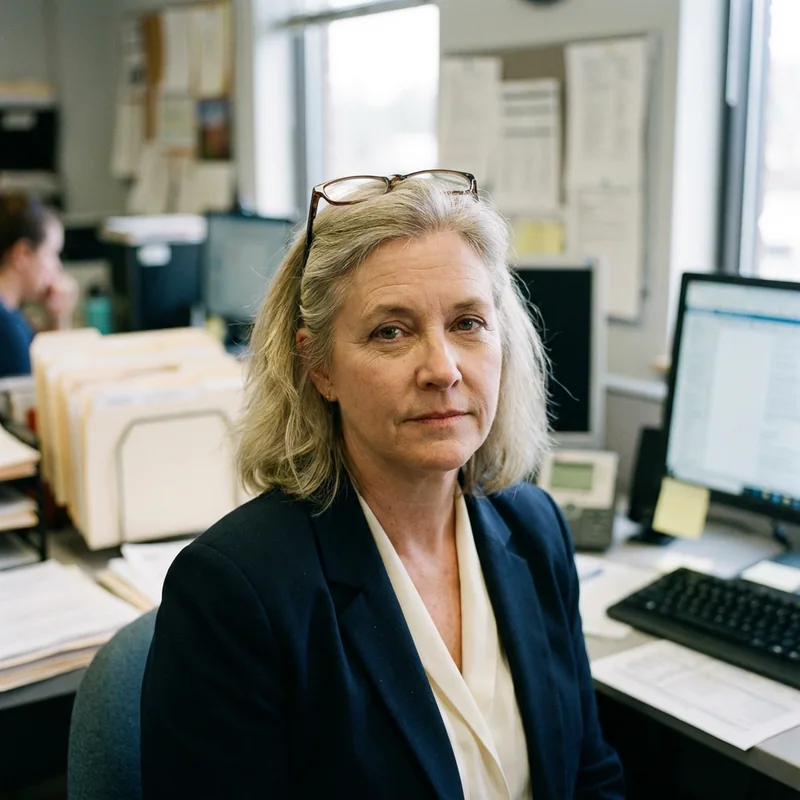
The White County Department of Public Health has not, per its
director Edwina Moakley, been formally consulted. Ms. Moakley, reached
by phone Thursday morning, said: "I am comfortable commenting
informally. Please advise your readers not to get sick. I support
this."



Reader Comments
Leave a comment ↓