
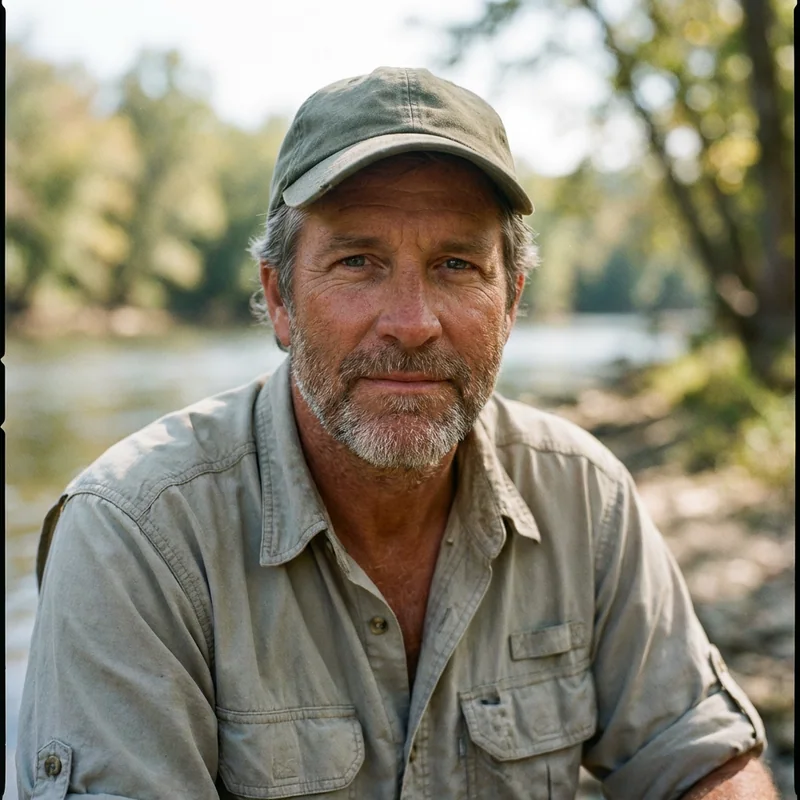
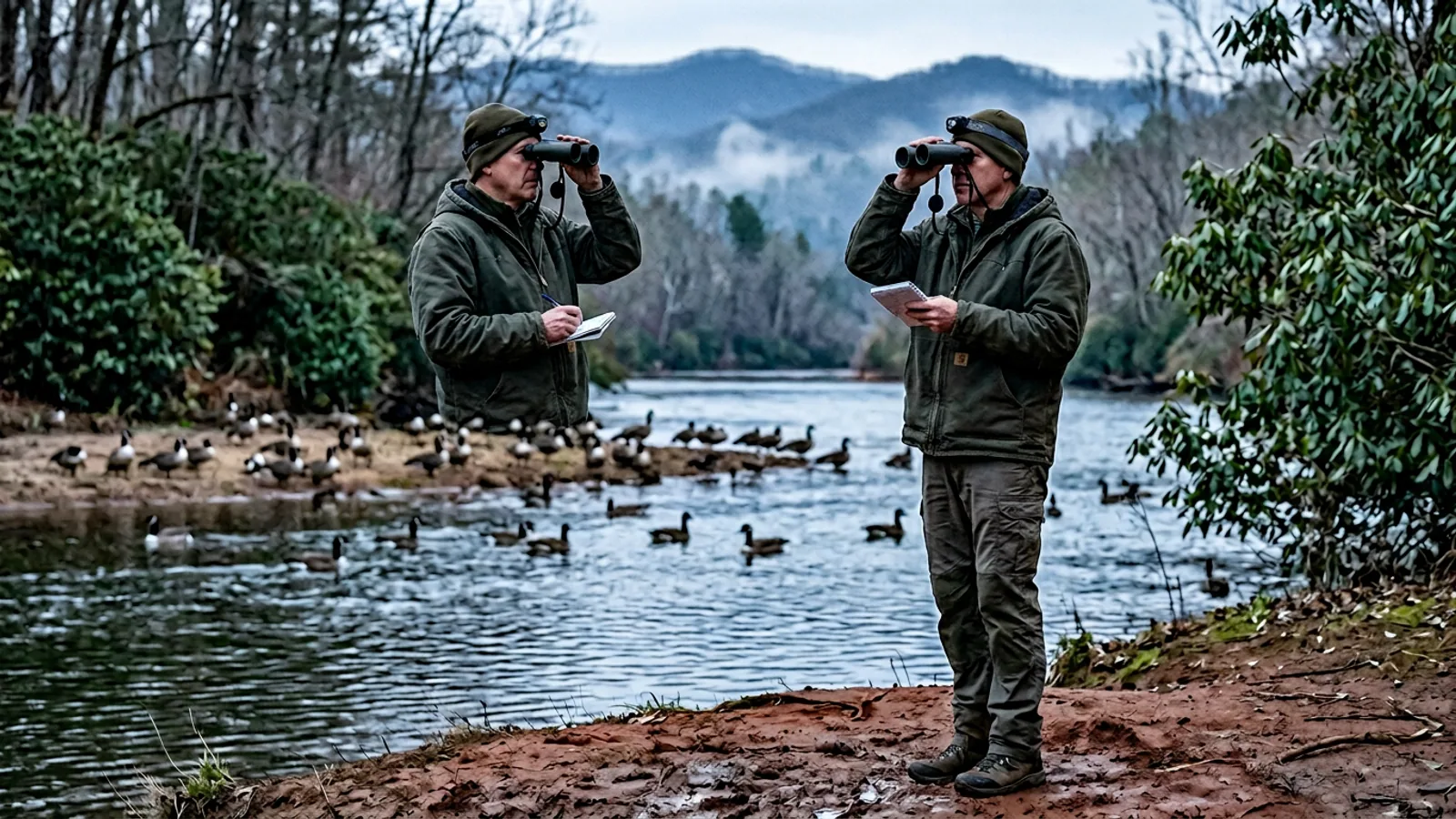
I ran my full-corridor goose count on February 26, starting at 6:47 a.m. from the Robertstown Road bridge and walking south to the Old Sautee Store Road bridge, both banks, stopping at each established observation point to count and record. The count took two hours and fourteen minutes. I had good conditions — overcast, light wind out of the north-northwest at about eight miles per hour, temperature 39°F. The geese were out.
Final count: 314 Canada geese (Branta canadensis) in the downtown Helen river corridor and the adjacent areas I define as the census zone — the Chattahoochee banks, both sides, plus the downtown green spaces, the Festhalle lawn, and the stretch of Edelweiss Strasse between the river and Hauptstrasse where the geese have established what I can only describe as an auxiliary staging area.
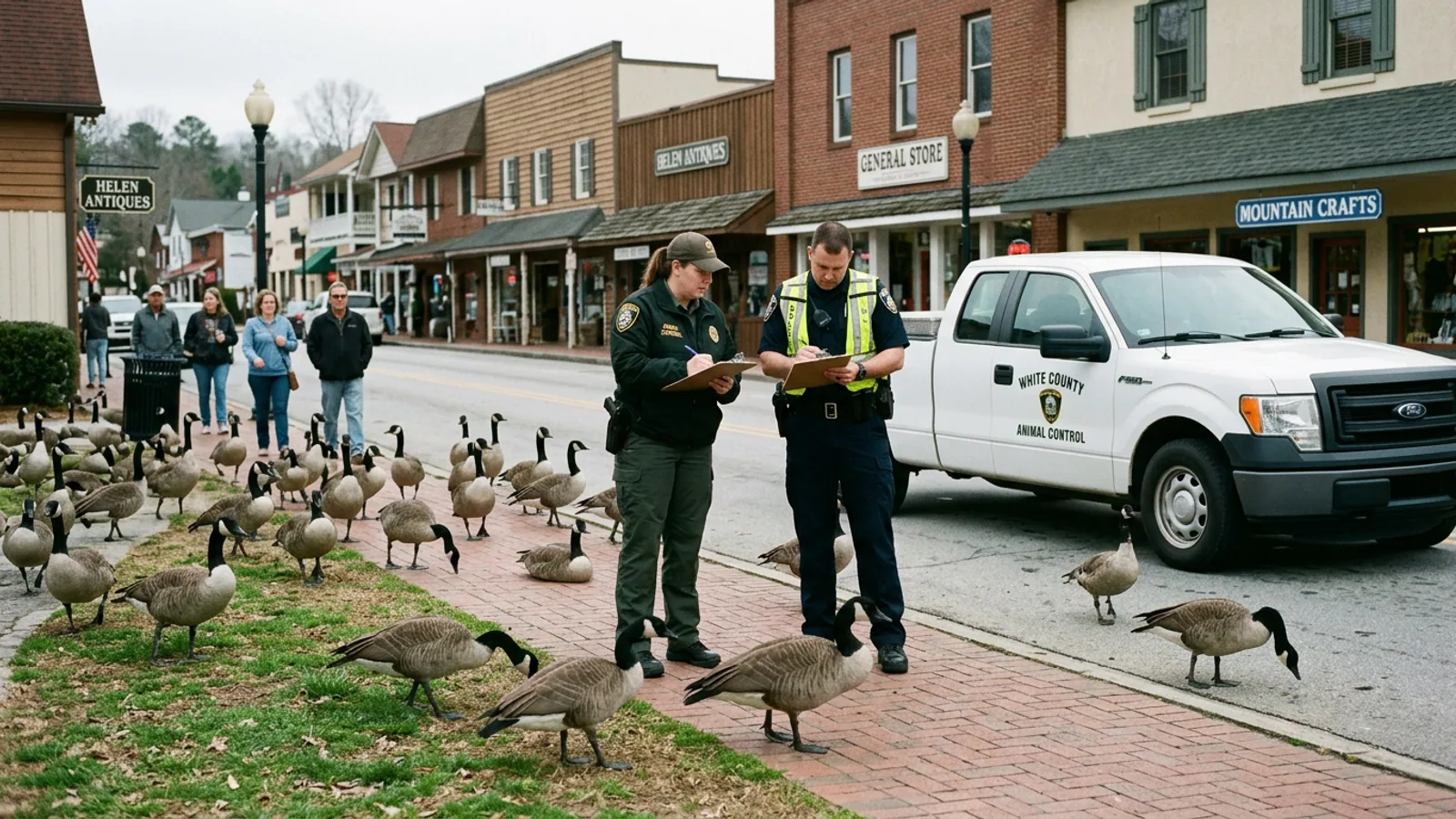
That number — 314 — is from White County Animal Control's 2025–2026 annual wildlife census as well. Animal Control conducted their count on February 14. I conducted mine on February 26. We were within eleven birds of each other. I am going to use 314 as the working figure.
In February 2022, I counted 47.
What My Records Show
I have been counting the Helen geese in February and August — high-winter and late-summer — since 2021. Those are the two counting windows that matter for migration analysis. August tells you how many geese are present before the theoretical fall departure. February tells you how many stayed through winter. The gap between the two numbers — birds present in August minus birds present in the following February — is what I've been watching.
Here is the record:
| Year | August Count | Following February Count | Winter Retention (%) |
|---|---|---|---|
| 2021 | 68 | 41 | 60% |
| 2022 | 94 | 47 | 50% |
| 2023 | 158 | 119 | 75% |
| 2024 | 241 | 207 | 86% |
| 2025 | 318 | 314 | 99% |
The trend in the retention column is what I want you to notice. In 2021, 40 percent of the Helen geese left for winter. By 2025, 1 percent left. One percent is, within counting error, zero percent. The Helen geese are no longer migrating. They are, as a population, residents.
This is not unusual in the broader literature. The U.S. Fish & Wildlife Service has documented the growth of so-called resident Canada goose populations throughout the mid-Atlantic and southeastern United States since the 1980s, when the Giant subspecies (Branta canadensis maxima) was re-established through a deliberate federal restoration program after near-extinction. The Giant subspecies, as it turns out, does not have strong migratory instincts to begin with. Pair it with a reliable food source, mild winters, and the absence of significant predation pressure, and you get a population that simply does not leave.
Helen, Georgia, is a reliable food source. Helen is also, for a goose, almost entirely free of predation pressure.
The Biological Explanation, As I Understand It
Canada geese migrate because of food and temperature. In their historical northern nesting range, winter means frozen water and buried food. Migration was not a preference — it was survival. But the logic breaks down when you take away the conditions that made migration necessary.
Helen has open water year-round. The Chattahoochee, even in its coldest February weeks, does not freeze over. The downtown green spaces — the Festhalle lawn, the grass along Edelweiss Strasse, the strip behind the Helen Welcome Center — provide foraging ground for twelve months. The geese here are primarily grazers: cool-season grasses, leftover grain, and, as I will document below, the accumulated detritus of the tourist economy.
Temperature is the second driver and the second thing that has changed. The five-year average February low in Helen, per the NWS Peachtree City data archive, is 28.4°F for the 2010–2019 period and 31.2°F for 2020–2025. That is a 2.8°F shift in the average February overnight low over ten years. Canada geese are not fragile in cold weather — they have substantial down insulation — but milder winters reduce the metabolic cost of staying and reduce the cost-benefit math in favor of migration. At some temperature, staying becomes cheaper than leaving. Helen seems to have crossed that threshold.
The Georgia DNR's waterfowl program has been tracking the statewide resident goose population for years. Their materials are clear on the general dynamic: resident flocks establish themselves first at urban parks and golf courses where human activity provides supplemental food and where hunting pressure is absent. Once established, they grow quickly. Canada geese mate for life, raise one clutch per year, and have low adult mortality in the absence of predators. A resident flock of 47 birds in 2022, growing at the rate I've observed here, gets you to 314 by 2026 on math alone.
The Funnel Cake Factor
I want to be precise about this because I don't want to overstate it. The supplemental feeding that happens in downtown Helen is not organized. Nobody is throwing bread at the geese as a deliberate wildlife-management strategy. What is happening is that Helen is a tourist economy built around the outdoor consumption of food, and a non-trivial fraction of that food ends up in the vicinity of the geese.
I spent two Saturdays in October doing informal observation from a bench near the Festhalle to try to quantify this. My methodology was simple: I counted identifiable food items that reached ground level within fifty yards of me, and I noted whether geese investigated them.
In four hours on October 11, I counted 31 dropped or discarded food items — funnel cake fragments, soft pretzel ends, wurst casings, one full half of a bratwurst that a child refused, a bag of kettle corn whose bottom seam had failed. Twenty-two of those items were investigated by at least one goose within two minutes of hitting the ground. Of the 22 investigations, 18 resulted in consumption.
This is not why the geese are here. The geese are here because the river doesn't freeze and the grass stays green. But the funnel cake is why the geese congregate specifically on the downtown green spaces rather than distributing more evenly along the upper Chattahoochee corridor where food would be scarcer and competition lower. The food reinforces the specific geography.
The White County Animal Control census noted the same pattern. Of the 314 birds in the February count, 247 were found within the downtown commercial district and the adjacent river banks. The remaining 67 were distributed upstream between the downtown and the Unicoi State Park boundary. The downtown concentration ratio has been increasing each year.
What This Means For The Population
Canada geese live 10 to 25 years in the wild. The Helen flock's oldest resident birds — I have been tracking a small number of individually identifiable birds based on leg-band markings and distinctive color variations since 2022 — are at a minimum four years old and likely older. They are not going to develop migration instincts they don't currently have. Their offspring, hatched and raised in Helen, have never migrated and will not migrate unless conditions change dramatically.
The DNR's management guidance for resident Canada geese in Georgia includes several tools: egg oiling (which prevents hatching without harming adults), habitat modification, and, in appropriate contexts, hunting under permits. All of those tools require active management decisions by the relevant property owners and agencies.
Nobody appears to be actively managing the Helen flock right now. I have spoken to the White County animal-control officer who ran the February census. She confirmed that the county's current position is monitoring, not intervention.
"Three hundred and fourteen is a big number," she said, in our conversation last week. "We're watching it."
She asked me not to use her name. I'll respect that.
The Georgia DNR's position, as stated in their public materials, is that resident Canada geose management is primarily a local responsibility. The relevant authority in the Helen case is split between the City of Helen, White County, and the National Forest Service for the stretches above the city boundary. Getting three agencies to coordinate on a goose-management strategy is, historically, not a fast process.
The Practical Situation On The Ground
I want to be direct about what 314 geese in a two-mile river corridor looks like in practice, because some of the discussion I have heard around town conflates the wildlife-biology question with the cleanup question, and those are not the same question.
A Canada goose produces approximately 1.5 pounds of feces per day. At 314 birds, that is approximately 471 pounds of goose feces per day in the downtown Helen corridor and adjacent green spaces. That is a real sanitation figure. It is not my place to tell Helen how to manage its downtown green space, but it is my place to put the number in the paper.
The feces load is highest on the Festhalle lawn, the Welcome Center green, and the two grass strips along Edelweiss Strasse between the river and Hauptstrasse. Those are the areas with highest goose density. On a dry week, most of it dries and disperses quickly. On a wet week, it does not.
The Helen PD call log for the week of April 5–11 included thirteen goose-related calls. For context: the five-year rolling average for the same week is fourteen-point-one. We are at, or slightly below, the long-term goose-incident rate, which is a function of the fact that both the geese and the residents have largely adapted their behavior to the other's presence. The geese know which streets are busiest and time their road crossings accordingly. The residents know which parts of the Festhalle lawn to avoid.
This is not a crisis. It is a census result.
The Count Method, For Completeness
I use a clicker counter. I walk both banks sequentially — east bank south, then west bank north — so that I do not count birds that cross the river between passes. At high-density gathering points, I use photographs and count from the image, which reduces the fast-moving-bird error that accumulates with a purely visual count at close range. I cross-check against the USGS flow data to note whether river stage affects bank usage — at high flow, geese move off the lower banks and concentrate on the Festhalle lawn and the upstream beaches, which inflates the ground-based count at those locations while deflating the riverside count.
The February 26 count was conducted at 1.74 feet stage and 89 cfs at the USGS gauge — normal late-February low-flow conditions, well below the bank-effect threshold. The distribution I recorded should be considered representative of the population's normal late-winter spatial pattern.
My next count will be in August 2026. If the retention rate holds, I expect somewhere between 290 and 330 birds in the winter corridor at that point. Whether the population grows further from there depends largely on nesting success this spring.
I'll report the nesting count in May.
— Buck Pendergrass
Reader Comments
Leave a comment ↓