

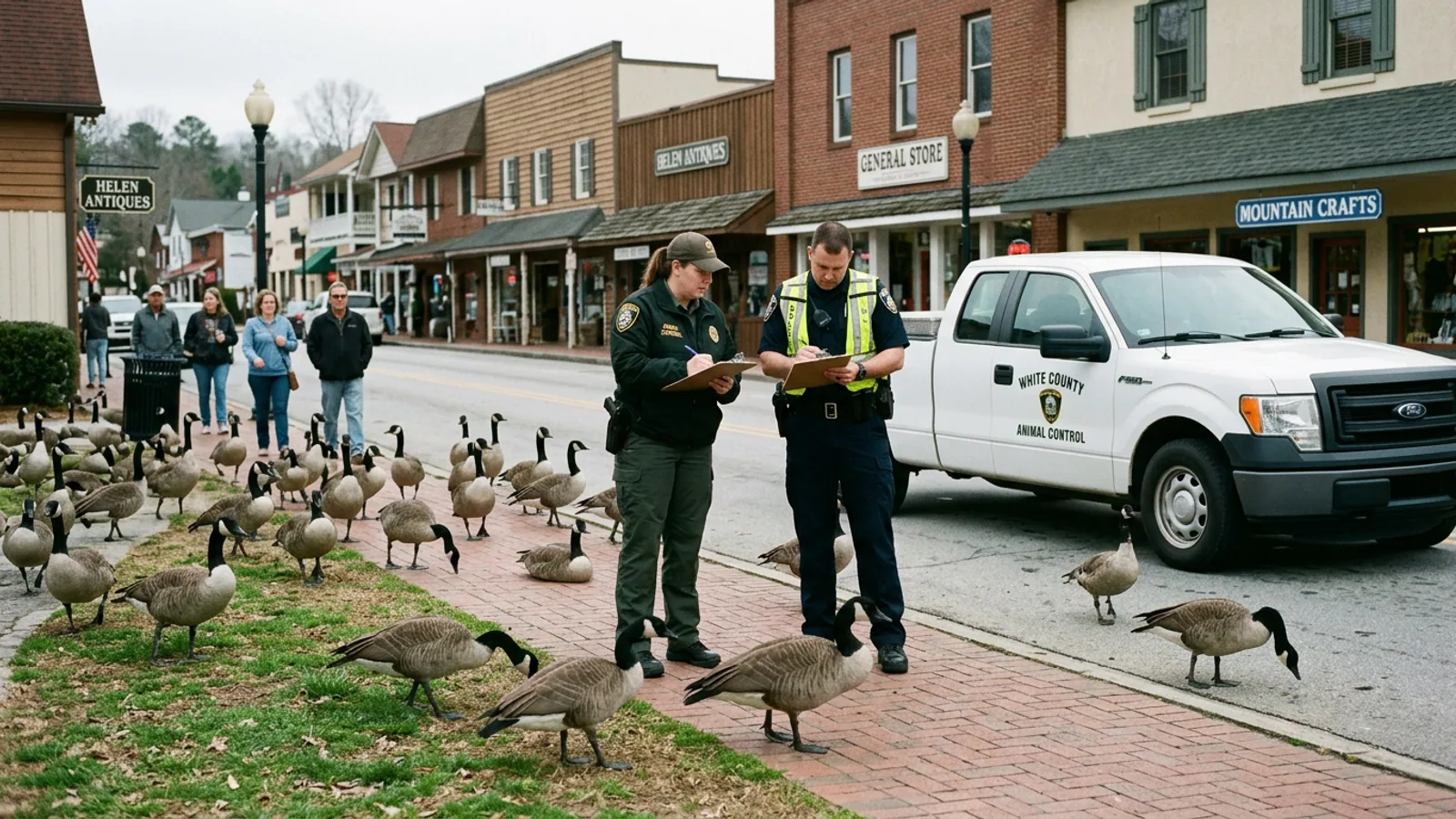
White County Animal Control released its 2026 Urban Waterfowl Census Report on February 28, four days after the completion of the three-day ground count. The report's headline figure: 314 resident Canada geese counted within the census boundary, which covers the City of Helen's downtown commercial area and the adjacent Chattahoochee River Walk corridor from the Edelweiss Strasse footbridge south to the Robertstown Road bridge. The 2026 total is up from 293 in 2025 and 271 in 2024.
Of the 314 counted geese, 211 meet the county's operational definition of a "full-time Helen goose": an individual bird primarily resident within the downtown commercial zone and documented through passive observation on more than 200 days in the prior calendar year. The full-time figure, 211, is up from 203 in 2025 -- a 4-percent increase year over year, and an increase of 39 birds from the 172 counted as full-time residents in 2022, when the Animal Control division first began applying the distinction.
"They're not all here every day," said Pamela Dukes, White County Animal Control's supervisor and the census director, in an interview Tuesday. "But the ones we classify as full-time -- they're here almost every day. They have established territories. They know the street grid better than most visitors do."
How the Count Works
The census is conducted annually in February, during what Dukes described as "the low-tourism period," when foot traffic in the downtown corridor is reduced enough that geese in the counted area are more likely to be year-round residents than migratory birds passing through. The count takes place over three consecutive days -- this year, February 13, 14, and 15 -- with observers on foot covering the census boundary in two-hour shifts, beginning at dawn.
The 2026 count involved 14 volunteer observers, coordinated by Animal Control, plus four Helen Police Department officers who participated on an informal basis during patrols. Observers used a standardized form developed by Dukes's office in 2022 that records bird count, location, flock grouping, approximate age (adult versus juvenile), and any notable behavior. Observers are instructed not to approach birds, not to feed birds, and not to disturb birds that have claimed fixed positions -- a category the form refers to, without apparent irony, as "entrenched."
Total observer hours for the 2026 count were 38. The three-day total count was conducted across 27 distinct observation zones within the census boundary.
Where the Geese Are
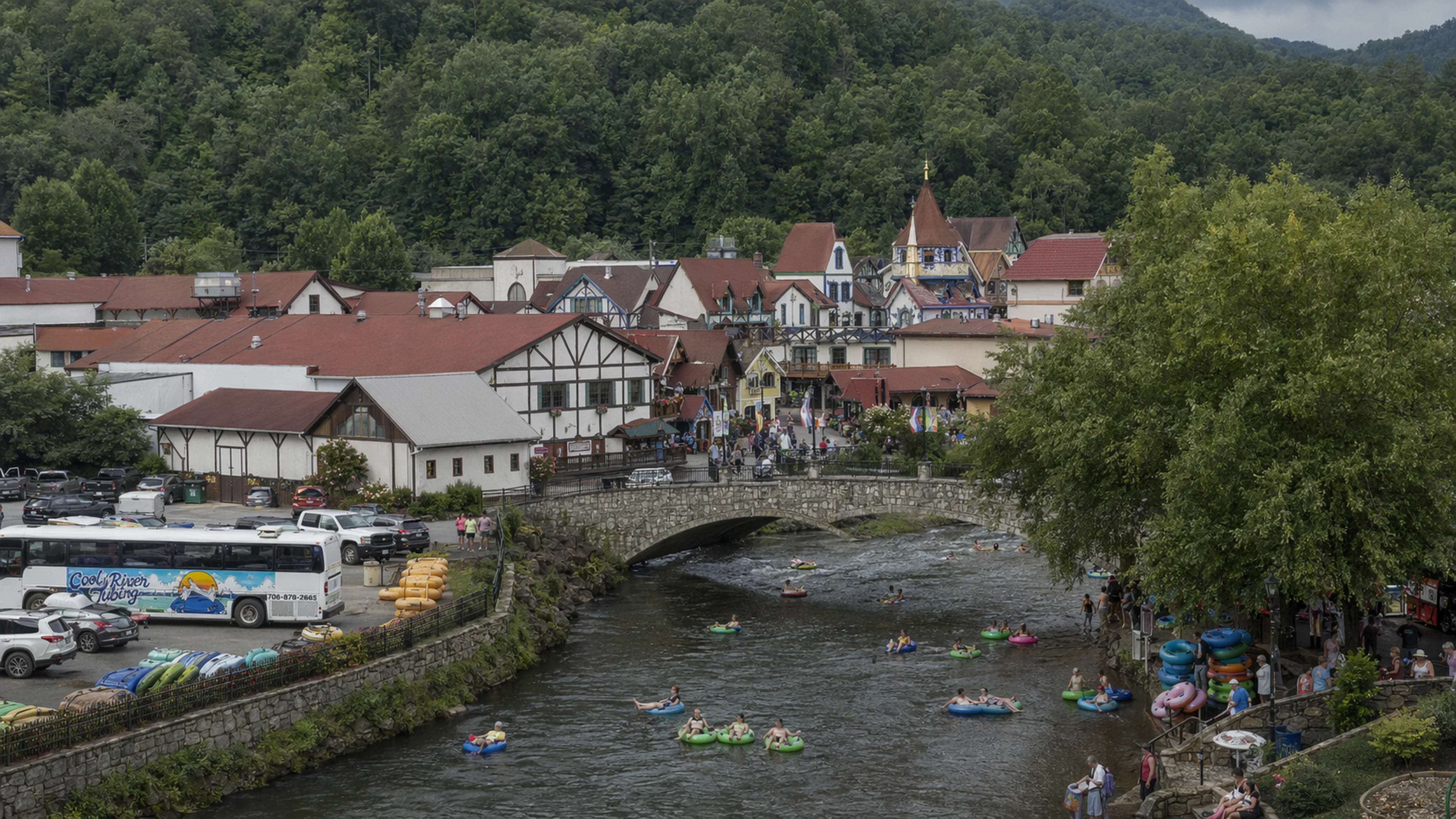
The single highest-count zone in 2026 was the Chattahoochee River Walk eastern embankment, from the Helendorf River Inn put-in to the Edelweiss Strasse footbridge. Observers counted 34 individual geese across the three-day period in this zone -- a figure that reflects multiple observations of some birds and that the census report notes "likely includes the same individuals counted on multiple days."
The second-highest zone was the pedestrian area at the Bruckenstrasse-Edelweiss Strasse intersection, with 28 counted. Third was the open-air section of the Festhalle grounds with 22.
Two observation zones within the census boundary recorded zero geese across all three count days: a parking structure on Hauptstrasse and the interior courtyard of a Bruckenstrasse hotel that uses a gravel surface Dukes described as "apparently inhospitable."
"They have preferences," Dukes said. "Grass, water adjacency, pedestrian foot traffic. They like the pedestrian foot traffic. I don't fully understand that one, but it's consistent."
The Full-Time Designation
The "full-time Helen goose" classification emerged from a 2021 conversation between Animal Control and the Helen Police Department, after the Department's call logs showed enough year-round goose-related dispatch activity that Dukes and then-Department liaison Officer Ricky Farr began trying to determine whether the same individual birds were generating repeat calls.
The answer, confirmed through ear-tag and leg-band tracking in a pilot program that ran from 2021 to 2023, was substantially yes. Of the 18 birds tagged during the pilot program, 14 were still identified within the census boundary at least 200 days per year as of the 2023 count.
The pilot program ended when the leg-band application process required a state wildlife permitting review that Animal Control determined was not worth pursuing for an informational study. The department retired the physical tagging and shifted to observational identification of known birds using distinctive physical features.
"You learn the birds," said Thomas Ingram, a retired White County schoolteacher who has volunteered as a census observer for four consecutive years. "There's a big male who holds the corner at Bruckenstrasse and Edelweiss -- east side, near the flower planter. He's been in every count I've done. I recognize him. I've named him, but Animal Control doesn't want me to put that in the report."
Dukes confirmed that observers occasionally name individual birds but that the census documentation uses identifier codes rather than names. She declined to share Ingram's name for the Bruckenstrasse-Edelweiss male.
The 103 Non-Full-Time Geese
Of the 314 total geese counted in 2026, the remaining 103 are classified as seasonal or migratory residents -- birds present during the census period but not meeting the 200-day-per-year threshold for full-time designation. Dukes said this population includes birds that use the Chattahoochee corridor as a winter staging area and birds that may split their annual presence between the Helen area and other sites in the Chattahoochee watershed.
"The 103 are here in February," Dukes said. "Whether they're here in July is a different question."
The 2026 census report includes, for the first time, a supplemental section on juvenile birds -- geese hatched in the prior calendar year that have joined the adult population within the census boundary. Eleven such birds were identified in 2026, based on plumage markers consistent with first-year adults. Dukes said it is too early to project how many of the 11 will establish full-time resident status by the 2027 count.
The Department's Perspective
The Helen Police Department's involvement in the census is informal and non-mandatory. Officers participate during their regular patrols by relaying observations to Animal Control. The Department does not maintain a separate goose-tracking function, but its call logs serve as a secondary data source for the census report: the report's appendix includes a table of goose-related dispatch calls from the prior calendar year, organized by location, which Animal Control uses to calibrate the census zones.
Per the table in the 2026 report, the Department logged 487 goose-related calls in calendar year 2025. The top five call locations by volume were, in order: Bruckenstrasse-Edelweiss intersection (89 calls); Chattahoochee River Walk eastern embankment (74 calls); Festhalle grounds (61 calls); Hauptstrasse pedestrian crossing at the central Bruckenstrasse intersection (58 calls); and the Helendorf River Inn parking area (44 calls).
"The call data and the census count are consistent with each other," Dukes said. "The geese are where the geese are. We count them. They don't change their behavior for the count."
The 2027 census is scheduled for the second week of February.
-- Connor McAllister
Reader Comments
Leave a comment ↓