
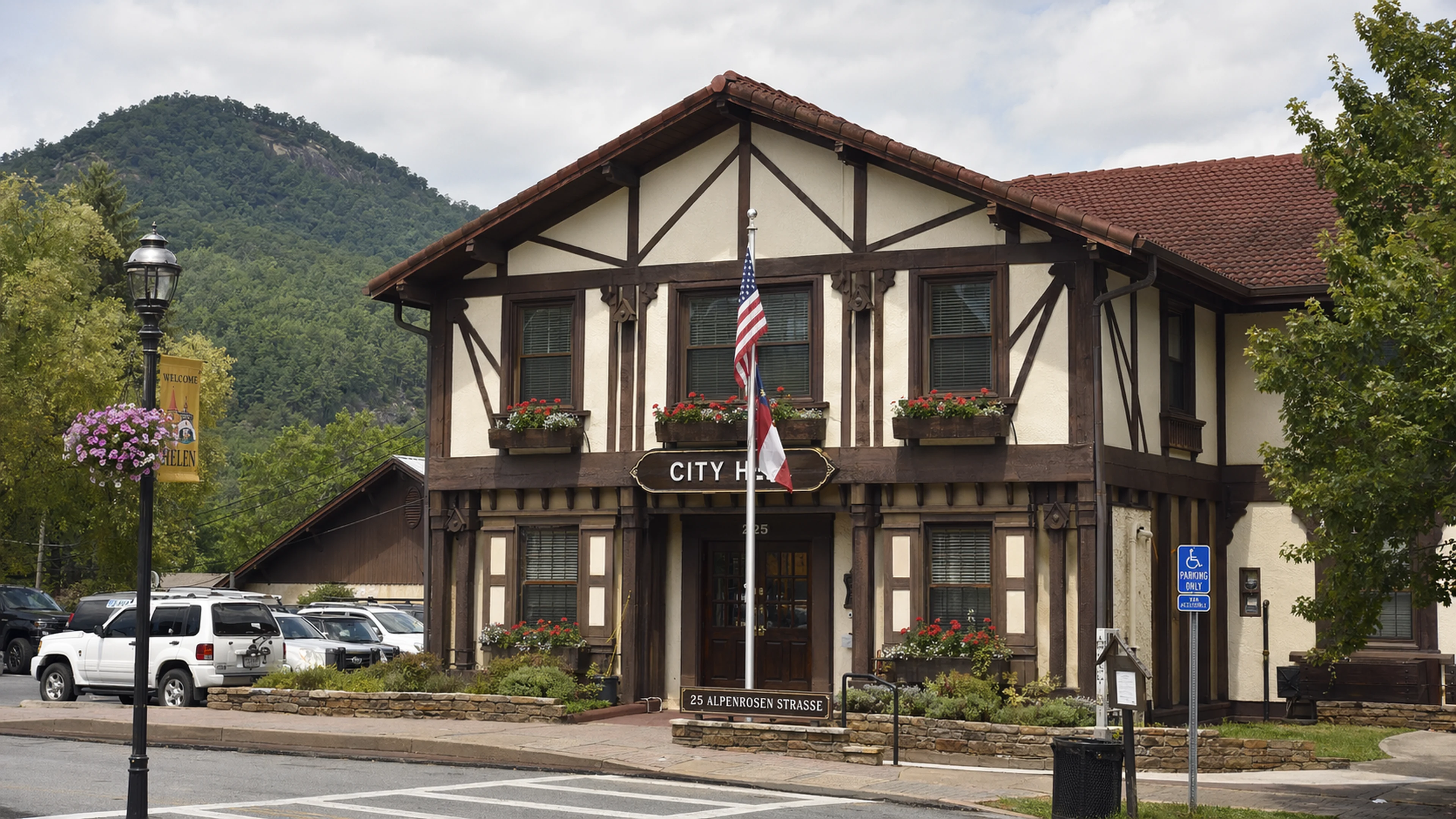
The White County Board of Commissioners, at its regularly scheduled Tuesday meeting in the upstairs community room of the White County Historic Courthouse, voted 4-1 to adopt Resolution 2026-41. The resolution, a 2,300-word document drafted by County Commissioner Dale Henneman and co-sponsored by three of his four colleagues, formally pegs the operating schedule of the Helen Downtown Glockenspiel to the published meeting calendar of the Federal Open Market Committee of the United States Federal Reserve System.
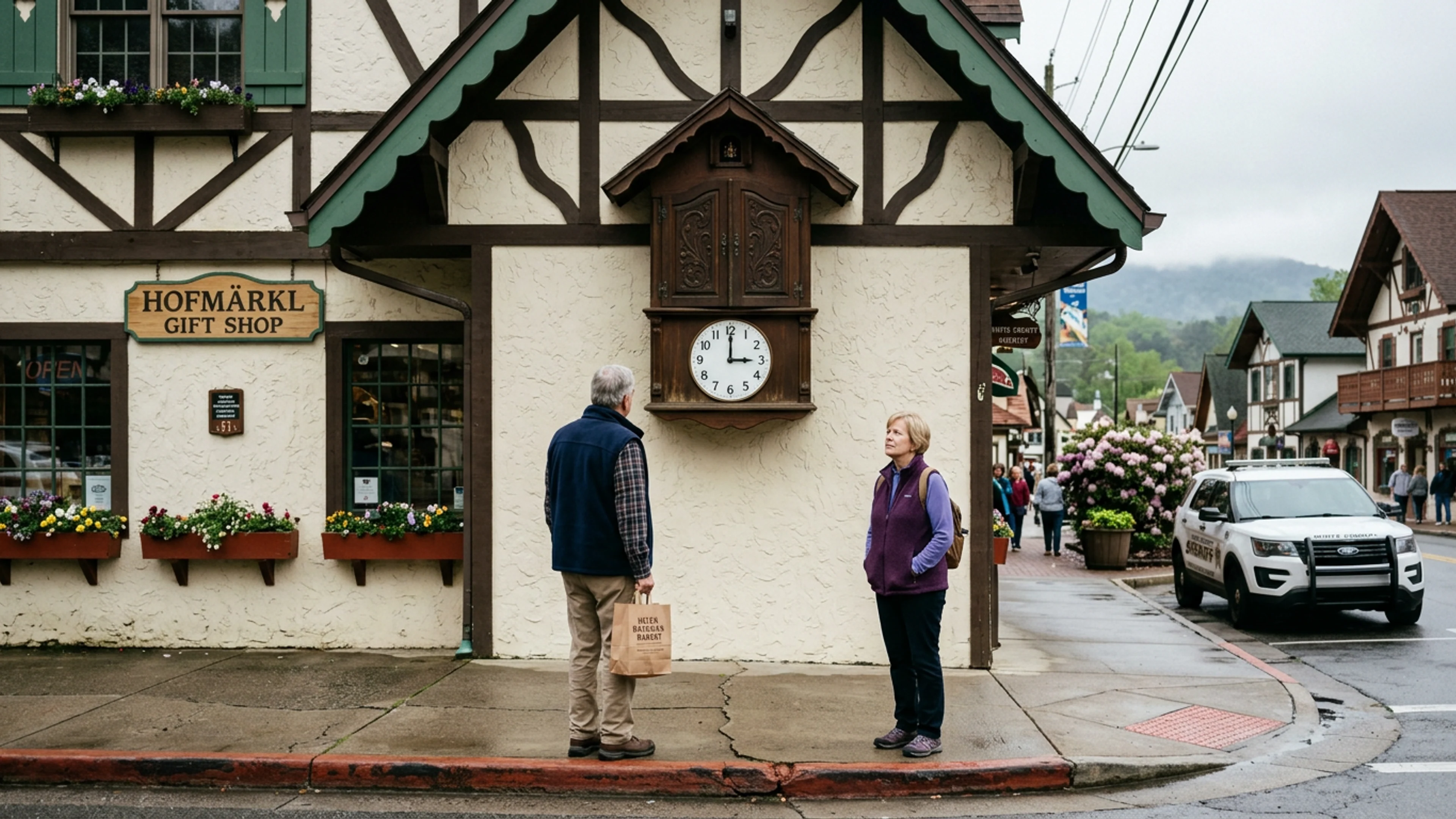
Under the resolution, the Glockenspiel — which has, since its 1977 installation on the south face of the Helen Chamber of Commerce building at 726 Bruckenstrasse, chimed on the hour between 10:00 a.m. and 6:00 p.m. daily, weather permitting — will, effective April 19, 2026, chime only within a 36-hour window following the conclusion of any FOMC rate decision. The FOMC meets eight times annually. The resolution therefore reduces the number of authorized Glockenspiel chimes per calendar year from approximately 2,900 to approximately 288, a reduction of 90.1%.
The sole dissenting vote was cast by Commissioner Reba Kinnison (District 3, Cleveland), who described the resolution from the dais as "procedurally sound but substantively baffling." She did not elaborate.
The motion
Commissioner Henneman opened the item at 7:47 p.m. by reading, without editorial comment, a four-paragraph preamble noting that the Federal Reserve's interest-rate policy "constitutes the single most consequential ongoing action of American civic life," and that "the Helen Downtown Glockenspiel, as the region's most visible public clock, bears a civic responsibility to reflect the cadence of national monetary deliberation." He then moved adoption. Commissioner Burnside seconded.
The public comment period drew 14 speakers. Their occupations, as self-reported at the podium microphone, included four retirees, three small-business owners (two of whom own businesses within audible range of the Glockenspiel), two substitute teachers, one "researcher," one "just a concerned citizen," one horologist (the only speaker to oppose the measure on technical grounds; his objections concerned the clock's escapement mechanism, not its schedule), one person who identified themselves only as "a neighbor," and one who did not state an occupation. None identified themselves as an economist. The one speaker who referenced the Federal Reserve by name pronounced it "the Federal Preserve."
Implementation
County Manager Wyatt Coombs, speaking from the staff table, informed the board that the change will be implemented by Helen Chamber of Commerce maintenance staff — not county staff — via a software update to the clock's programmable chime controller, a 2004 Seth Thomas retrofit. The update will be performed Friday between 2:00 and 4:00 a.m. The Chamber has not yet been consulted about this.
The next FOMC meeting is scheduled for April 28-29, 2026. The Glockenspiel will therefore be silent for a continuous period of approximately 240 hours — from Friday morning until the afternoon of April 29 — the longest continuous silence in its 48-year operating history.
A second item on the agenda, Resolution 2026-42, proposing that the Glockenspiel's 6:00 p.m. chime be additionally pegged to the closing print of the ICE Brent crude futures contract, was tabled for further study. Commissioner Kinnison, before the tabling motion, noted for the record that Brent closes at 11:30 a.m. Eastern, which would place the chime squarely in the middle of the morning. She did not vote on the tabling motion. She was observed, on the chamber video, to put her head in her hands.
Reaction
Reached by phone Wednesday morning, Helen Chamber of Commerce Executive Director Willa Mackey said the Chamber had "not been briefed" on the vote. Informed of the resolution's content, Ms. Mackey paused for approximately nine seconds. She then said: "The Glockenspiel is a cultural asset of the Helen tourism economy. I would need to review the resolution before commenting further."
She was then asked whether the Chamber, as the building's owner, intended to comply with the county's instructions regarding a clock on its own facade. Ms. Mackey paused for an additional period of approximately six seconds. She then said: "I would need to review the resolution before commenting further."
Local business owners contacted for comment were, in aggregate, unsure what had happened. Gunter Maier, operator of Hofer's of Helen and owner of the property immediately adjacent to the Glockenspiel, said he had "assumed the clock was broken" when it did not chime at 10:00 a.m. Wednesday. Informed that the silence was policy, he said he would "need to think about this over a beer."
Dr. Linus Parks, an assistant professor of economics at the University of North Georgia's Dahlonega campus and the only economist this publication was able to reach on short notice, said the resolution was "not technically wrong in any specific sense" but that he was "unable to construct a policy rationale." Asked whether an hourly clock could be meaningfully pegged to an eight-times-yearly policy schedule, Dr. Parks said: "No."
The Glockenspiel was silent at press time.


Reader Comments
Leave a comment ↓