
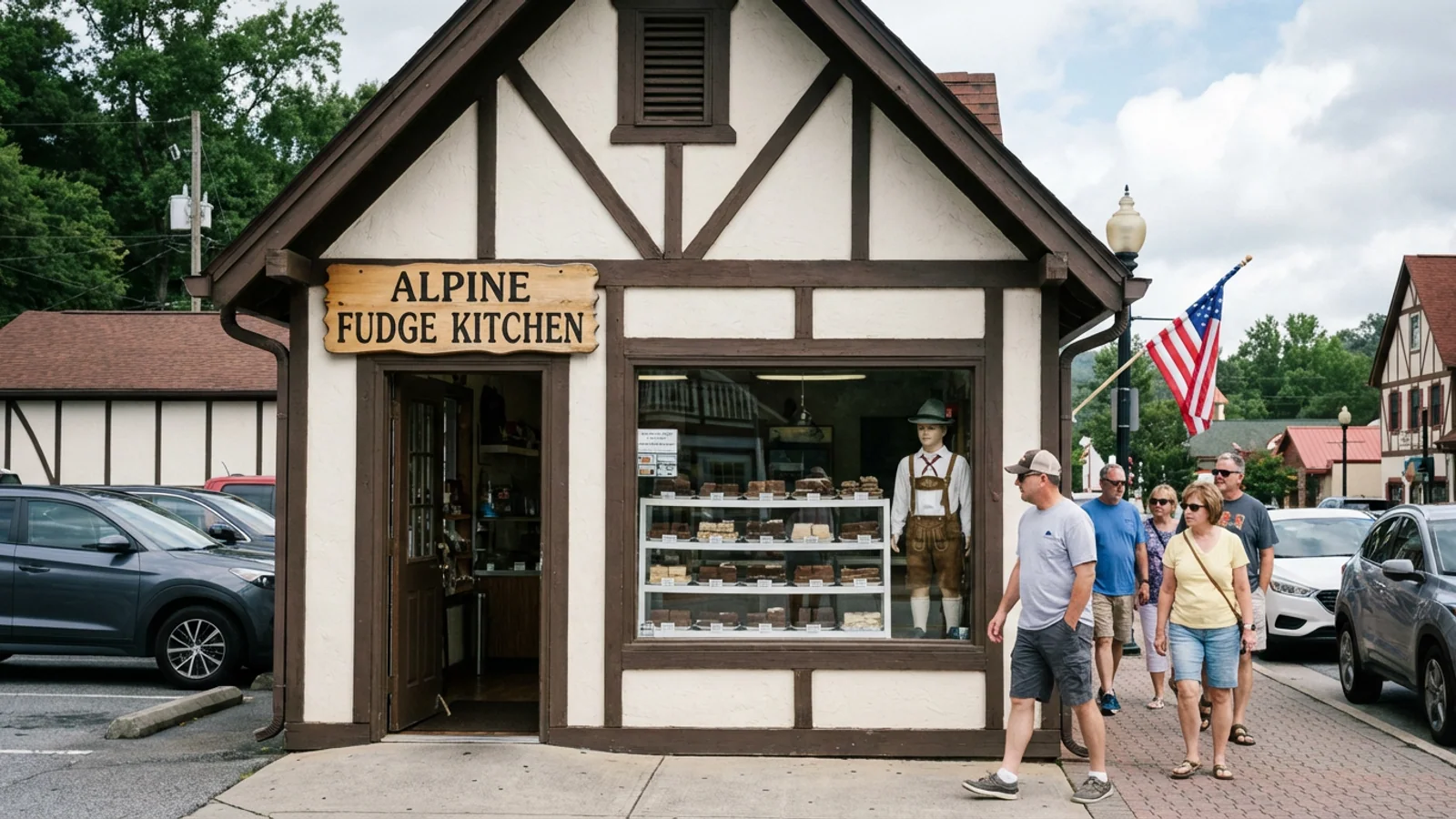
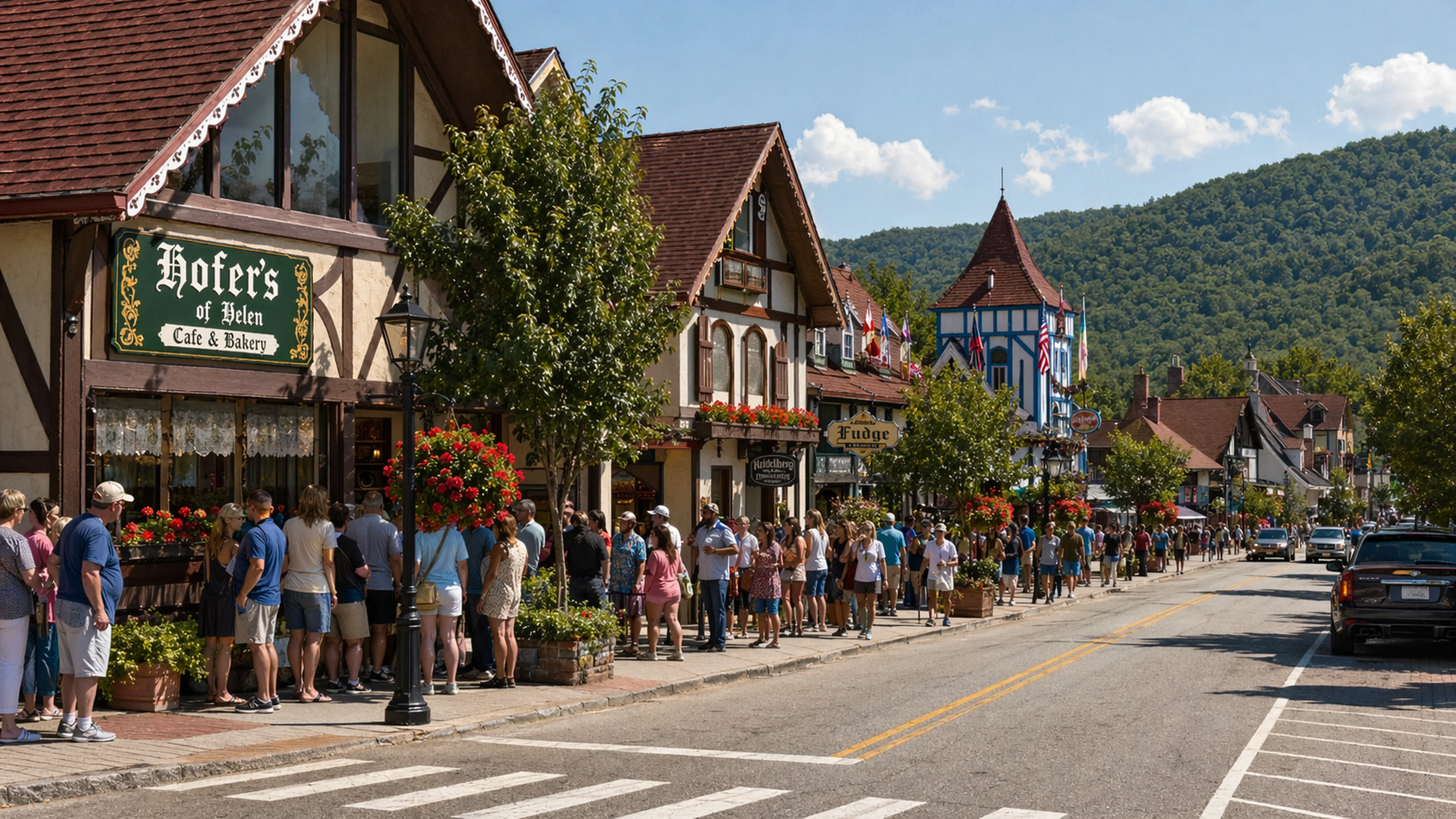
The Alpine Fudge Kitchen at 7225 South Main Street is one of seven Helen-downtown fudge shops. It has been in continuous operation since December 1978. It is owned, as of its most recent business-license renewal (February 2026, on file at the White County Clerk's office) by Edith and Frank Grau, ages 66 and 71 respectively, who took over the business from Edith's parents in 1994.
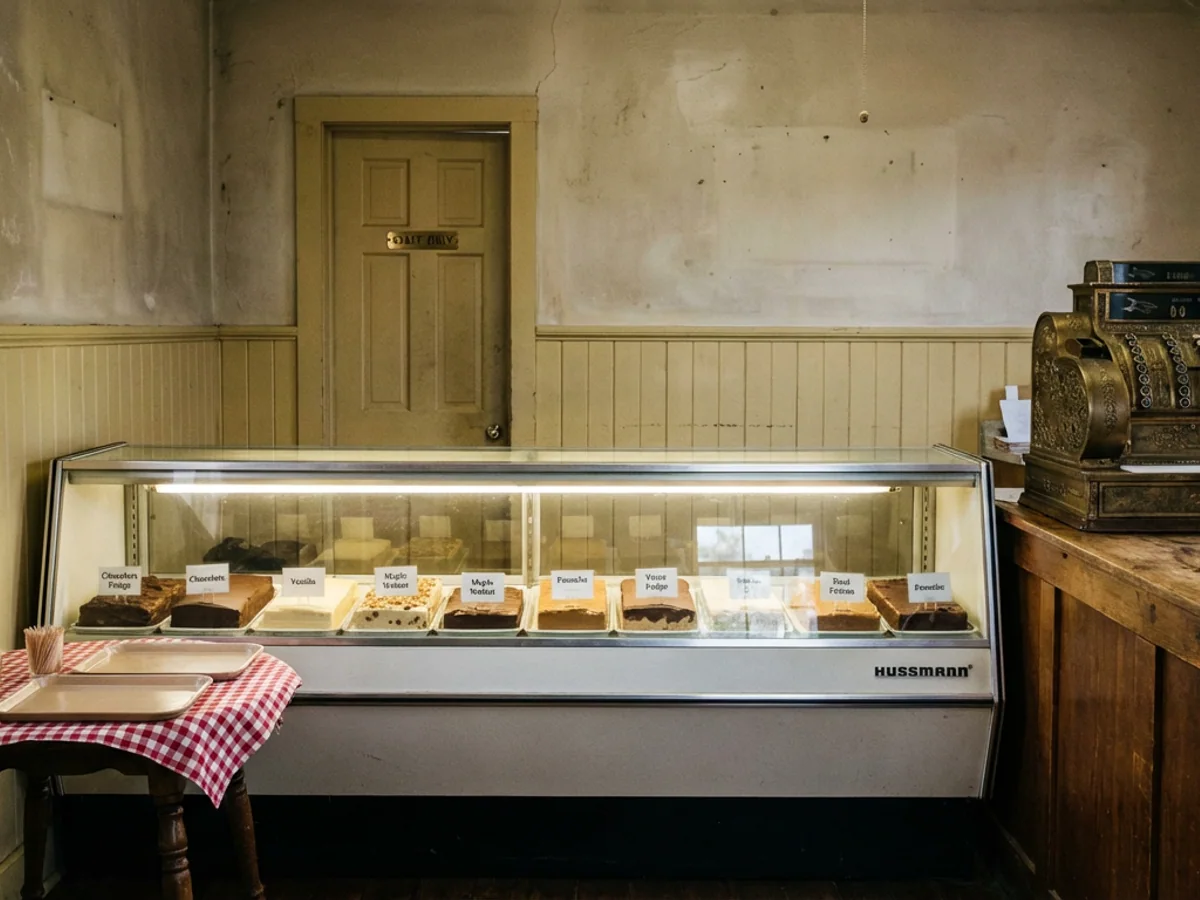
The Alpine Fudge Kitchen's public-facing storefront is 840 square feet. The storefront contains a display case (eleven varieties of fudge, plus four seasonal rotations), a vintage brass cash register, a small table with samples, and an employee workstation behind the display case where the day's fudge is cut and packaged.
Behind the employee workstation, in the rear wall, there is a door.
The door is painted the same pale-yellow wainscot paneling as the rest of the rear wall. The door has a small brass sign, engraved in standard serif block letters, that reads STAFF ONLY. I have, in my three previous reporting visits to the Alpine Fudge Kitchen, observed the STAFF ONLY door but paid it no particular attention. It is, on the face of it, a STAFF ONLY door.
Four weeks ago, while interviewing Edith Grau about the 2026 festival-season outlook, I asked her, conversationally, what was behind the door.
Edith said: "That is the other store."
I said: "The other store?"
Edith said: "The store in the back."
I said: "Your store has a store in the back?"
Edith said: "Yes. It has been there since 1979. You can see it if you like."
The Hallway
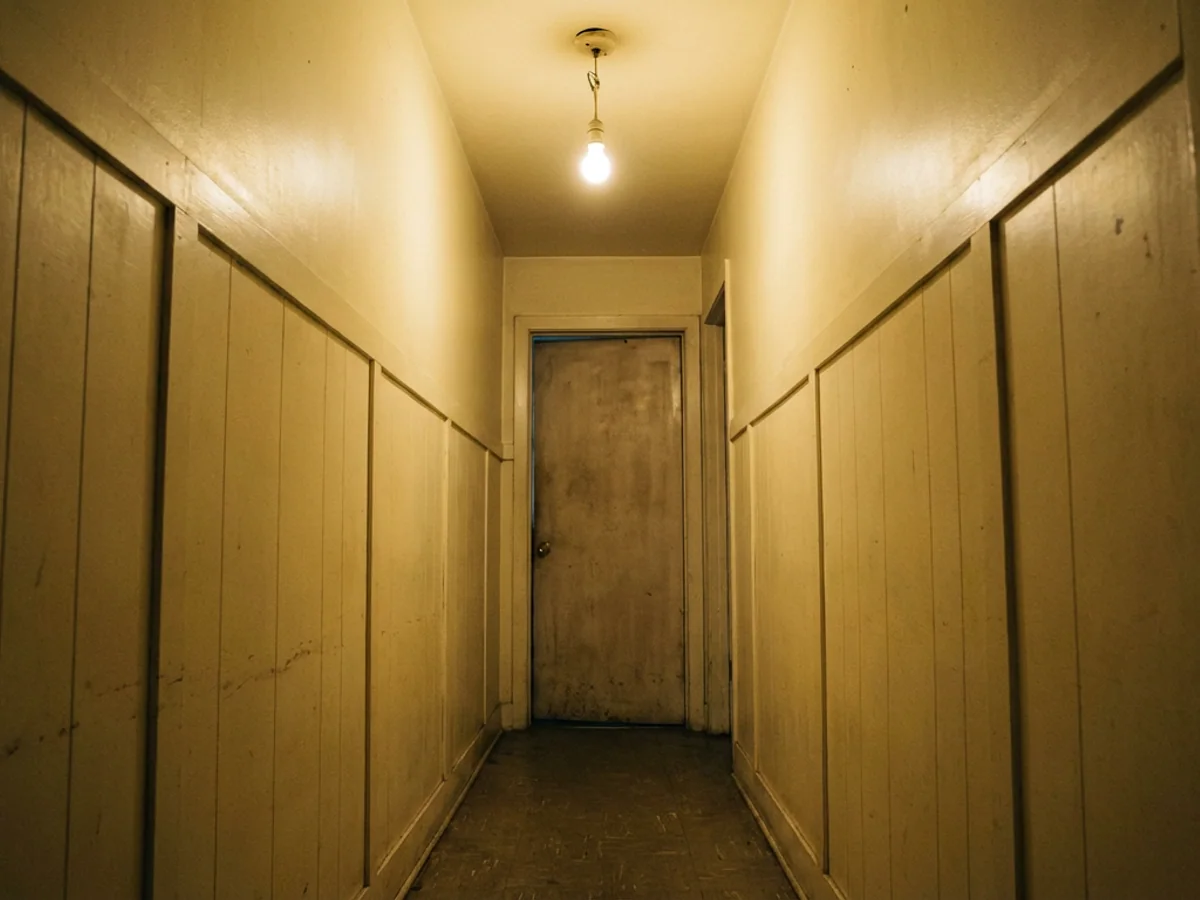
Through the STAFF ONLY door is a hallway. It is approximately 14 feet long. It is approximately 42 inches wide, which is tight but not unreasonable. It is lit by a single 60-watt overhead bulb. The wainscot paneling of the front-of-house room continues along both walls of the hallway, which lends it the disorienting quality of a hallway that does not know it is a hallway. At the far end of the hallway is a second door.
The second door is unpainted. It has no sign.
Edith did not accompany me down the hallway on the initial visit. She said, by way of explanation: "I do not go back there unless I have to."
The Second Store
Through the second door is a second fudge shop.
It is, by every observable physical characteristic, a fudge shop. It is approximately 600 square feet. It contains a display case with, on the afternoon I first visited, nine varieties of fudge. The display case is, I confirmed by direct measurement with a retractable tape measure I was carrying in my bag, the same make and model as the display case in the front room — a Hussmann commercial glass case, approximately 48 inches long, which the manufacturer discontinued in 1994.
The display case is manned by a man named Walter Grau, age 68, who is Edith Grau's brother-in-law. Walter Grau's relationship to the Alpine Fudge Kitchen is, per the White County Clerk's business-license records, not formally documented. Walter Grau has been operating the second fudge shop, continuously, since 1979.
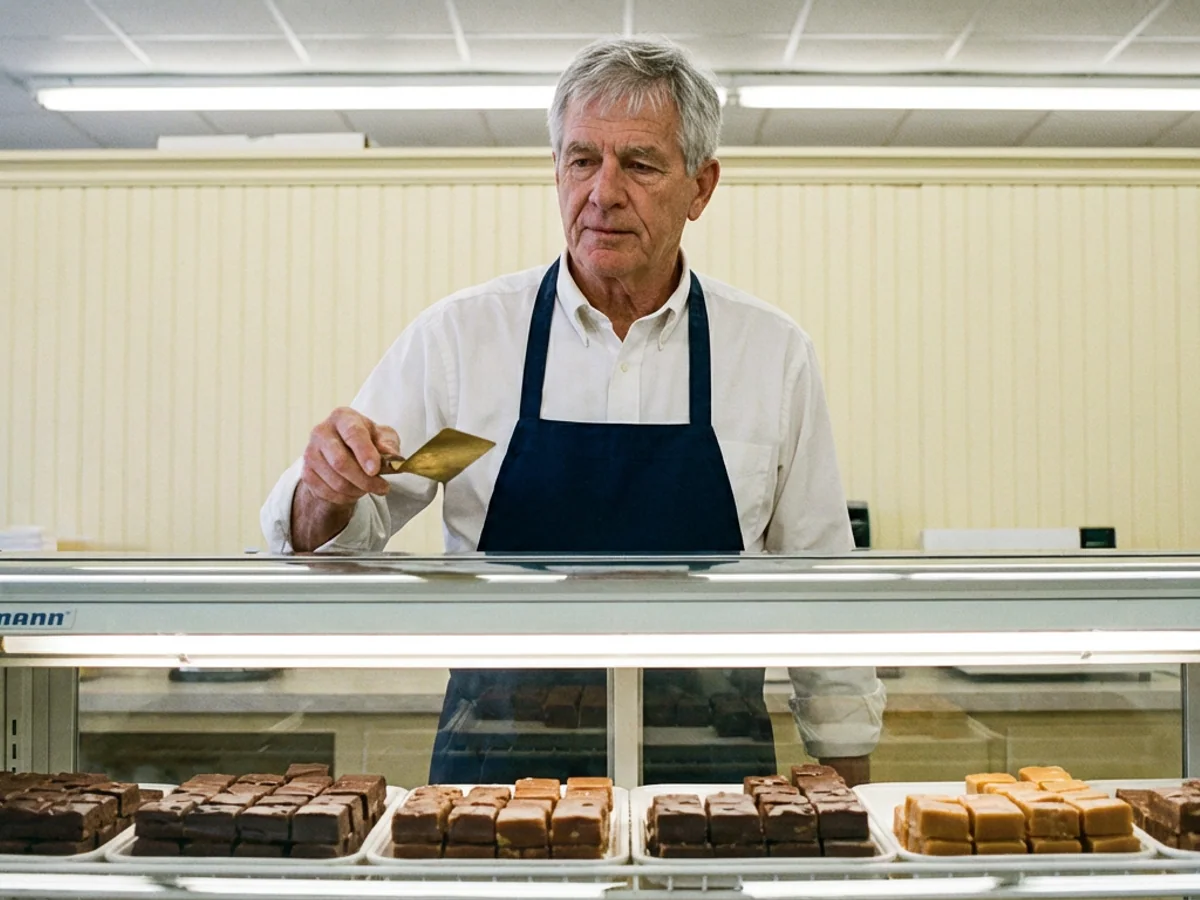
Walter Grau agreed to speak on the record. He said:
"My brother and his wife own the front store. I own the back store. It is a different store. The fudge is made in the same kitchen. The recipes are slightly different. I use more butter. I use less corn syrup. I do not use artificial color. The front store does. That is, I would say, our meaningful distinction."
Asked what his shop is called, Walter said: "It does not have a name."
Asked why it does not have a name, Walter said: "When I started, I wanted to see if a fudge shop needed a name. I found, in the years since, that it does not. This remains a working hypothesis."
Asked how customers find the second shop, Walter said: "Someone is always telling someone. It is quiet. But it is continuous."
The Customers
On the afternoon I first visited the second fudge shop — Monday, March 22, at approximately 2:40 p.m. — there were two customers in the second shop. They were a husband and wife named Tom and Dorothy Berendt, of Buford, Georgia. They had been to the Alpine Fudge Kitchen the previous afternoon with their granddaughter and had, in the course of that visit, been told about the second shop by a third customer in the front room.
"The woman in front of us in line said she was going 'to the other one,'" Tom Berendt said. "We thought she meant another fudge shop on Main. She did not. She went through the door."
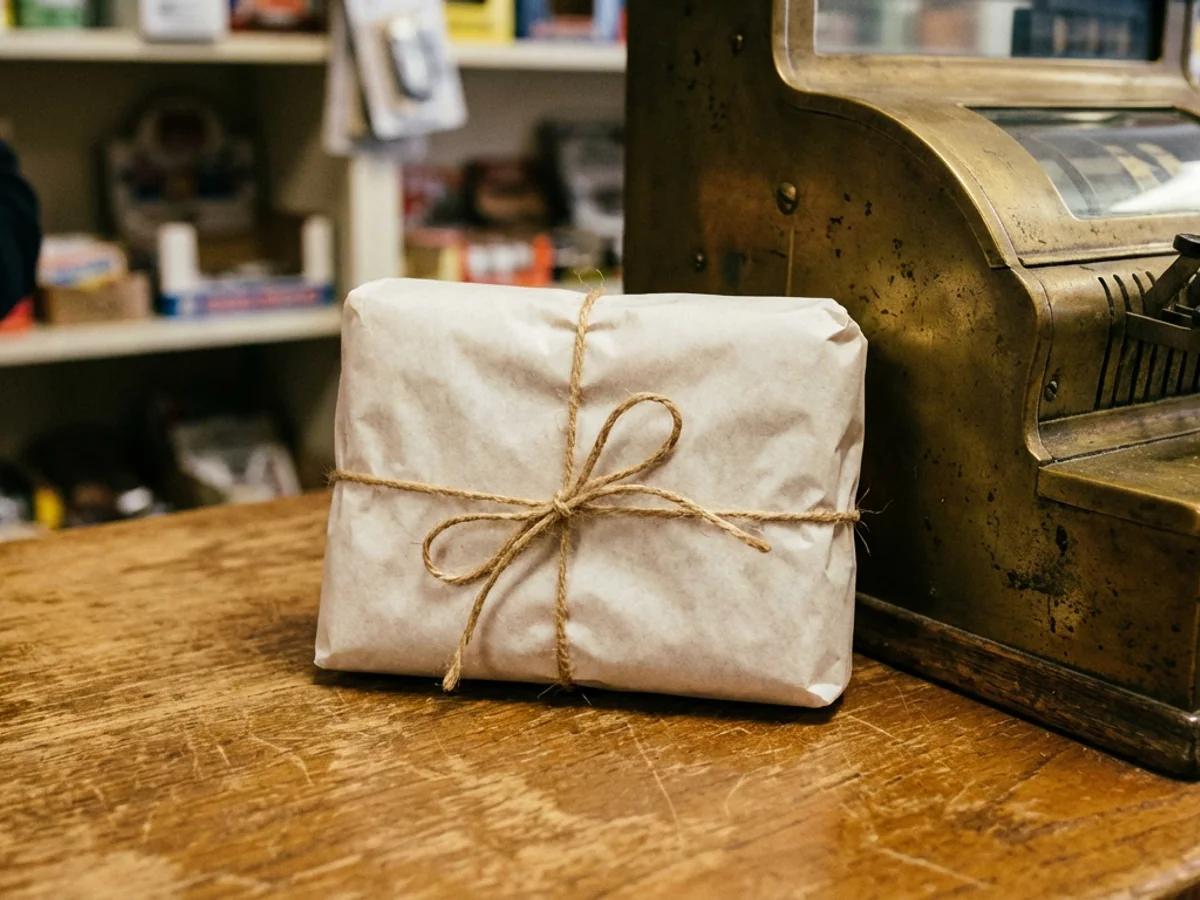
The Berendts returned the next day. They were, at 2:40 p.m. Monday, buying a half-pound of Walter's chocolate-walnut fudge. They paid $14.50 in cash. Walter wrapped the half-pound in white butcher paper and tied it with a length of natural twine. He did not use a box.
The Berendts asked if I wanted a recommendation. I said I did. Dorothy Berendt said: "The maple. The maple is better here than at the front."
I bought a quarter-pound of the maple.
It was better.
What Each Brother Says About The Other
Frank Grau, who owns the front shop, was not initially available for comment on the record. On a subsequent visit, Thursday, March 25, Frank agreed to speak, but with the caveat that he would not characterize his brother's operation in any detail.
"My brother is in the back," Frank said. "He has been in the back since 1979. This works for us."
Asked whether the two shops are in competition, Frank said: "We are not."
Asked why Frank's shop does not advertise the existence of Walter's shop, Frank said: "Because it is not my shop."
Asked, conversely, why Walter's shop does not advertise its own existence, Walter (on a return visit Monday, April 13) said: "Because I do not need to. The people who are supposed to find me, find me. The people who are not, do not."
Asked whether this was, practically, a sustainable business model, Walter said: "It has sustained me since 1979. I would propose that it is."
The Arrangement
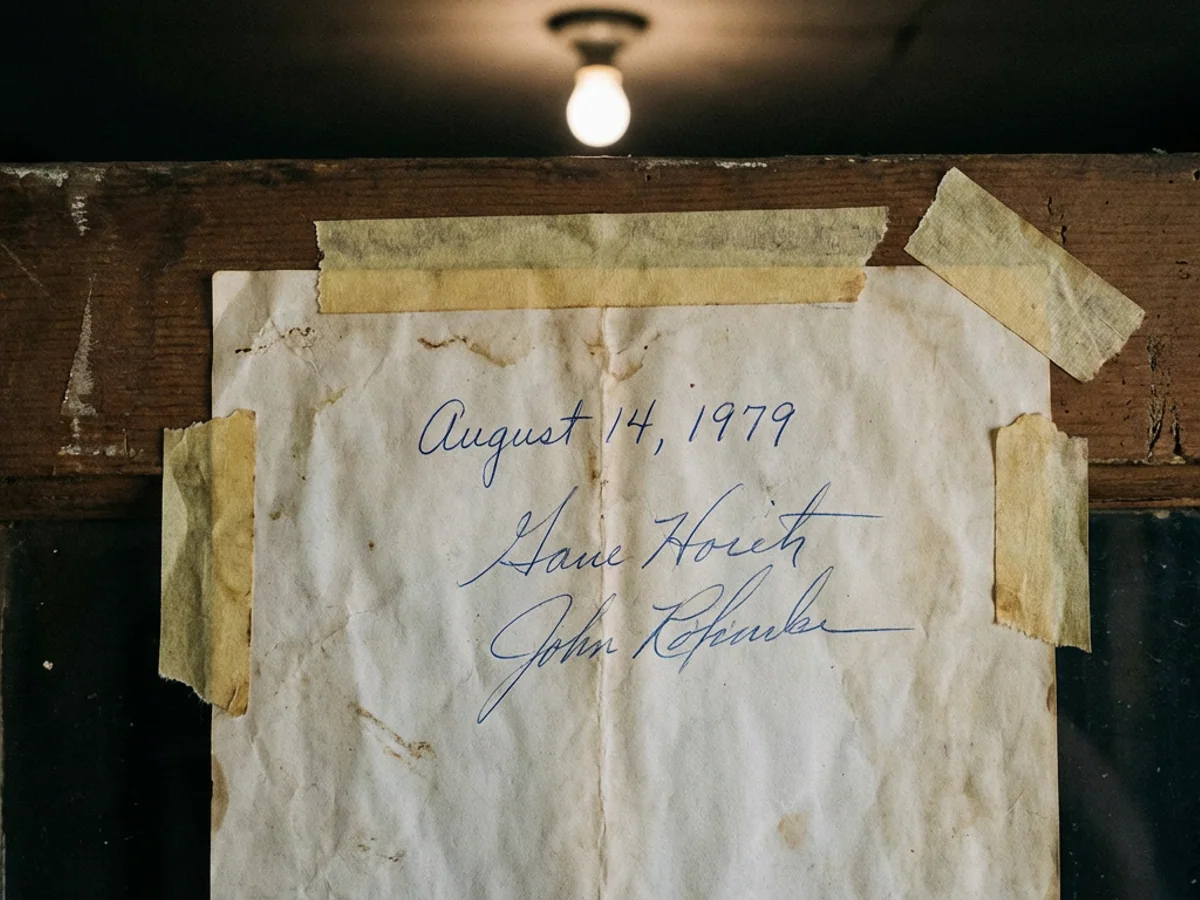
This reporter examined, with Edith Grau's permission and in the presence of both Edith and Walter, the paperwork governing the shared use of the kitchen space between the two shops. The paperwork consists of a single page, handwritten, dated August 14, 1979, and signed by Edith's father (the previous owner, now deceased) and by Walter.
The document, in its entirety, reads:
"Walter can use the kitchen in the back. He can have the back room. He can make his own fudge. He can sell it to whoever walks through the door. He will not call it the Alpine Fudge Kitchen. He will not put a sign outside. He will pay his share of the power bill. Ed Grau, August 14, 1979. Walter Grau, August 14, 1979."
The document is taped to the inside of the door between the two shops, facing the hallway side. I had walked past it on my first visit and had not noticed it. It is, on closer examination, slightly yellowed.
The Arrangement Has Held
The arrangement, per the paperwork and per the consistent account of both brothers, has held continuously for 47 years. The front shop has, across those 47 years, operated as the Alpine Fudge Kitchen. The back shop has operated as "the back shop." The back shop pays its share of the power bill. The back shop has never had a sign. The back shop has never advertised. The back shop has, by Walter's estimation, served approximately 80,000 customers since 1979.
The back shop is still there.
It is, at the time of the filing of this article (4:14 p.m., Thursday, April 16, 2026), open. Walter is behind the display case. The chocolate-walnut is in the case. The maple is in the case. The butterscotch-bourbon is in the case. The overhead bulb is lit.
The front door — the STAFF ONLY door — is, at this moment, closed.
The back shop will, if you wish to visit it, remain open until 6 p.m.
— Kaitlyn Reese-Brockman, Tourism Correspondent
Reader Comments
Leave a comment ↓