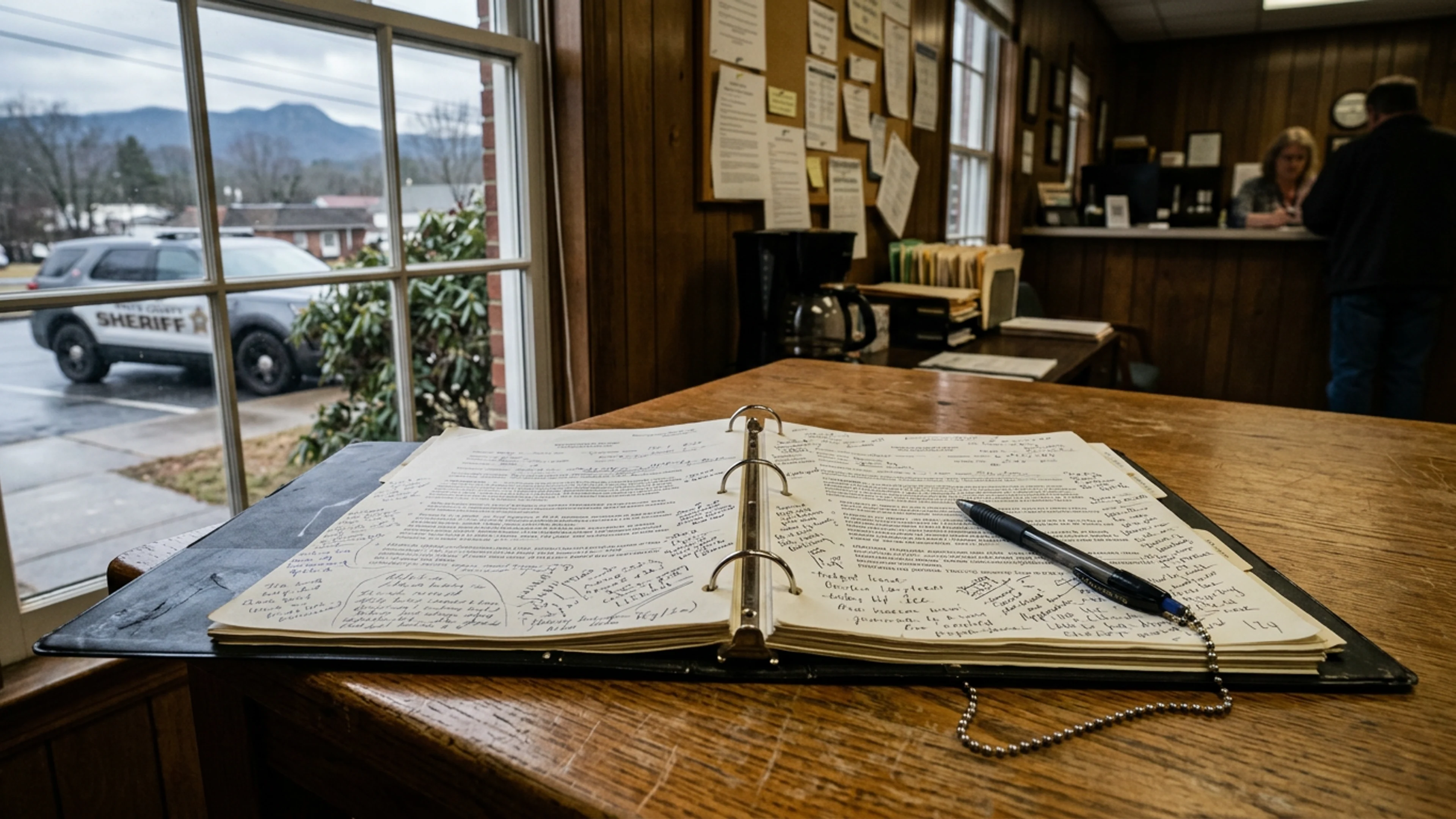
I spent eleven of the first twenty-one days of calendar-year 2026
at the White County Clerk's public reading table in Cleveland. I
read pages 1,369 through 1,842 of the binder identified in our lede.
I took, as notes, fourteen thousand words.
I offer, here, the Reporter's Notebook — the editorial-convention
short-form piece in which the reporter, having completed an
investigation too substantial for a single news piece but
insufficiently resolved for a long-form feature, publishes a
preliminary set of observations along with, where appropriate, a
confession of what remains unclear.
What I was looking for
I went to the binder to investigate whether — as two of my reader
sources have, independently and without knowledge of each other,
suggested in recent months — there is, within the eight-year record
of the White County zoning authority, a detectable and reproducible
pattern of preferential variance approval favoring a small and
identifiable subset of White County property owners.
That hypothesis, if true, would be the kind of investigation a local
newspaper exists to conduct.
What I found
The variance-approval record, as reflected in the binder's pages
1,369 through 1,842, is as follows. Of the 612 variance applications
filed between January 2024 and December 2025, 438 (71.6%) were
approved; 174 (28.4%) were denied. The approval rate is within, per
a 2022 University of Georgia public-administration working paper,
the normal range for rural Georgia counties (which the study reports
at 68.4%-74.1% over the 2018-2021 period).
Of the 438 approved applications, I have been able to associate 391
(89.3%) with a distinct and identifiable applicant — an individual,
a family, or a small business. The remaining 47 (10.7%) are filed
under names that I have been unable to trace to a public-record
entity; these may reflect trusts, shell arrangements, or (more
likely, per the Clerk's informal estimate) simple clerical issues in
the historical record.
Of the 391 traceable applicants, 26 (6.6%) appear in the binder on
three or more separate occasions. Of those 26, I have eliminated 19
on the basis that their multiple applications concern obviously
distinct parcels and obviously distinct property circumstances. The
remaining 7 are applicants whose applications concern, in at least
some cases, adjacent or related parcels, or recurring variance
requests for the same parcel type.
Of those 7, four are commercial developers I will not name at this
time. Two are family trusts connected with three-generation Helen
property-ownership lineages. One is a single Cleveland resident who
has, in the 2024-2025 period, filed eleven separate variance
applications concerning a single 4.3-acre parcel on Upper Edelweiss
Strasse. All eleven were approved.
Why I cannot publish yet
The Cleveland resident's record concerns me. It does not, however,
constitute, by itself, evidence of preferential treatment. I have
reviewed each of the eleven applications. They are, by my reading of
the underlying record, each independently justifiable under the
County Planning Code's ordinary-hardship-variance framework. I
cannot, from the approval record alone, distinguish a pattern of
preferential treatment from a pattern of consistent-code-application
to an unusually-configured parcel.
I cannot publish an investigative feature on this pattern unless I
can, with supporting interviews and source-document evidence beyond
the binder, establish that the preferential-treatment hypothesis is
more consistent with the evidence than the unusual-parcel
hypothesis.
I have sent, this week, five interview requests, to: the Cleveland
resident, her attorney, the Planning Director, two former planning
commissioners, and the 2024-2025 County Attorney. I have received
one acknowledgment (from the former County Attorney, who indicated
he would respond "in late January or early February"). I have
received no responses from the others.
What comes next
I will keep reading. I will keep asking.
If the investigation reaches a publishable conclusion, it will
appear in these pages. If it does not, it will not. The binder is,
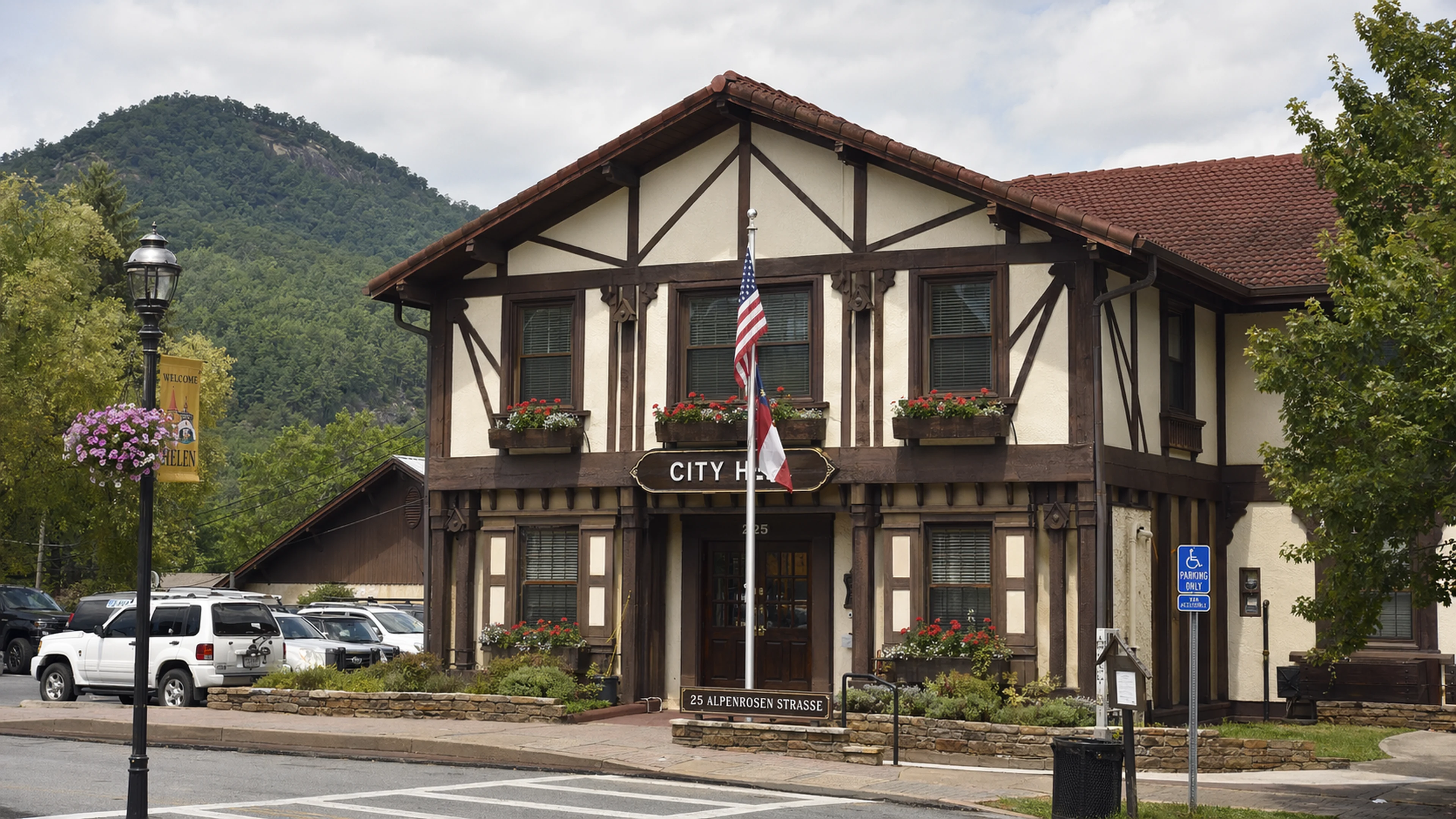
for the record, open Monday through Friday, 9:00 a.m. to 4:00 p.m.,
at the Cleveland administration building. The Clerk's pen, which I
have, per building policy, not been permitted to take with me, is a
blue Bic medium-point. The table is oak. The chair is, I am obliged
to say, uncomfortable.
I will return.
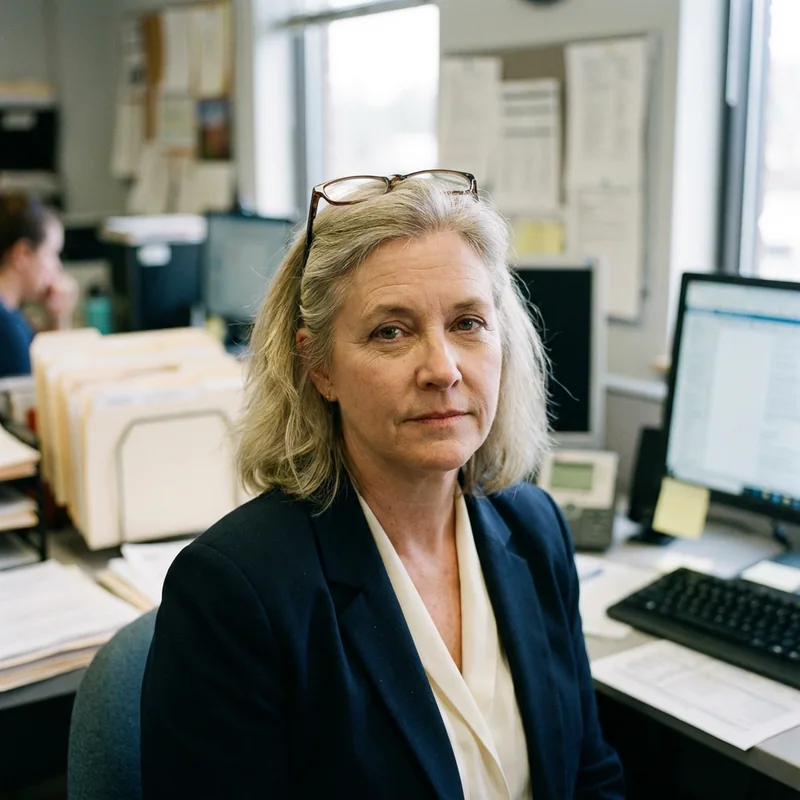
— Margaret Holcomb



Reader Comments
Leave a comment ↓