County officials confirmed Wednesday that a 22-foot reflective glass-and-marble temple has been installed on the summit of the Sautee Nacoochee Indian mound, replacing a 1985 timber gazebo. The temple was not on any public agenda. The contractor left the lot at 4:47 p.m. on Tuesday and did not return.
The 2024 update to the City of Helen Comprehensive Plan, a 312-page document that, in the eighteen months since its adoption, has been read in its entirety by approximately fourteen people, contains substantive provisions governing the city’s cuckoo-clock retail sector. We have read all 312 pages.
A single subordinate clause in the City of Helen’s 1971 architectural-overlay ordinance, intended to encourage the original Bavarian-style downtown facade conversions, now functions — fifty-five years later — as a parcel-level multiplier on assessed property values. Twenty-three downtown property owners have, since 2018, exercised it. Bavarian Brainrot has reviewed each.
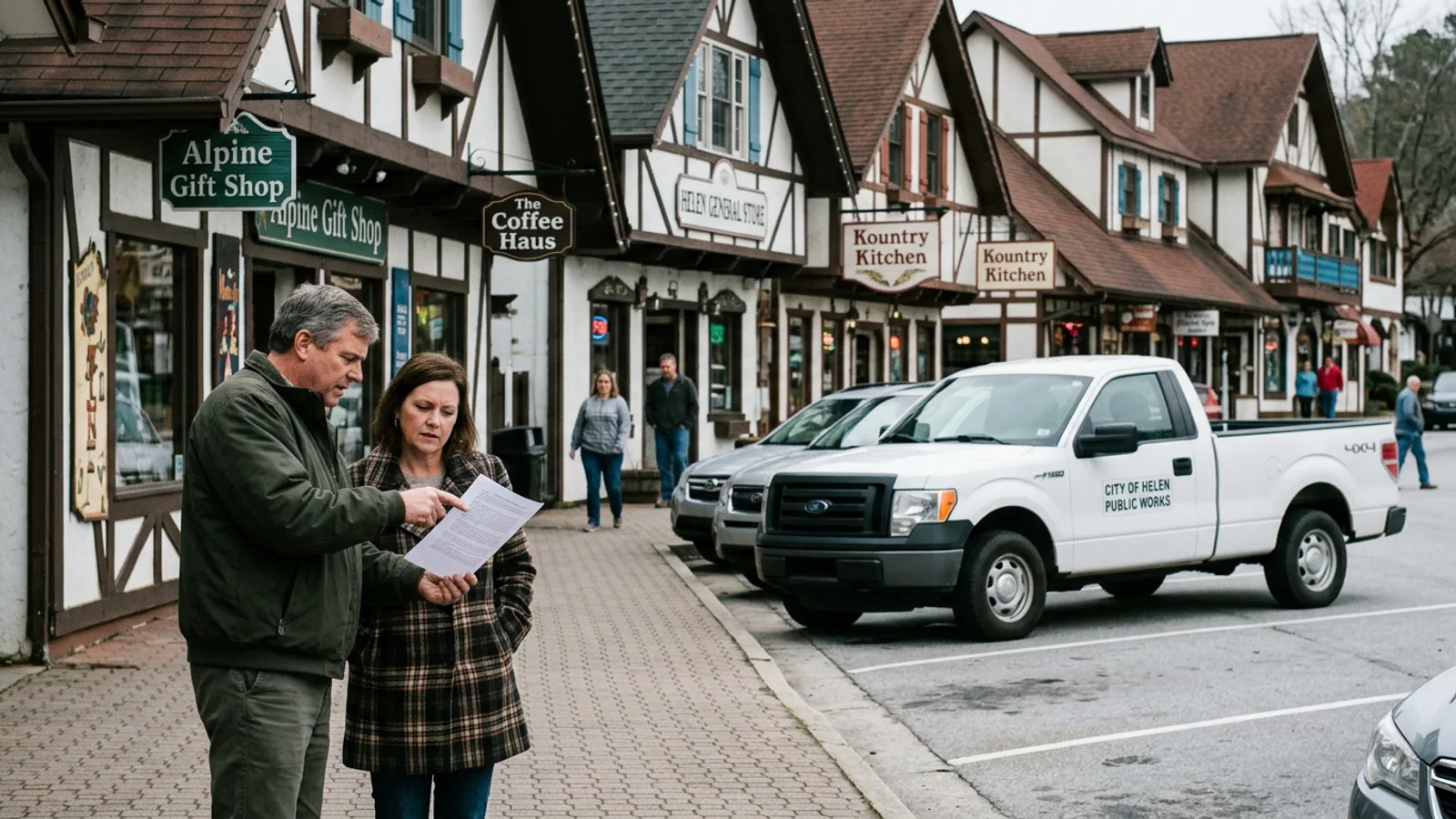
A draft amendment submitted by the Helen Downtown Aesthetic Consistency Subcommittee would prohibit new commercial business names containing a standalone 'K' — defined as any 'K' not immediately followed by a qualifying umlaut diacritic. The amendment, if adopted, would require 17 existing businesses to rebrand or seek a variance. One of them is owned by the Subcommittee chair's brother-in-law.
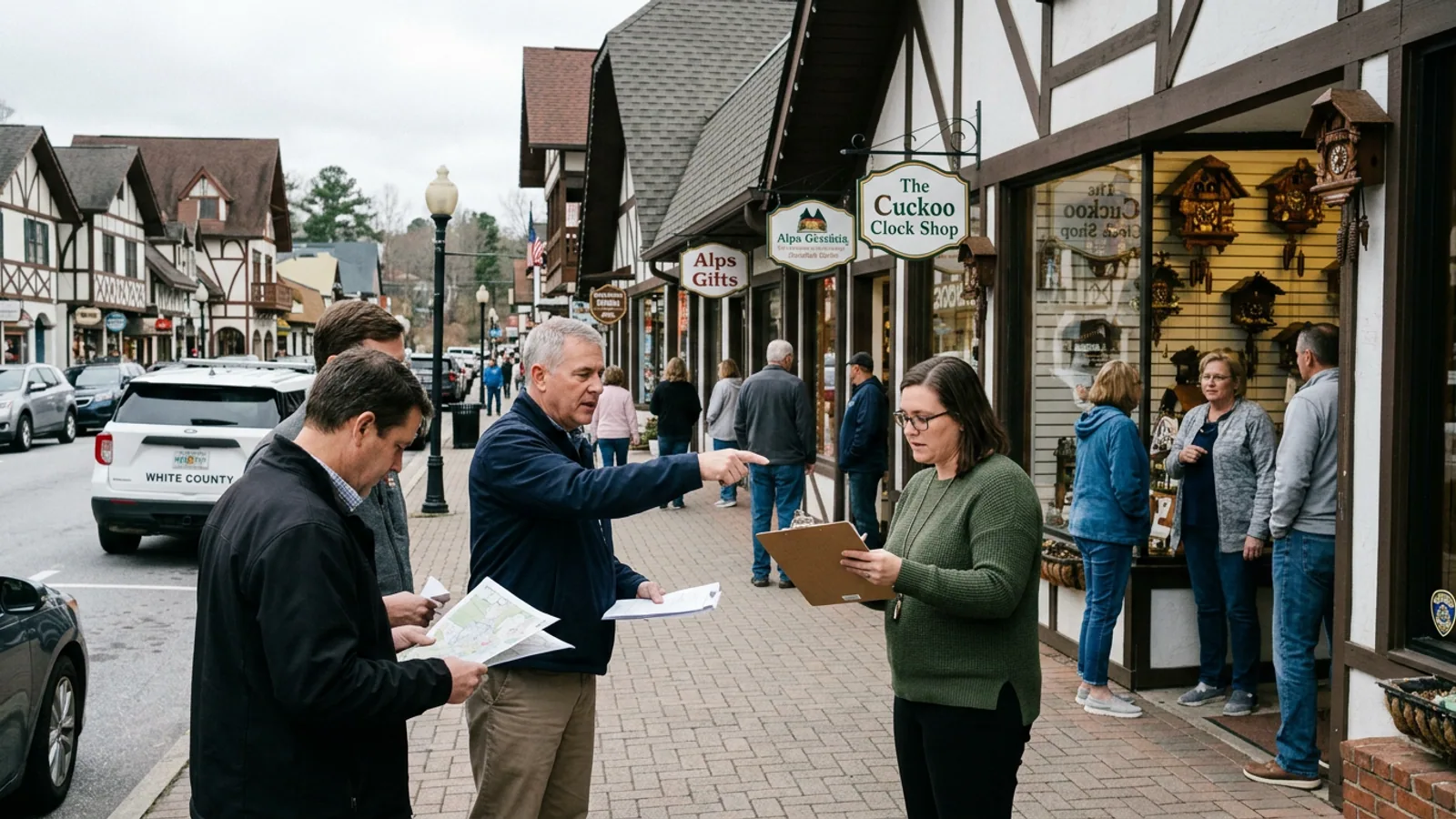
The proposed amendment, which would reduce the downtown cuckoo-clock retail concentration from its current 2.7 establishments per linear block to a maximum of 1.8, is drawn from a figure back-calculated by a White County planning consultant in 1974. The consultant died in 1991. The memo runs 94 pages.
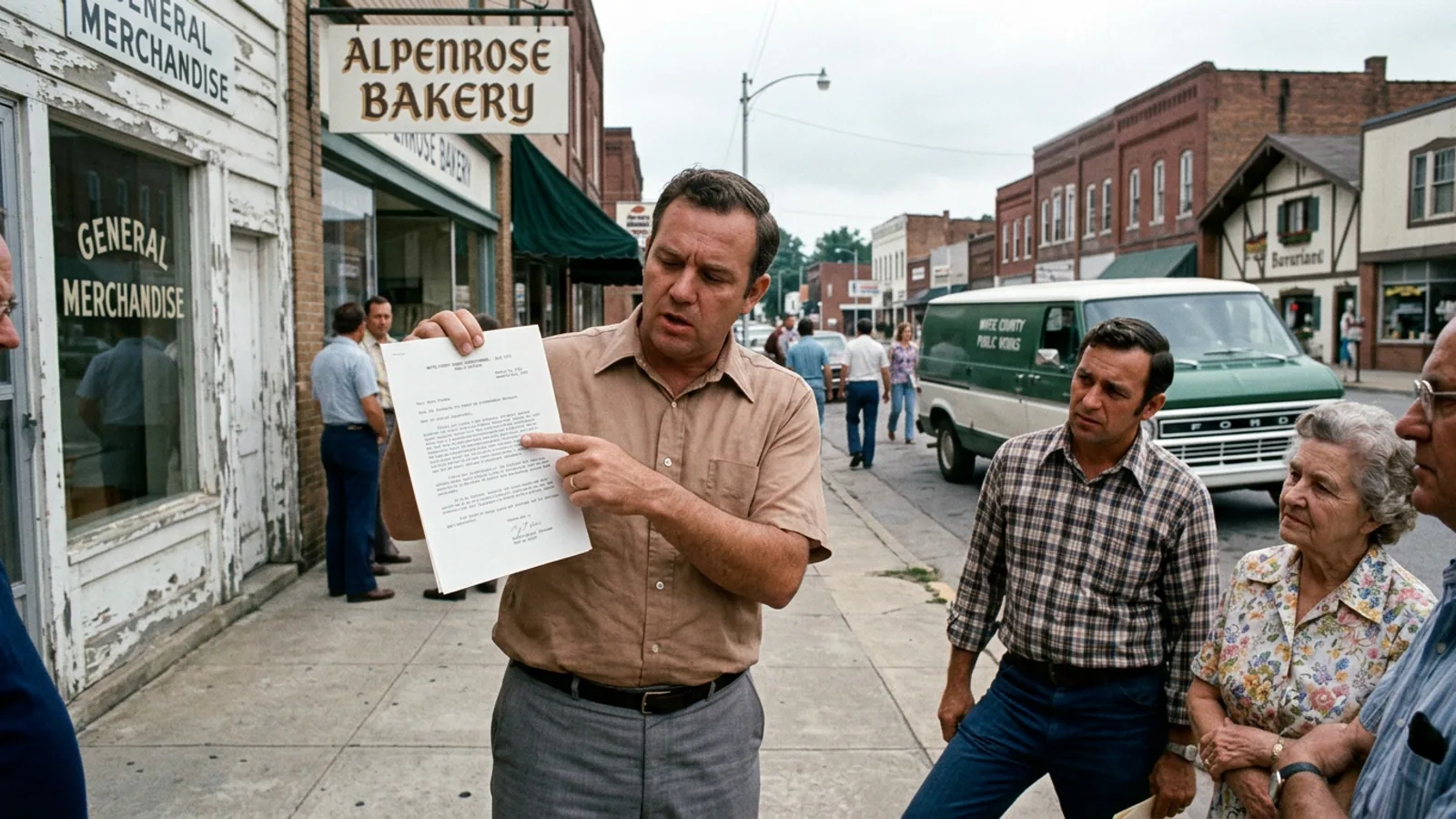
The accepted history of Helen's Bavarian-theme conversion begins in 1969, when a group of local business owners hired an artist to sketch a new identity for a dying mill town. The documentary record suggests the conversion did not become legally real until a single-paragraph variance was granted by the White County Board of Commissioners on a Thursday night in July 1973 -- a paragraph that contains the words 'and for similar applications henceforth.'
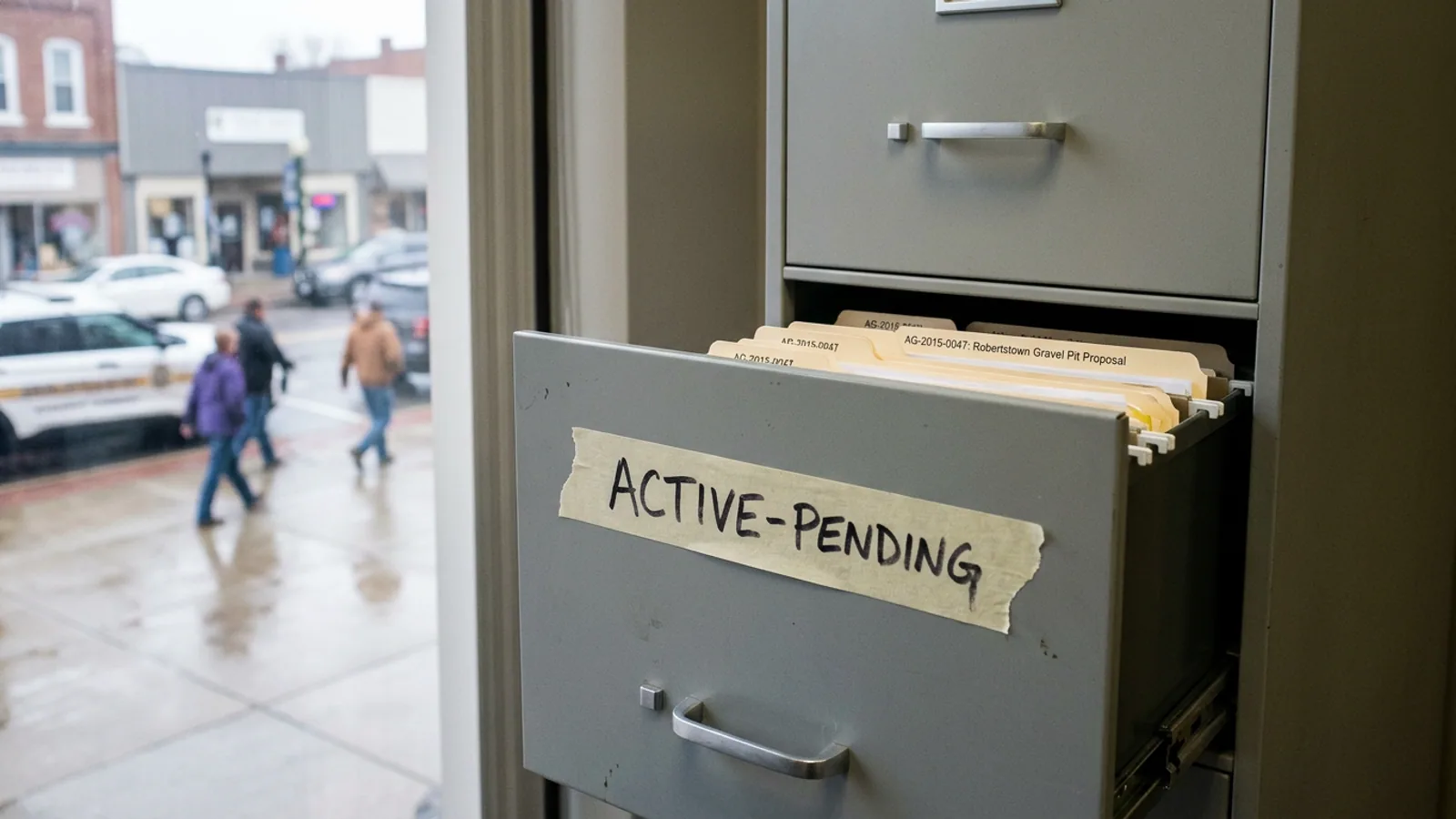
A 47-acre aggregate extraction proposal off Highway 75 has cleared seven consecutive permit reviews, survived three ownership changes, and accumulated 873 pages of administrative record since 2015. It has not, in eleven years, been formally approved. The reason is a three-sentence letter written in 2016 by a woman who now lives in Colorado.
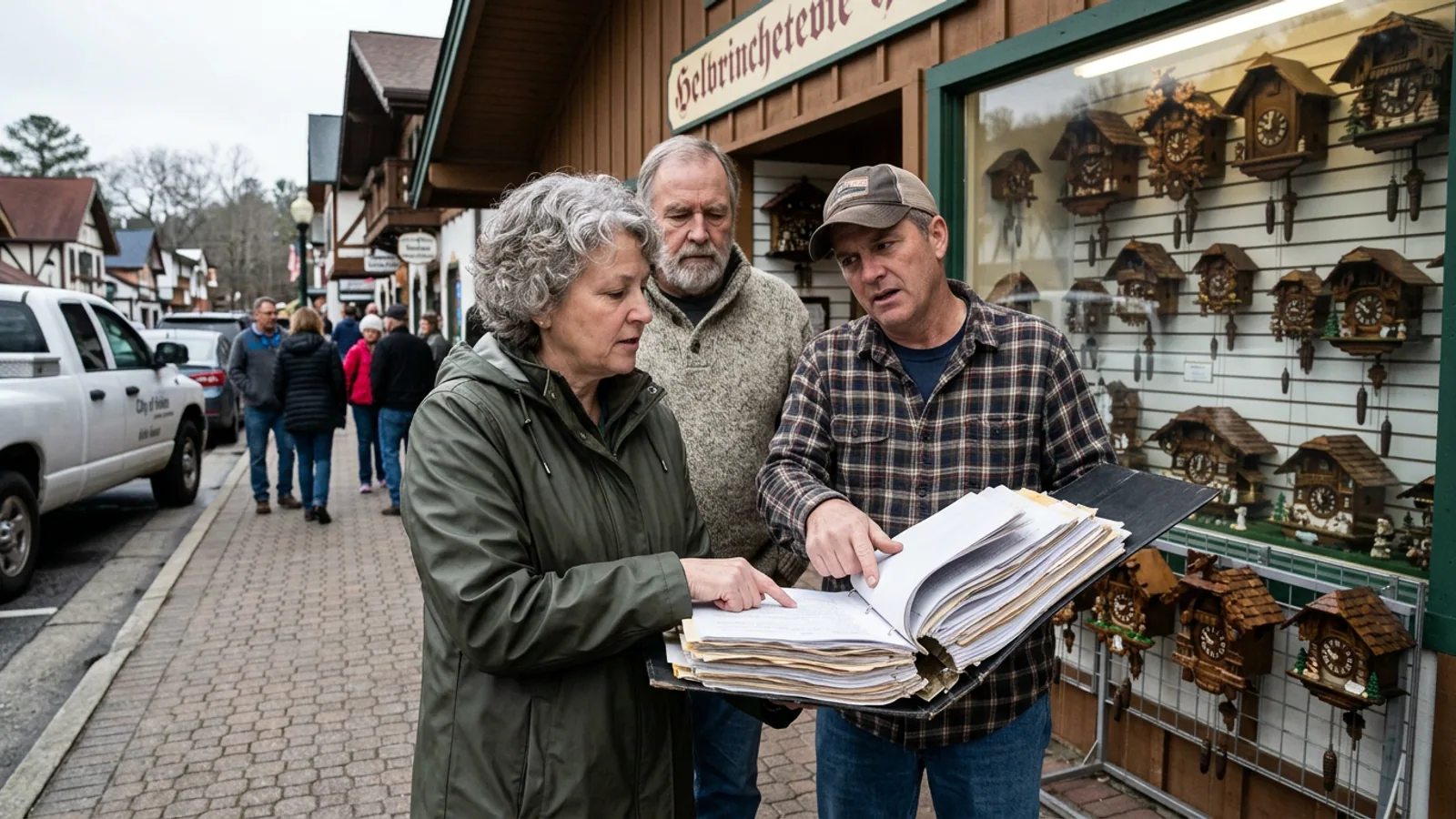
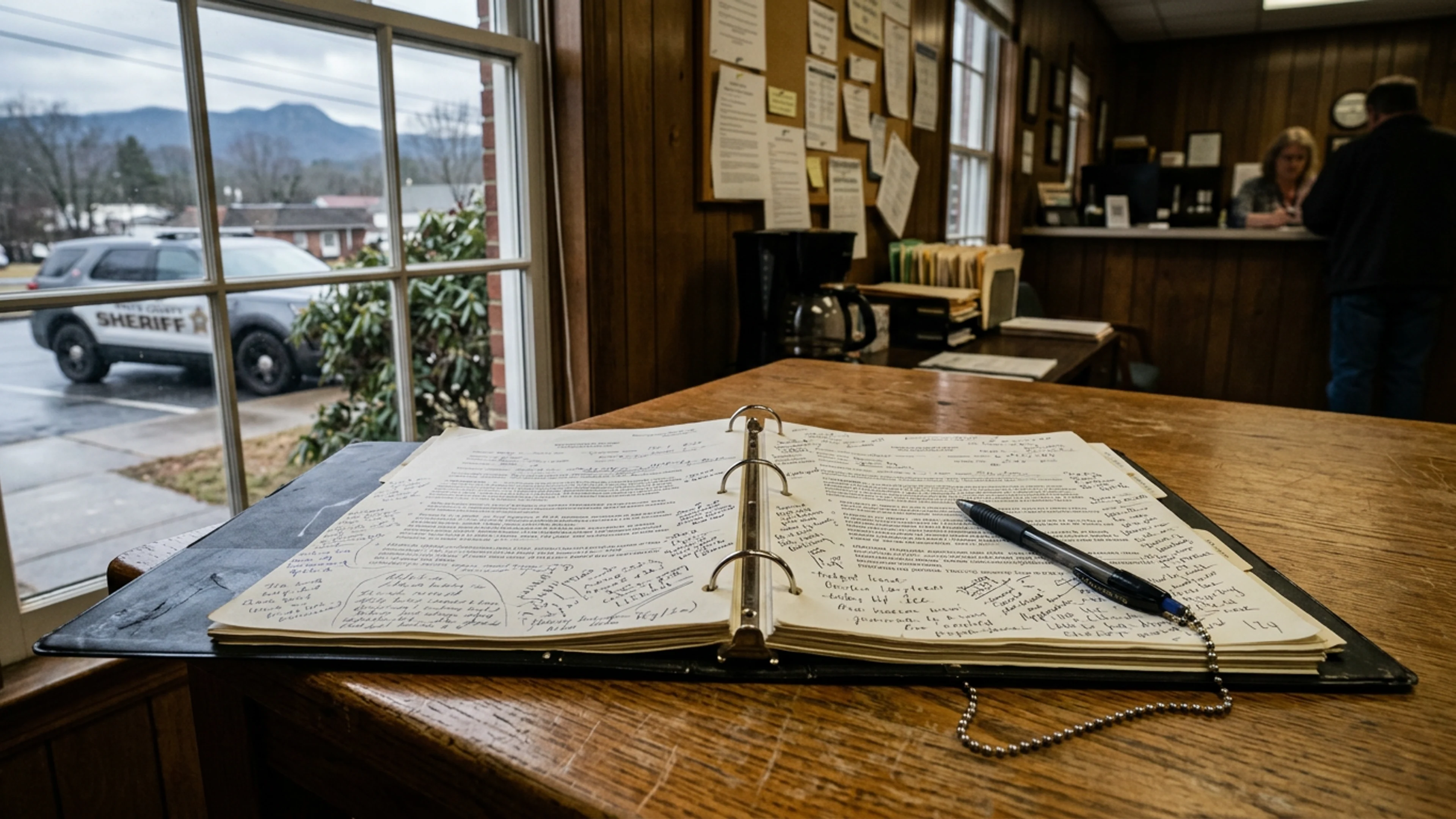
The White County Zoning Binder — more formally, the Consolidated Record of White County Zoning Appeals and Variance Applications, Volume VII (2019-2026) — is a 1,842-page three-ring notebook held open to the public at the County Clerk's office in Cleveland, consultable only on-site, with the use of a County pen and under the passive supervision of the Clerk. Through the first three weeks of January 2026, I spent eleven working days at the reading table. I read the binder's pages 1,369 through 1,842 — the portion covering 2024 through the present. I wrote, in my own notebook, approximately 14,000 words of annotations. I am no closer to a settled view of what, in aggregate, the binder is actually arguing about.