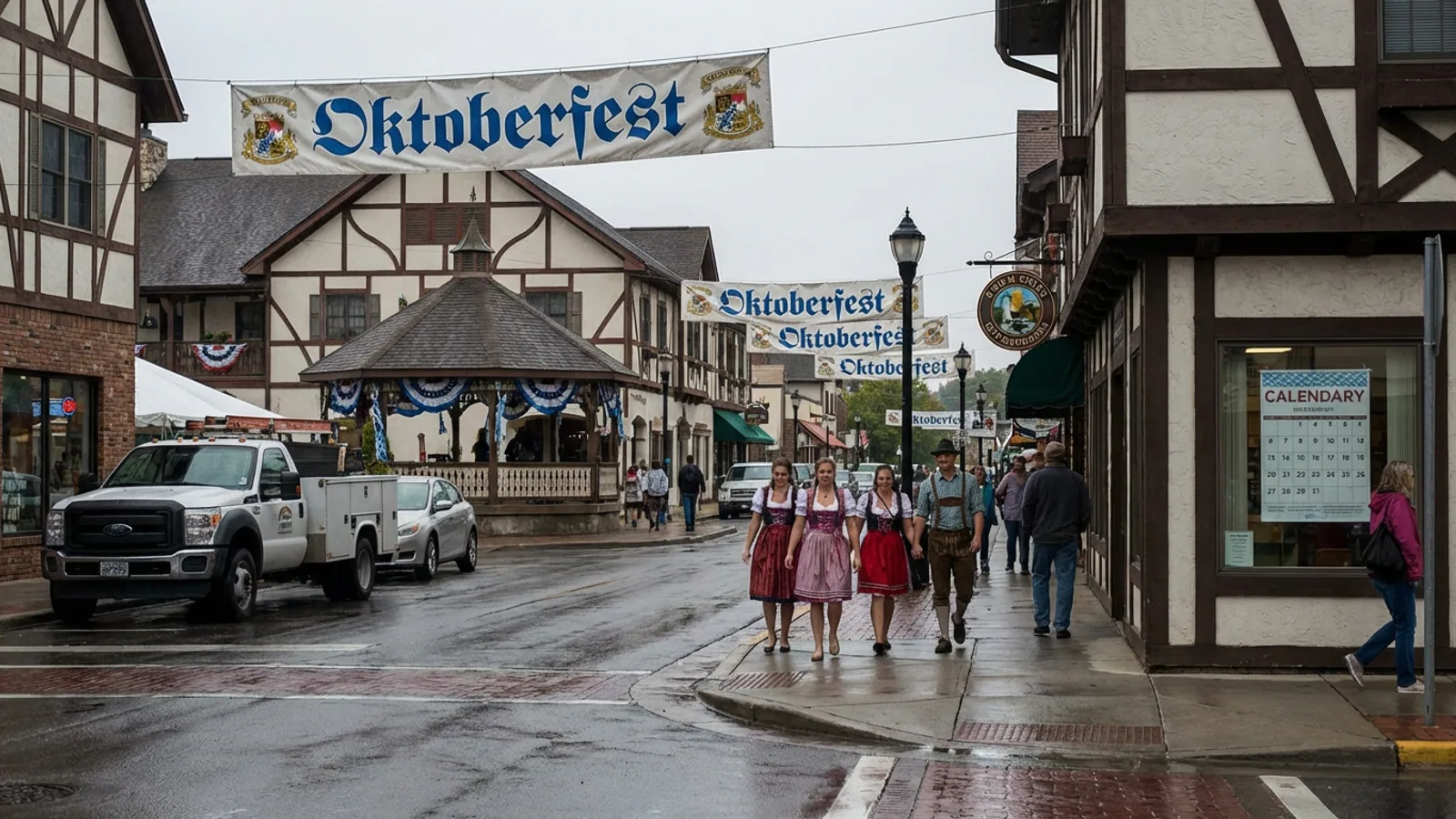
The Helen Oktoberfest, held annually in Helen, Georgia since 1970, is the longest continuously operating Oktoberfest in the United States. Its 2026 iteration is, by this newspaper's reckoning, the 56th. The Helen Chamber of Commerce, on its printed program and its permanent Festhalle mural, numbers the 2026 iteration the 55th, for reasons this newspaper's April 11 editorial attributes to a 2008 typographer's off-by-one error that the Chamber has not, in 18 subsequent years, formally corrected. This page uses the correct figure.
What follows is a master reference for the festival: its dates, its venues, its dress code, its music, its food, its permit framework, and the small procedural customs the Festhalle has accumulated across more than five decades of Saturday nights. The Bavarian Brainrot newsroom has covered the Helen Oktoberfest in every issue since its January 2026 founding. A rolling index of that coverage lives at the festival hub. This page sits above it, and is revised annually when the dates change.
The broader context pages for downtown Helen are at Helen, Georgia, Chattahoochee tubing, and the cuckoo-clock economy. Oktoberfest intersects all three in ways that are, depending on the weekend, either mildly inconvenient or the entire point.
When It Runs (2026 Dates)
The 56th Annual Helen Oktoberfest will run from Wednesday, September 10, 2026, through Sunday, November 1, 2026 — a total of 53 consecutive calendar days. The Helen Chamber of Commerce confirmed the schedule in a March 14, 2026 announcement, which this newspaper reported on the day of release.
At 53 days Helen's Oktoberfest is longer than the Munich original (16 to 18 days), longer than Leavenworth, Washington (9 festival days across 21 calendar days), and longer than Frankenmuth, Michigan (a four-day core plus ambient fall programming neither town markets under the Oktoberfest name). The Chamber's 2027 forecast extends the festival to a duration described as "as long as seasonally practicable." No operational definition of that phrase has been published.
Legally, the duration is permitted under White County's "continuous festival use" zoning category — the same category used for the Helen Christmas Market. The form, as Senior Zoning Clerk Lurleen Carpenter noted in this newspaper's April 16 investigation into whether a 53-day event still qualifies as "a fest," has three checkboxes: under 72 hours, three to ten days, and continuous festival use. The Chamber checked the third. The etymological question of whether "Oktoberfest" continues to mean what it has meant in Bavaria since 1810 was not on the form. For authoritative dates, consult the Helen Chamber of Commerce schedule; for the 53-day-fest etymological audit, this newspaper's April 16 filing.
The 56-Year Timeline
The first Helen Oktoberfest was held in October 1970. It ran five days. It was organized by the same committee that had, one year earlier, voted to adopt the Bavarian theming now visible on every downtown storefront, under the 1969 Robertstown beautification compact. The 1970 program — a 12-page stapled booklet archived at the Yonah Preservation Library — describes the event as "the First Annual Oktoberfest in Helen, Georgia." The arithmetic from there is not difficult. 1970 is one. 2026 is 57. The festival held in 2026 is the 56th.
In the 55 years between the first festival and the 2025 one, the Helen Oktoberfest has grown, by the Chamber's own post-festival economic analysis, from a five-day community event to a 52-day commercial tourism anchor drawing 1.83 million unique visitor-trips and generating $47.2 million in direct gross revenue in 2025 alone. Each subsequent year has, by a narrow margin, exceeded the prior year's duration. 2026 is the first year the duration has exceeded the fiftieth day.
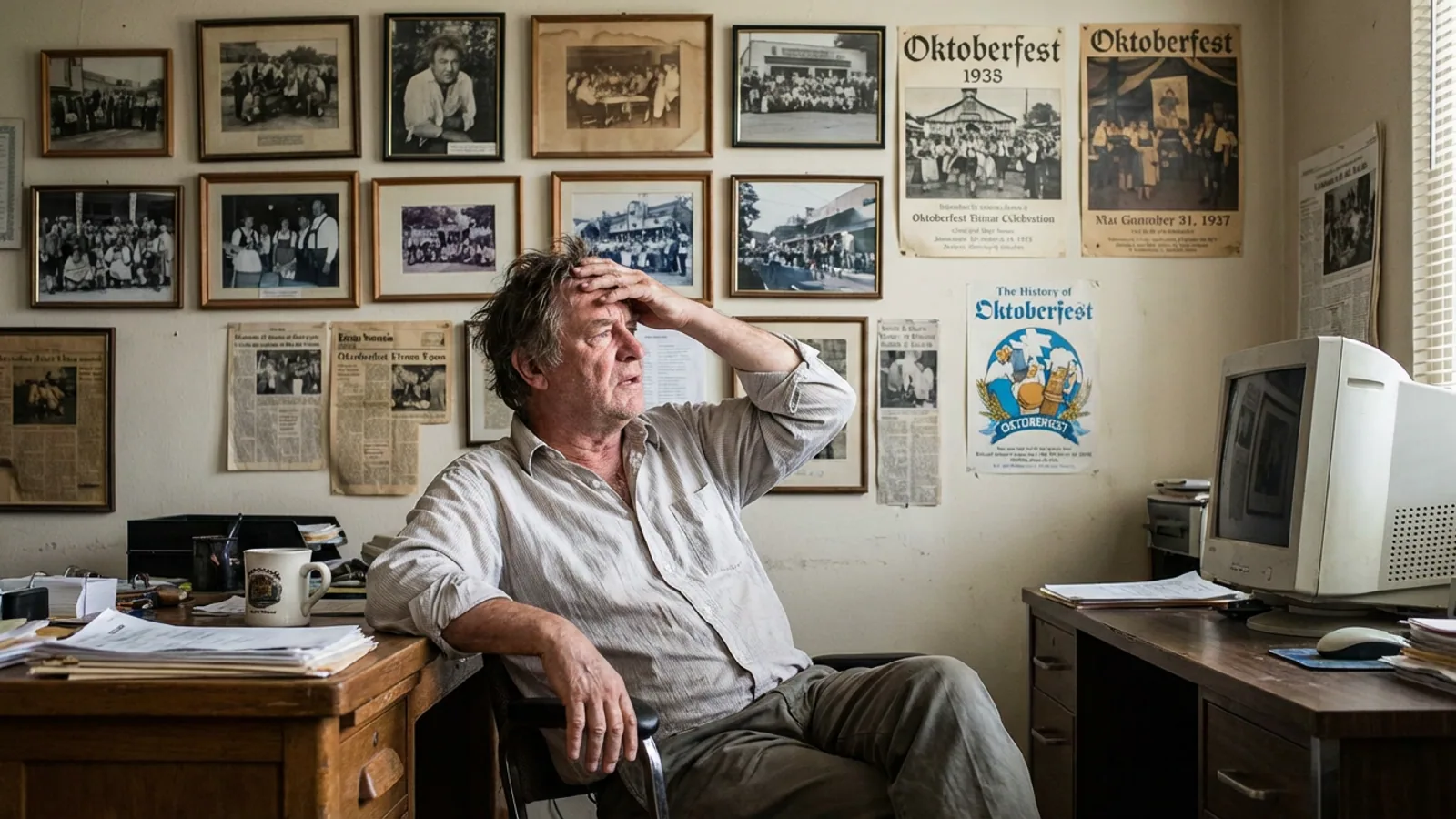
The 55th-anniversary retrospective covers the full arc: the 1970 founding, the 1972 dedication of the Festhalle, the 1977 Glockenspiel installation, the 1982 Munich-band guest program, the 1994 return of the Munich band in a widely documented lesser form, the 2008 numerical drift that institutionalized the off-by-one year count, and the 2025 post-festival analysis in which the Chamber first used the phrase "as long as seasonally practicable" in a publicly released document.
Relevant filings: the 55th retrospective, the Festhalle at 54, the 56th-versus-55th editorial.
Getting Tickets
Entry to the Helen Oktoberfest is free on weekdays and priced on weekends. Weekend entry in 2025 was $12 at the gate, $10 in advance, with a $25 three-weekend pass and a $40 full-season wristband. The 2026 figures had not, at the Chamber's April 17 board meeting, been finalized. Weekend entry includes access to the Festhalle main floor, the Biergarten, the 2025-built east-side Games Annex, and the dance floor (expanded by approximately 44 percent for 2026, per the Festhalle's post-renovation permit).
Wristbands are the Chamber's standard admission credential. The 2026 wristband-vendor procurement drew one bid worth noting: on April 14, eight days after losing a federal antitrust verdict in the Southern District of New York, Ticketmaster LLC submitted a sealed competitive bid to become the 56th Annual Oktoberfest's exclusive wristband vendor at $1.87 per unit, a 54.7-percent reduction from the Chamber's 2025 in-house fulfillment cost. Twenty-five minutes after the Chamber's bid-opening committee opened the envelope, Ticketmaster withdrew, citing "further review of our Helen-specific consumer-base demographics." The Chamber has confirmed it will retain in-house fulfillment for 2026. The full reporting, including the procurement memo obtained under the Georgia Open Records Act, is at the April 18 filing. The Chamber, historically, charges no service fee.
Advance purchase runs through the Chamber portal at helenchamber.com/oktoberfest. Group pricing is available for parties of 12 or more. The Festhalle does not offer weather refunds.
Where It Happens
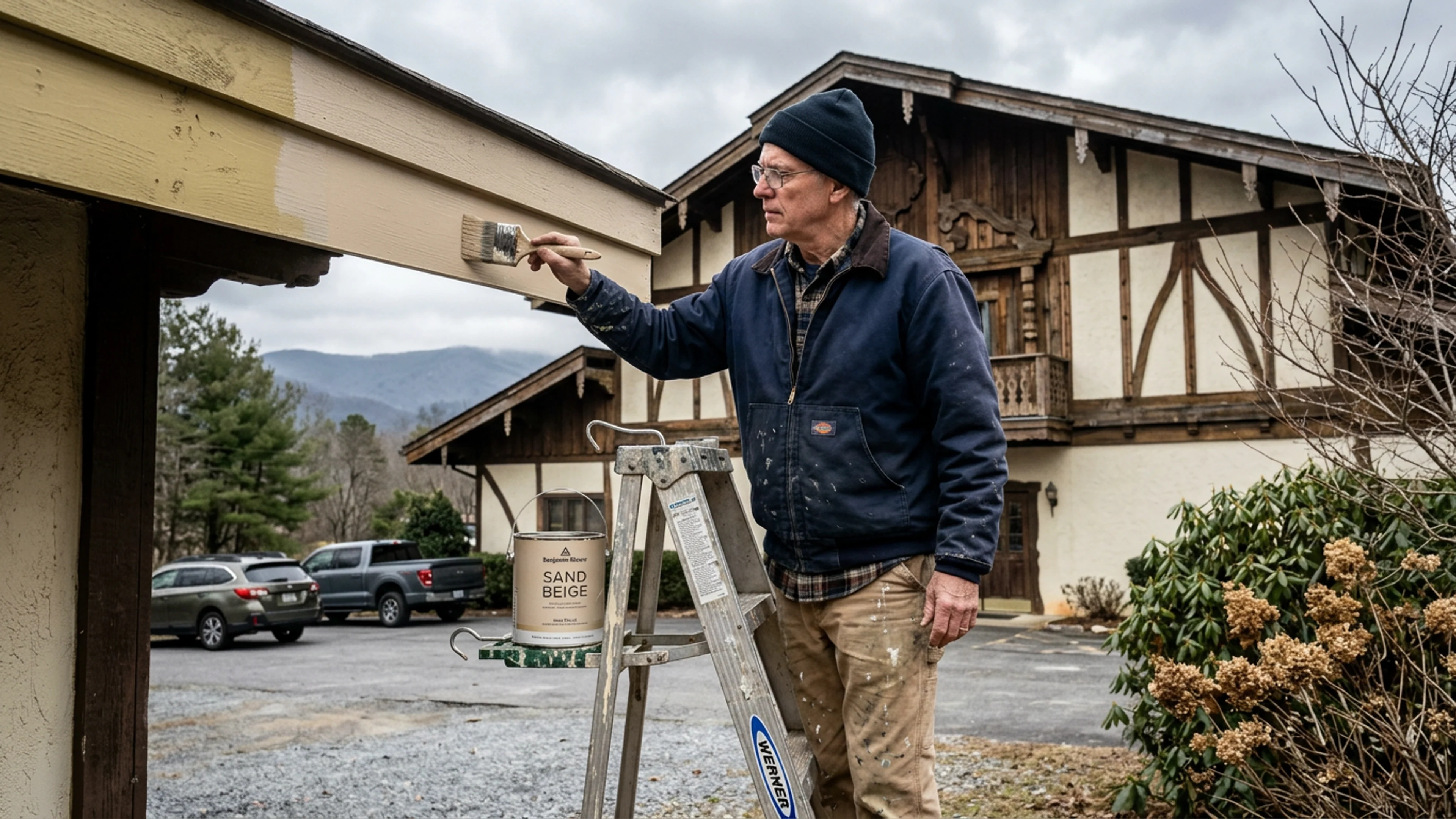
The festival's center of gravity is the Helen Festhalle, a 14,800-square-foot timber-and-stucco event hall at 1074 Edelweiss Strasse, designed by Atlanta architect Otto Kaufmann in a north-Bavarian alpine-revival idiom, and dedicated Friday, January 7, 1972 by Mayor Elbridge Hodkinson. The building turned 54 on January 7, 2026. Its north trim was repainted in Benjamin Moore "Alpine Sand" by unpaid maintenance volunteer Arnulf Steinberg the Saturday before the anniversary.
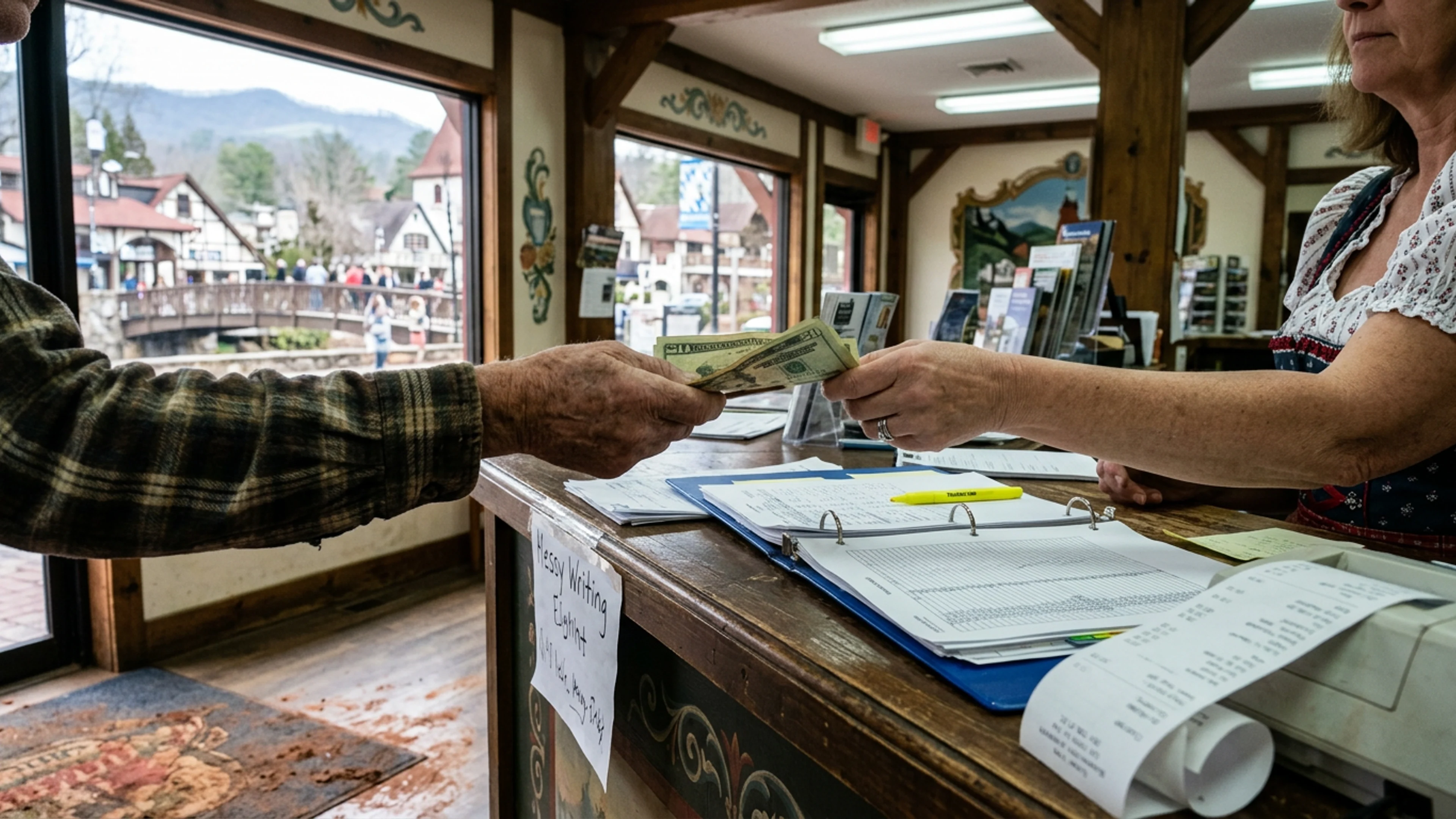
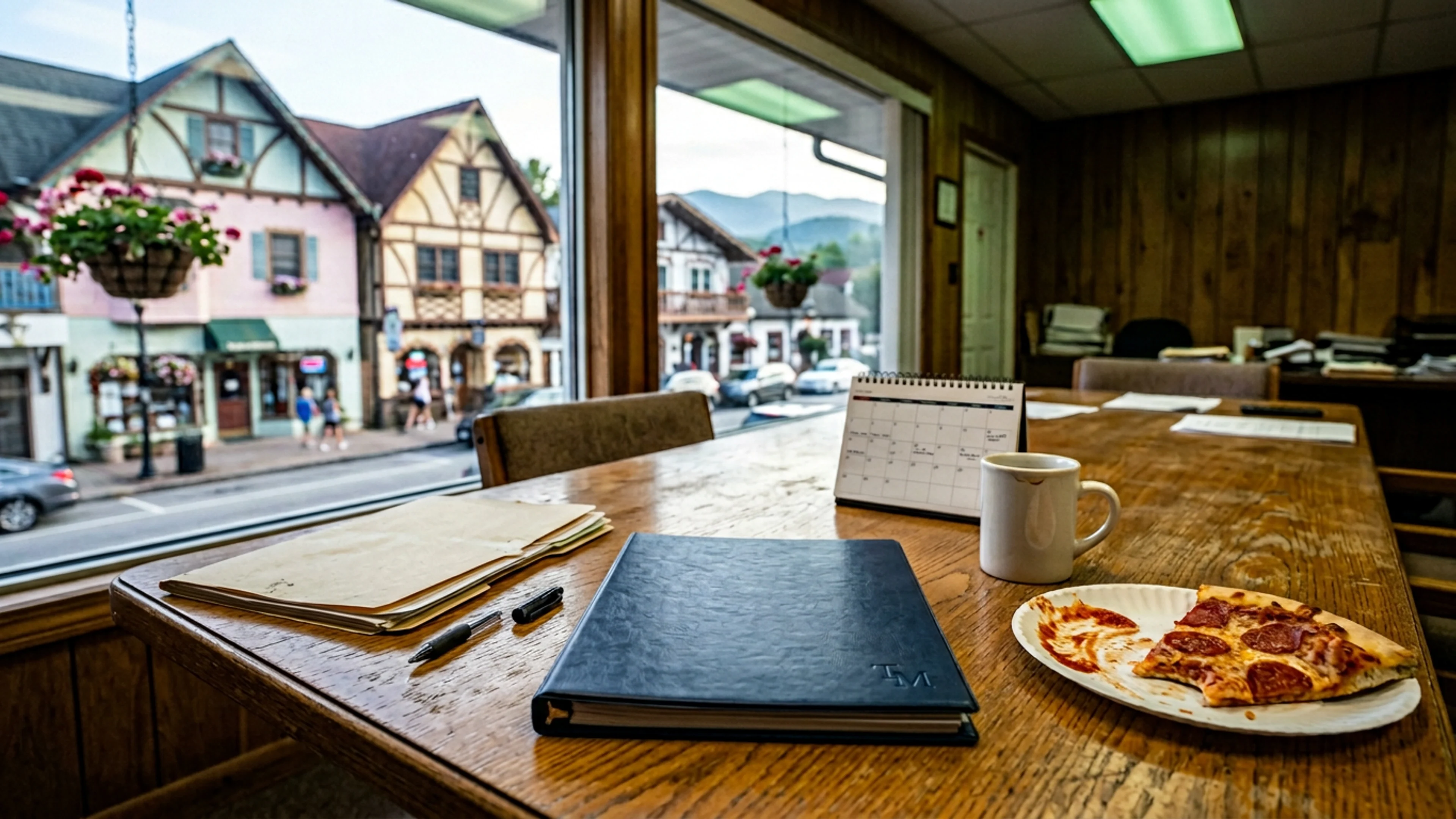
The Festhalle's main hall seats 840 at communal tables, with standing capacity for an additional 400 during peak hours. A 2025 renovation added 1,400 square feet of annex space on the east side, now occupied by the Games Annex (see: our three-day survey of what the games actually are). The Festhalle's booking calendar remains, as of press time, a single three-ring binder maintained at the venue's front-desk counter.
Programming spreads across the Helen Town Center (pedestrian stage at Main Street and Chattahoochee Strasse), the Oktoberfest Park lot (Bruckenstrasse, south end, overflow vendor tents), the Biergarten at the Bodensee Restaurant frontage, and the Chamber tent at Edelweiss Strasse and Hauptstrasse. A stein-return station operates at each venue. Wristbands scan at all four gates. The far end of the Oktoberfest Park is 0.4 miles on foot from the Festhalle entrance. The Chamber does not operate a shuttle.
What To Wear
Authentic Bavarian Tracht — lederhosen for men, a dirndl for women — is the de facto festival costume and, per the Chamber's visitor survey, worn by roughly 38 percent of weekend attendees. A properly fitted lederhose, wool or stag-leather, runs $180 to $420 at the Bruckenstrasse specialty retailers. A properly constructed dirndl, full skirt plus apron plus blouse, runs $220 to $600 at the same vendors. Less-formal approximations are available at the gift shops along Main Street in a range of synthetic fabrics for under $60. The Chamber does not require costume. Nothing in the city's 1973 Bavarian-theme variance mandates it either.
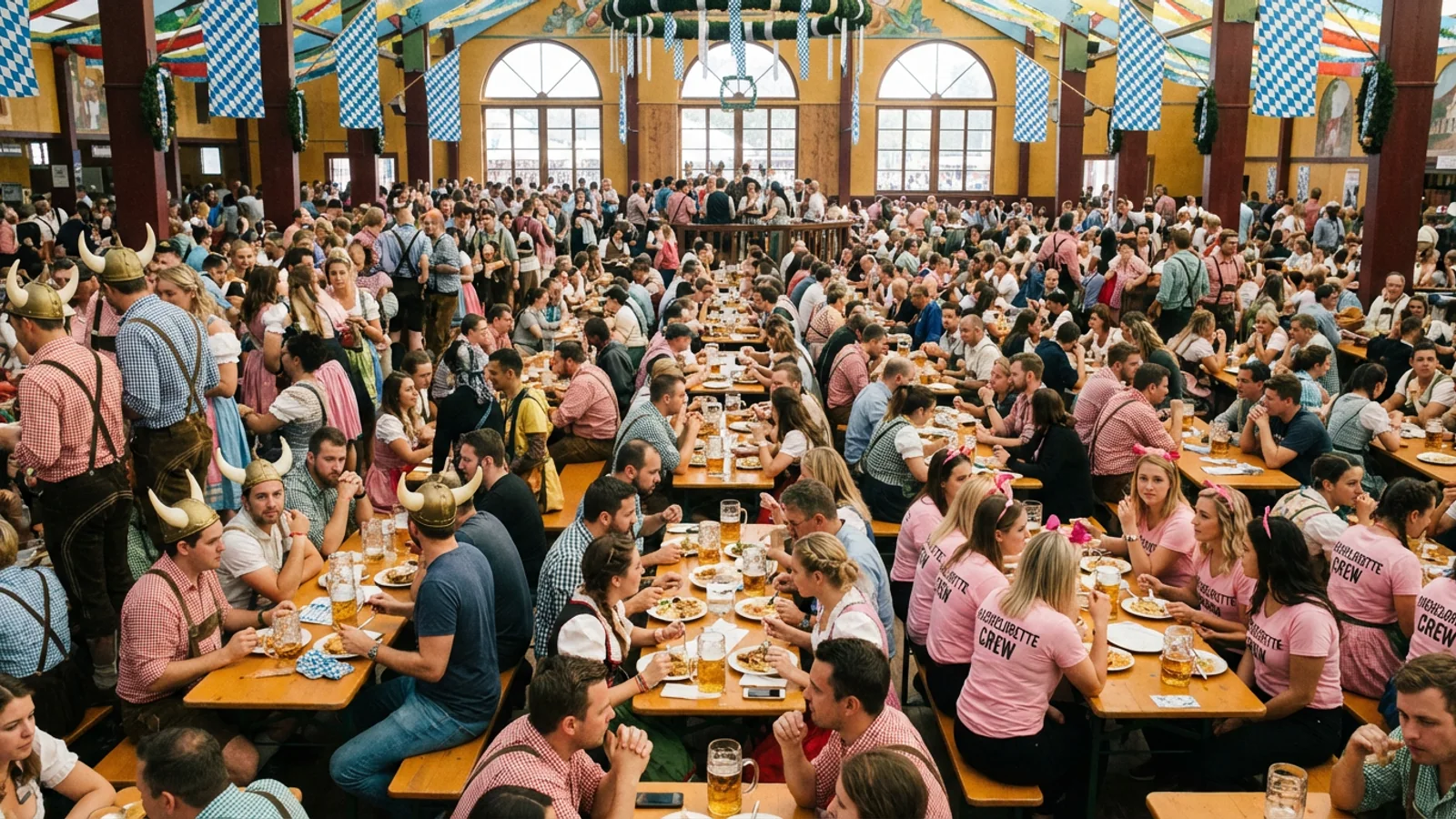
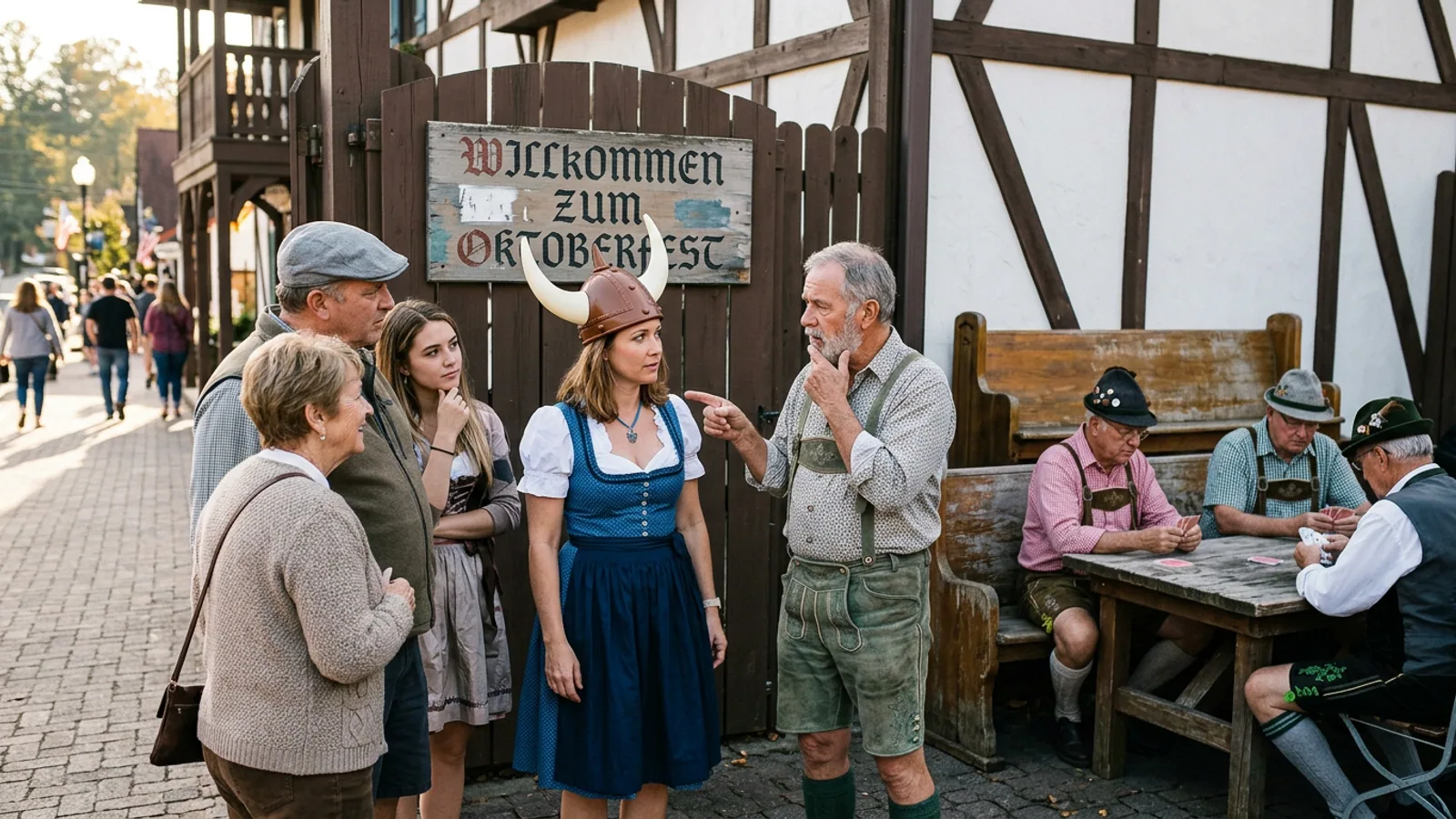
A recurring cultural-category question is addressed annually: the horned Viking helmet, which is not Bavarian and has never been Bavarian, is nonetheless worn by approximately one in nine adult attendees by this newspaper's observed count across three Oktoberfest Saturdays in 2025. The helmet is available at most Bruckenstrasse gift shops and at the Alpine Gift Haus. No Chamber official has, in 56 years, formally discouraged it.
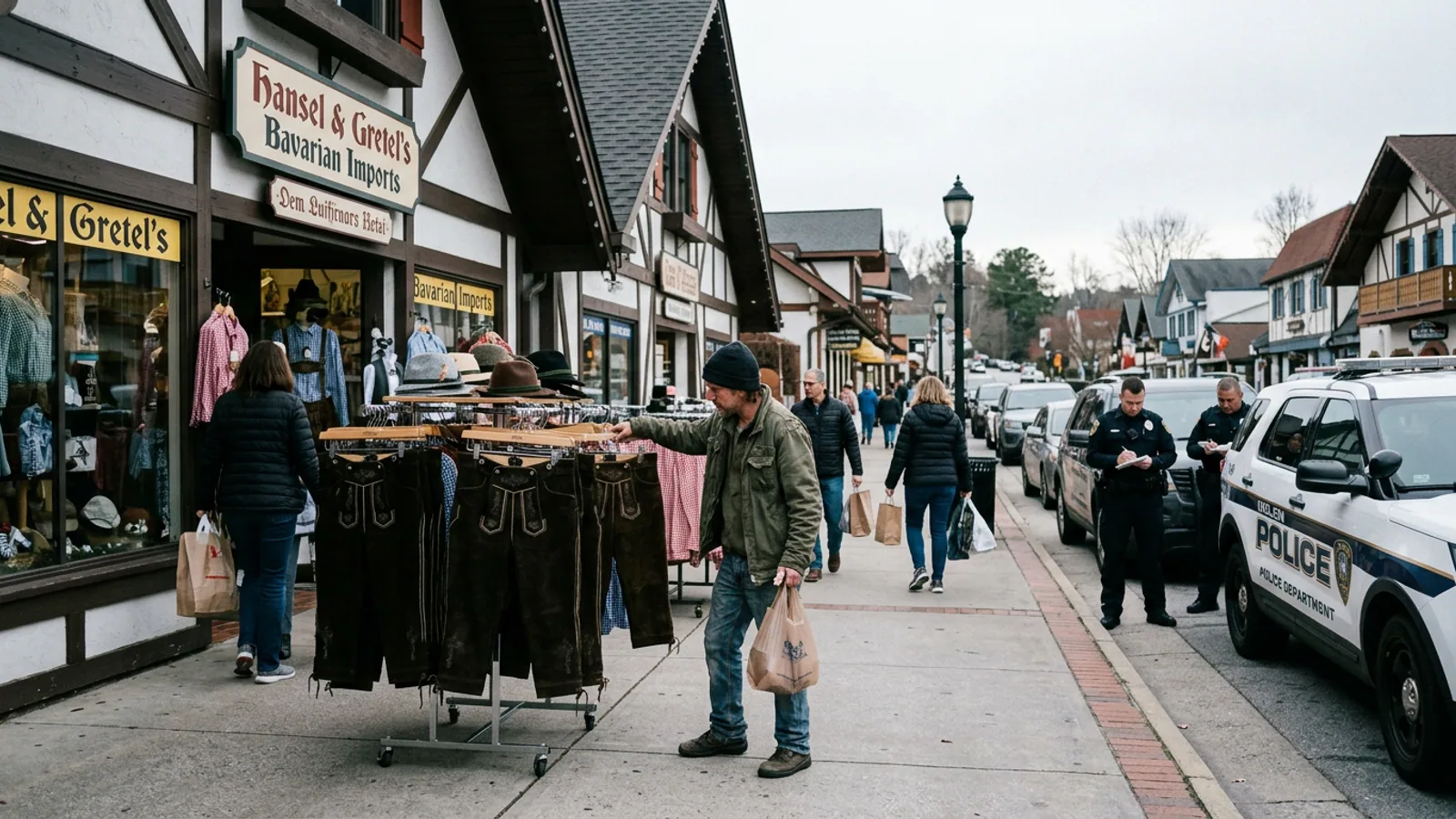
A secondary, and rising, consideration is theft. The Helen Police Department's Q4 2025 bulletin documents a 41-percent year-over-year increase in lederhosen-adjacent property crime, with 17 incidents logged between October 1 and December 31, 2025, and a recovery rate of approximately 30 percent. Most thefts occur from outdoor display racks on Bruckenstrasse and Hauptstrasse. Sergeant Darlene Hoopes of Helen PD has asked retailers to consider moving high-value Tracht inventory inside after 6 p.m.
Music And The Polka Canon
The Festhalle's principal musical offering is the house polka band, a rotating six-to-nine-piece ensemble Operations Manager Rutger Klauber describes, in booking correspondence, as "the pickup orchestra." It is drawn from a pool of approximately 34 regional musicians — Cleveland, Clarkesville, Blairsville, two accordionists from just outside Asheville — and rotates weekly through the 53-day season. Its standing set list includes In München Steht Ein Hofbräuhaus, Ein Prosit der Gemütlichkeit, the polka arrangement of Rosamunde, and, every Saturday at precisely 9:47 p.m., The Chicken Dance, in which the dance floor is contractually obligated to participate.
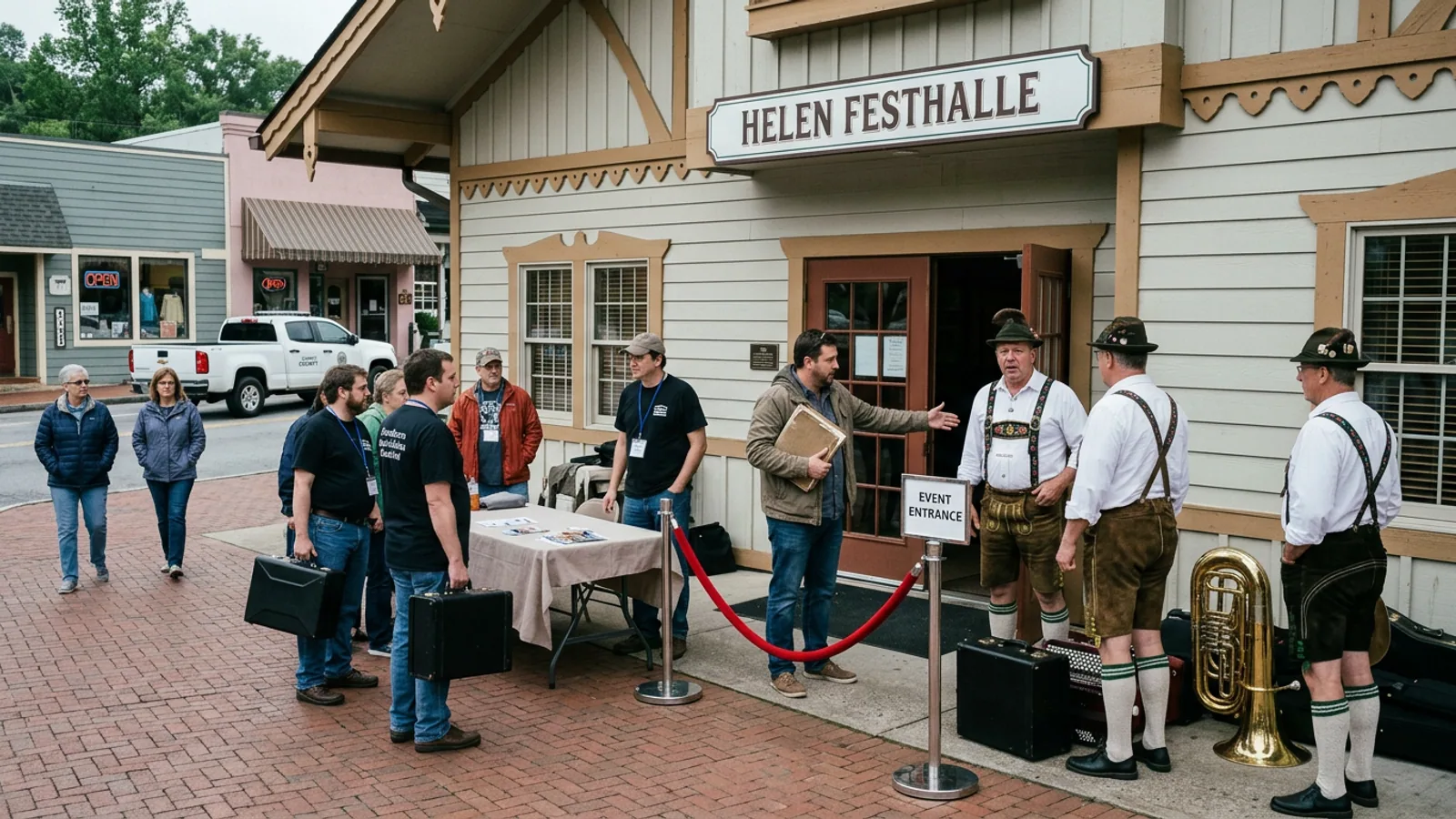
Guest bookings run through the three-ring binder. The 2026 schedule has produced one documented double-booking — the May 16 engagement of Das Tirolerische Gebirgsecho overlapping with the Southern Appalachian Accordion Festival's 19th annual juried event, resolved via a velvet rope and a renegotiated stage orientation (full reporting at the March 28 filing) — and one four-page certified letter on Meghan Trainor Enterprises LLC letterhead, dated April 15, referring to "our agreed July date" for which the Festhalle has no matching record (summarized at the April 19 filing).
Food And Drink
The Festhalle's 2026 taproom offers 24 draft positions, up from 19 in 2025. The standing canon — Warsteiner, Paulaner, Hofbräu Original, Weihenstephaner Hefe, and the Bodensee's house Helles — accounts for 14 of the 24. The remaining 10 positions rotate. A 32-ounce stein pour is the Festhalle house standard. Half-liter boots are available. The Festhalle does not, per its 2019 liability revision, permit personal glassware.
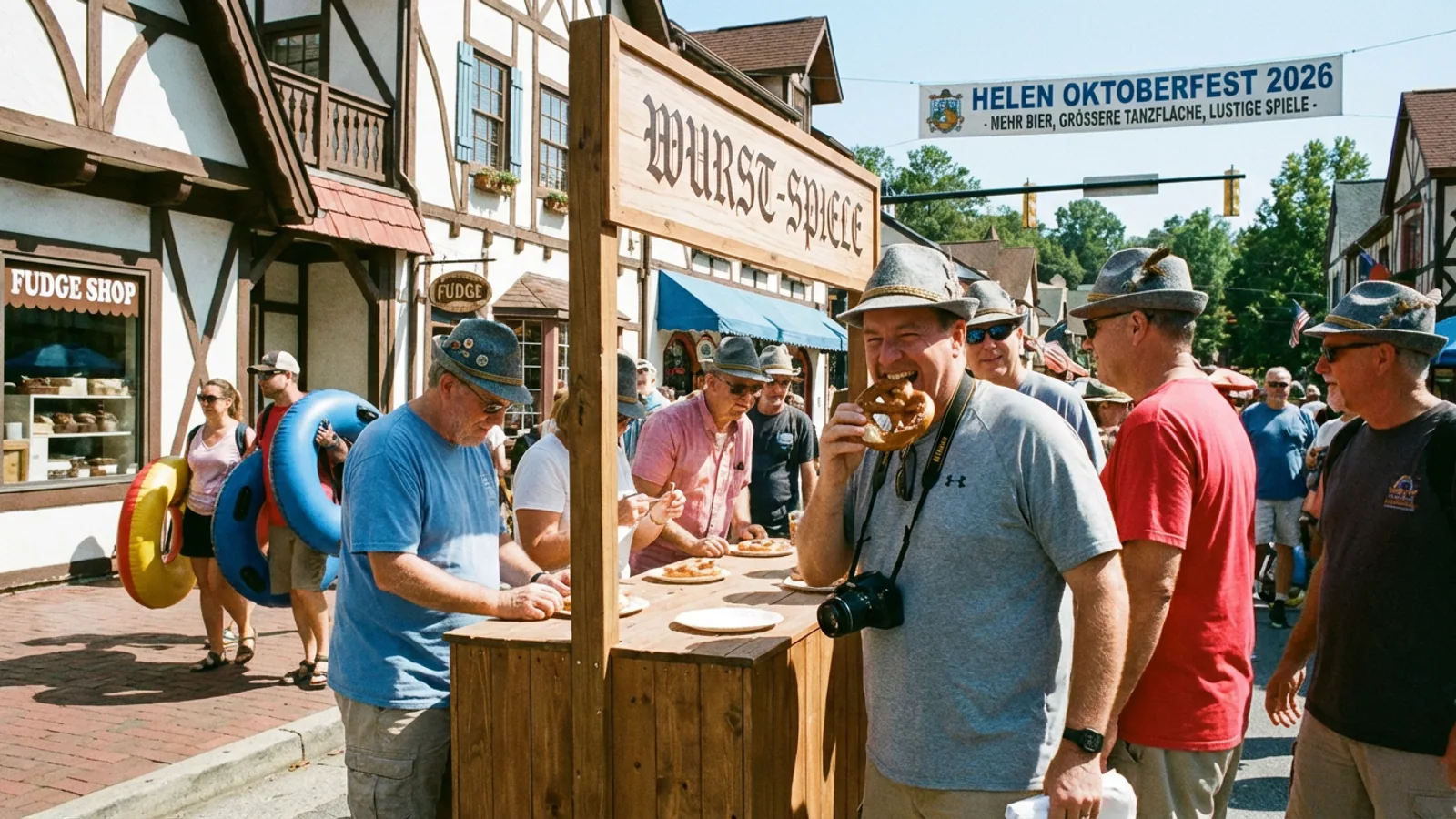
Food service is handled by the Festhalle kitchen for indoor seating and by approximately 38 licensed vendors across the Oktoberfest Park, the Town Center, and Bruckenstrasse sidewalks. The pretzel is the festival's signature food. Gunter Kellner has operated Pretzel Stand 4, the only pretzel vendor in continuous operation since 1987, from the Festhalle's north corner for 39 seasons. A standard festival pretzel runs $7. A large runs $11. The mustard is German-style coarse, from a 50-pound drum the Chamber procures annually from an Atlanta distributor.
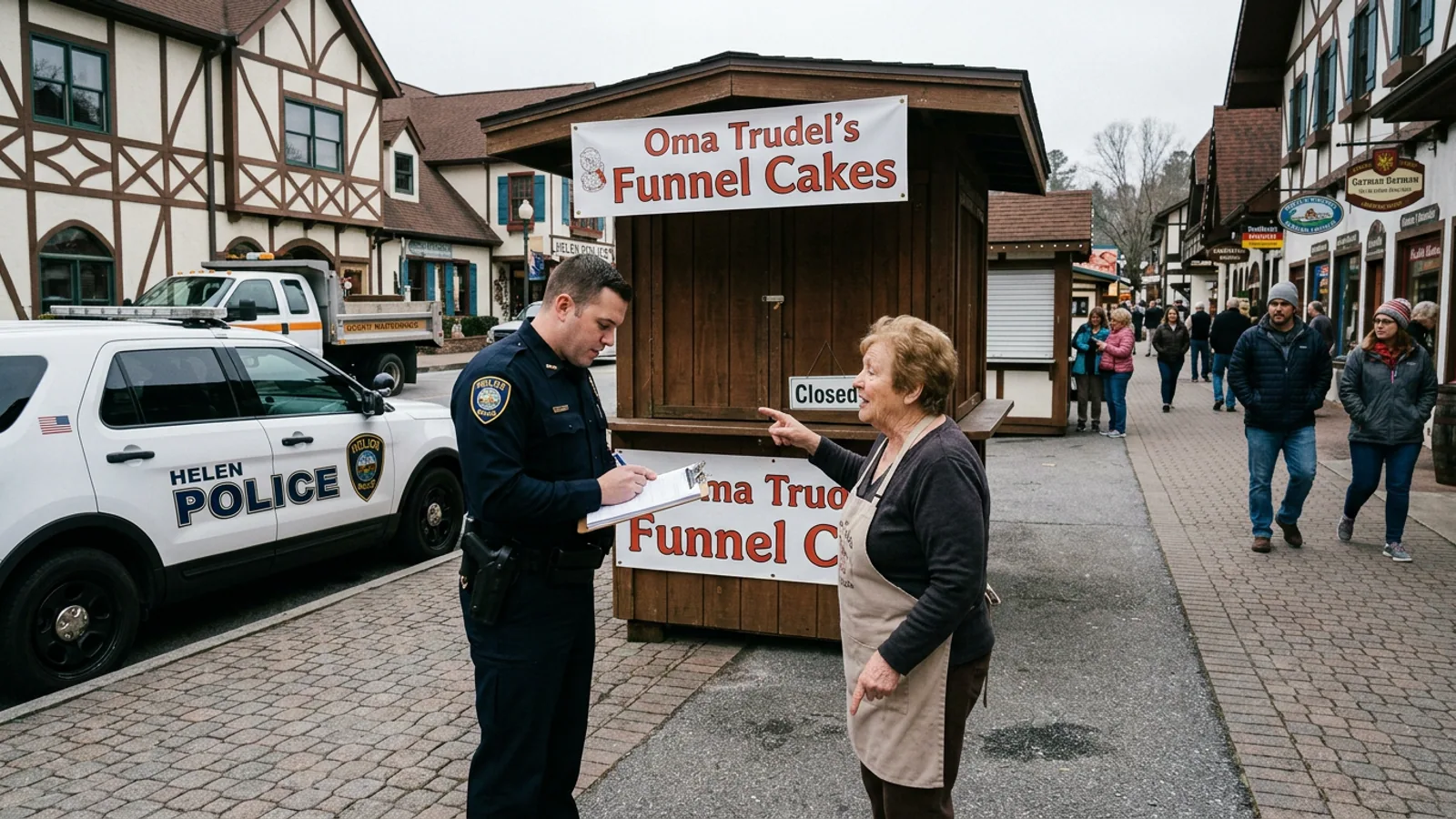
The bratwurst, the schnitzel, the red cabbage, the spaetzle, and the seven varieties of funnel cake at the Oktoberfest Park's perimeter all feature annually. The funnel cake perimeter has, in 2026, also generated a separate property-crime beat: the mid-March funnel-cake-related incident cluster has no direct Oktoberfest connection, but readers planning the weekend should note that the Chamber and Helen PD have begun coordinating perimeter coverage earlier in the season than in prior years.
The Locals' Guide
Lifestyle Editor Ramona "Romi" Fitzgerald, who has personally observed approximately 340,000 festival attendees across the 2023, 2024, and 2025 seasons, has published her taxonomy of the 11 types of Oktoberfest attendee. The taxonomy holds. It is, by this newsroom's internal count, the most-cited Bavarian Brainrot article since January. If you arrive in Helen on an Oktoberfest Saturday and do not know which category you are in, you are almost certainly category four (the Toccoa bachelorette party), category six (the Florida retiree couple who did not know Oktoberfest existed), or, quietly and with a pre-leaked faucet at home, category ten (the Helen resident for whom the Festhalle is the only thing open).
Category three — the Cleveland townie who has been here since 1977 and no longer enjoys it — is often wearing a Viking helmet. Category seven — the influencer who came specifically for content — will not sit down. Category 11 — the person who has attended every Oktoberfest globally for 20 consecutive years — is at the Festhalle bar, taking notes. Do not make eye contact with category 11.
Parking strategy for locals: the unpaved overflow lot at the Big Brown Building 0.9 miles northeast of downtown remains free, unsigned, and quietly maintained. Traffic strategy: exit before 5 p.m. or after 10 p.m. The 9 p.m. exit produces the worst queue. Food strategy: the shorter line at Pretzel Stand 4 is almost always at 3:15 p.m. The Chicken Dance is at 9:47 p.m. sharp, every Saturday. Plan accordingly.
Off-Season Oktoberfest
Helen's Oktoberfest-adjacent cultural programming runs, in practice, year-round. The Bodensee Restaurant on Main Street serves the standing Bavarian menu — schnitzel, sauerbraten, spaetzle, five rotating beers on draft — 52 weeks per year. The Festhalle holds roughly 120 private bookings annually (40 weddings, 30 corporate retreats, 50 one-off rentals). Polka instruction, by appointment, runs Tuesday evenings from January through August.
The Downtown Merchants Association's January petition to designate all 12 calendar months as "Oktoberfest-eligible programming periods" is under review by the City's Special Events Committee. Its merits, and its discontents — the residents' objection that a March Oktoberfest is, on strict construction, an event referring by name to a month other than its own — are covered in the February 5 vox populi. Outside the 53-day window you will still find Trachten storefronts, accordion music at the Bodensee on Thursday evenings, and the Glockenspiel, which plays its identical two-minute program at 12:05, 3:05, 6:05, and 9:05 p.m. every day of every year.
Parking, Noise, And What The Permits Cover
Official festival parking is distributed across five city-authorized lots: the Festhalle main lot (420 spaces, $20), the Oktoberfest Park north lot (180 spaces, $15), the Town Center lot (90 spaces, $15), the Chamber overflow lot at Bruckenstrasse and Robertstown Road (260 spaces, $10), and the Alpine Amphitheater satellite lot (340 spaces, $5, with a 12-minute shuttle on weekends). Total authorized capacity on peak Saturdays is 1,290 vehicles. The Chamber's 2025 peak-demand figure was 3,400. The remaining 2,100 vehicles distribute across unposted and informally tolerated parking along Robertstown Road, the USFS Anna Ruby Falls Visitor Center access road, and the unpaved overflow lot east of downtown.
Noise ordinance 2016-07 caps amplified sound at 75 decibels at property lines from 11 p.m. to 7 a.m. The Festhalle's amplified programming concludes, by long convention, at 10:45 p.m. The 11 p.m. cap has, in the last 30 months, been cited twice, both for Main Street street musicians rather than Festhalle performances. The Chamber's special-event permit covers the Festhalle, the Biergarten, the Oktoberfest Park, and the Chamber tent. It does not cover the eight Bruckenstrasse storefronts that operate sidewalk stein service from rolling carts. Those operate under individual peddler permits from the White County license office. A temporary EMT station runs out of the Festhalle's north vestibule on every Saturday of the 53-day window; White County Fire stages a brush unit at the Town Center on high-heat Saturdays. The full 41-page emergency-coordination plan is available on request at the Chamber's front desk at 726 Bruckenstrasse.